
Contents
Phrasal verbs with draw pop up everywhere in English, and they don’t always mean anything to do with pencils or pictures. From draw up a plan to draw on experience, draw out a conversation, draw back in fear, or draw in an audience, these little verb combos carry big meaning. For ESL and EFL learners, they’re essential for sounding natural and understanding real English.
What does ‘draw’ mean?
The word ‘draw‘ can mean many different things. As a verb, some meanings include to produce a picture or to pull something along.
For example:
- Reuben draws lovely pictures. (produce a picture)
- I’m going to the prom in a horse-drawn carriage. (pull something along)
Draw is an irregular verb. The past tense is drew and the past participle is drawn.
Common Phrasal Verbs with Draw

Draw is a sneaky little verb that loves to pair up with particles and change meaning fast. You can draw up a plan, draw on experience, or get drawn into a story before you know it. Here are the most common phrasal verbs with draw, with clear meanings and example sentences.
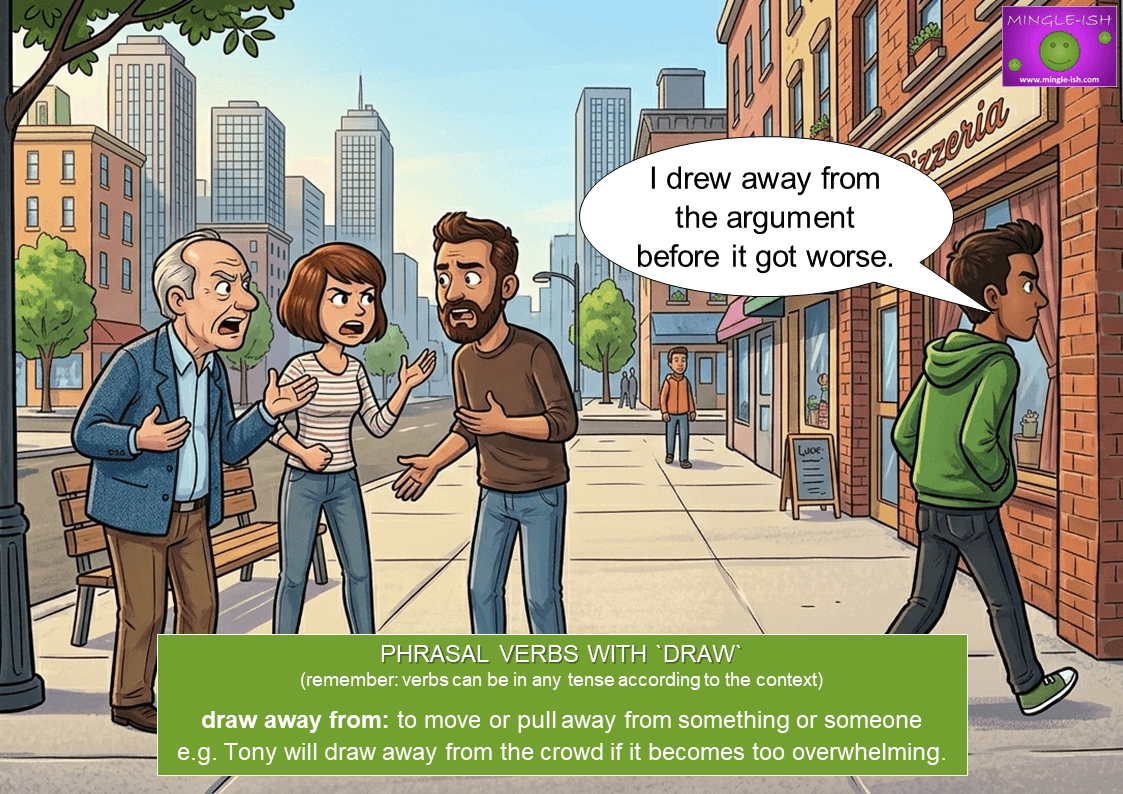
draw away from
meaning: to move or pull away from something or someone
examples:
- I draw away from loud crowds whenever I can.
- I am drawing away from the conversation because it’s boring.
- I drew away from the group when it got too noisy.
- I have drawn away from distractions to focus on my work.
- I will draw away from the crowd if it becomes too overwhelming.
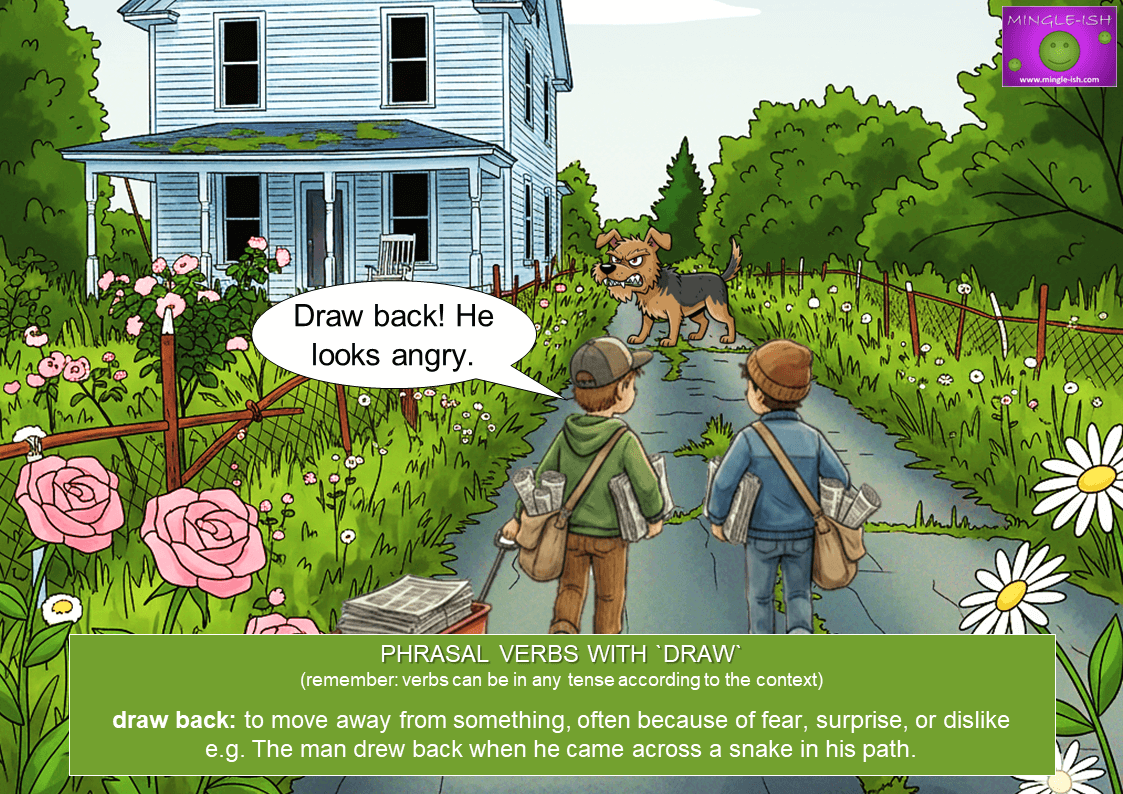
draw back
meaning: to move away from something, often because of fear, surprise, or dislike
examples:
- The man drew back when he came across a snake in his path.
- She drew back when the dog barked.
- He drew back from the edge of the cliff.
- The child drew back in fear.
- I instinctively drew back from the hot pan.
- They drew back when they heard the noise.
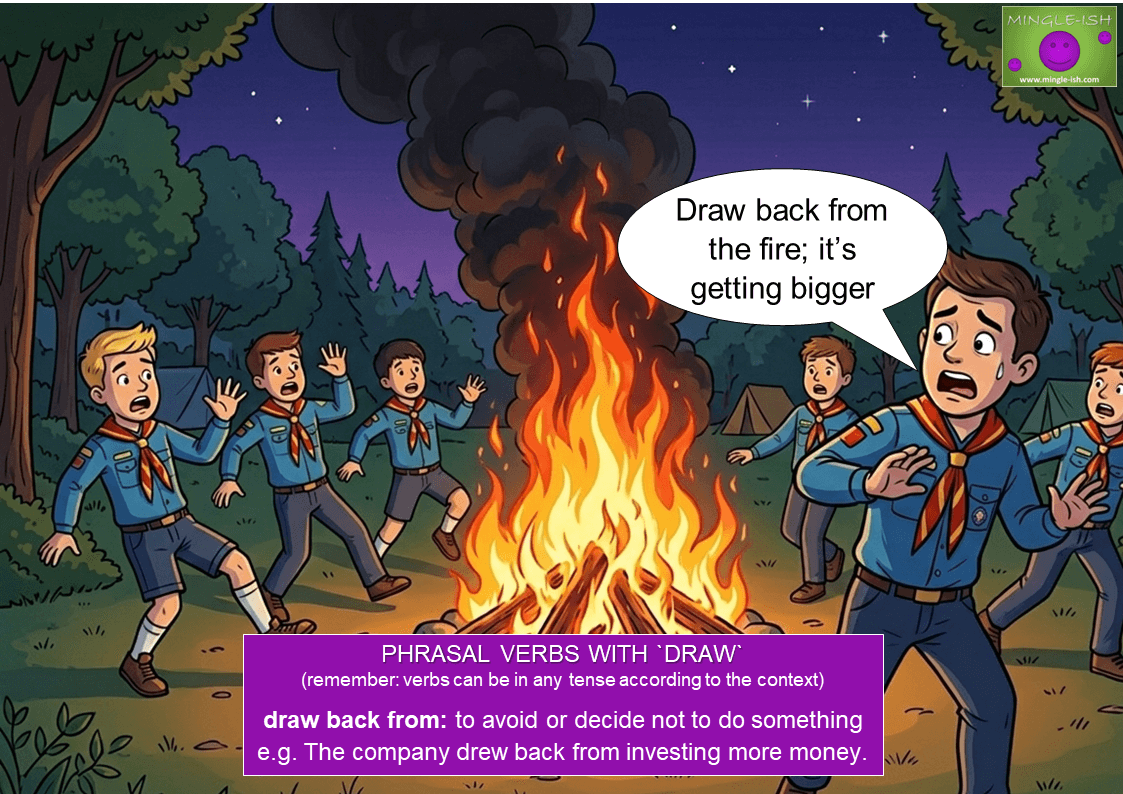
draw back from
meaning: to avoid or decide not to do something
examples:
- I draw back from confrontation whenever things start to get heated.
- I am drawing back from making a decision until I have all the facts.
- I drew back from signing the agreement at the last minute.
- I have drawn back from risky investments before.
- I will draw back from the deal if the terms change.
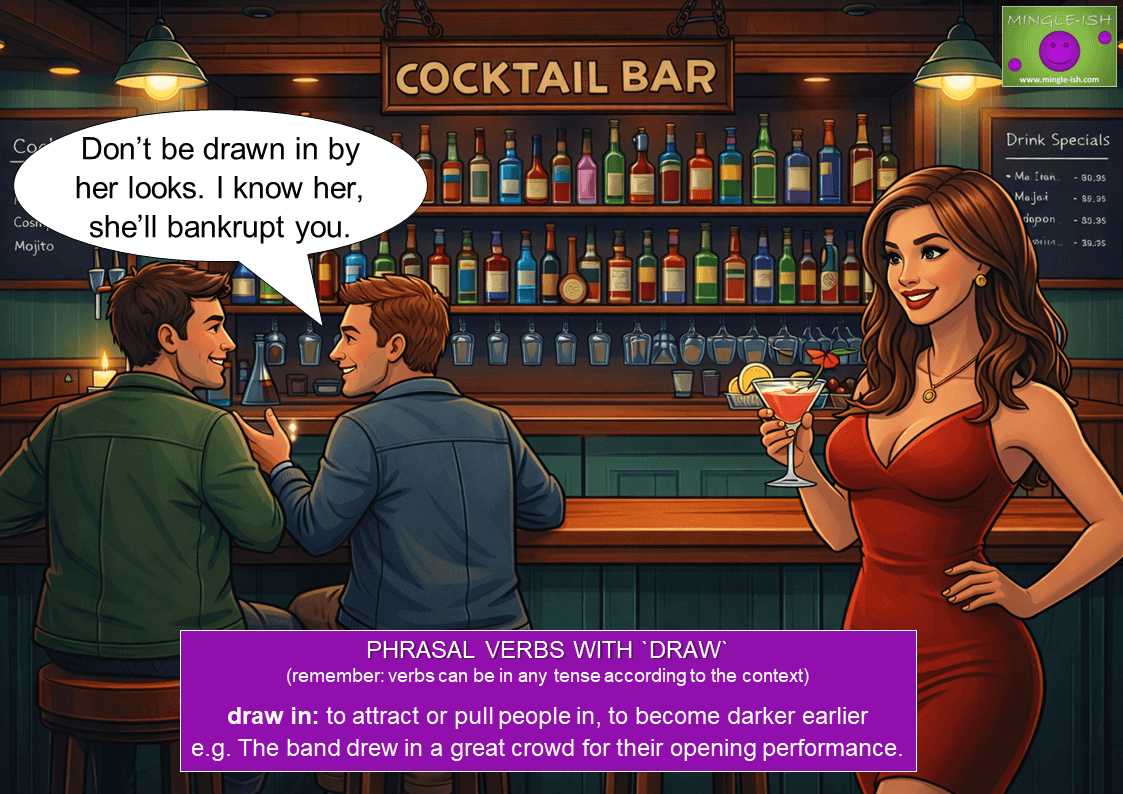
draw in
meaning 1: to attract or pull people in
meaning 2: (of evenings/days) to become darker earlier
examples:
- The band drew in a great crowd for their opening performance.
- The festival draws in huge crowds.
- The shop window drew me in.
- The story really draws you in.
- As winter comes, the evenings draw in.
- The lights drew in curious visitors.
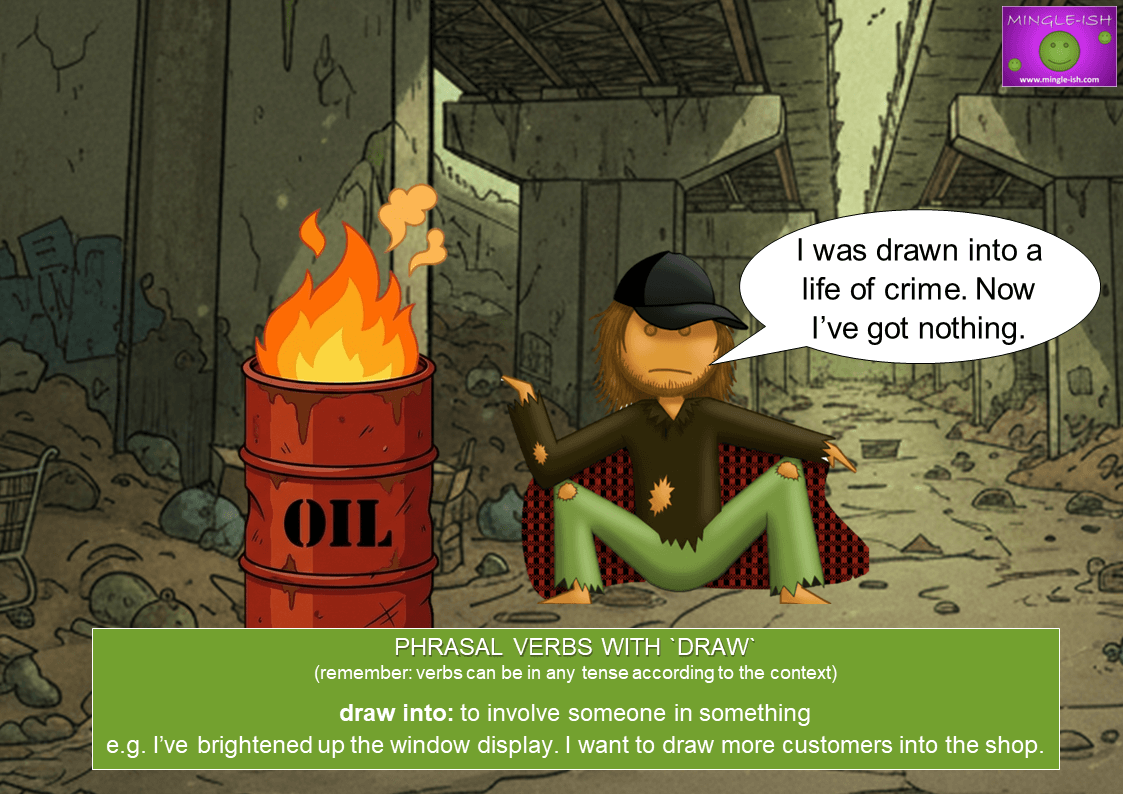
draw into
meaning: to involve someone in something
examples:
- I’ve brightened up the window display. I want to draw more customers into the shop.
- She was drawn into the argument.
- He got drawn into their drama.
- I was drawn into a long conversation.
- They were drawn into the conflict.
Don’t get drawn into gossip.
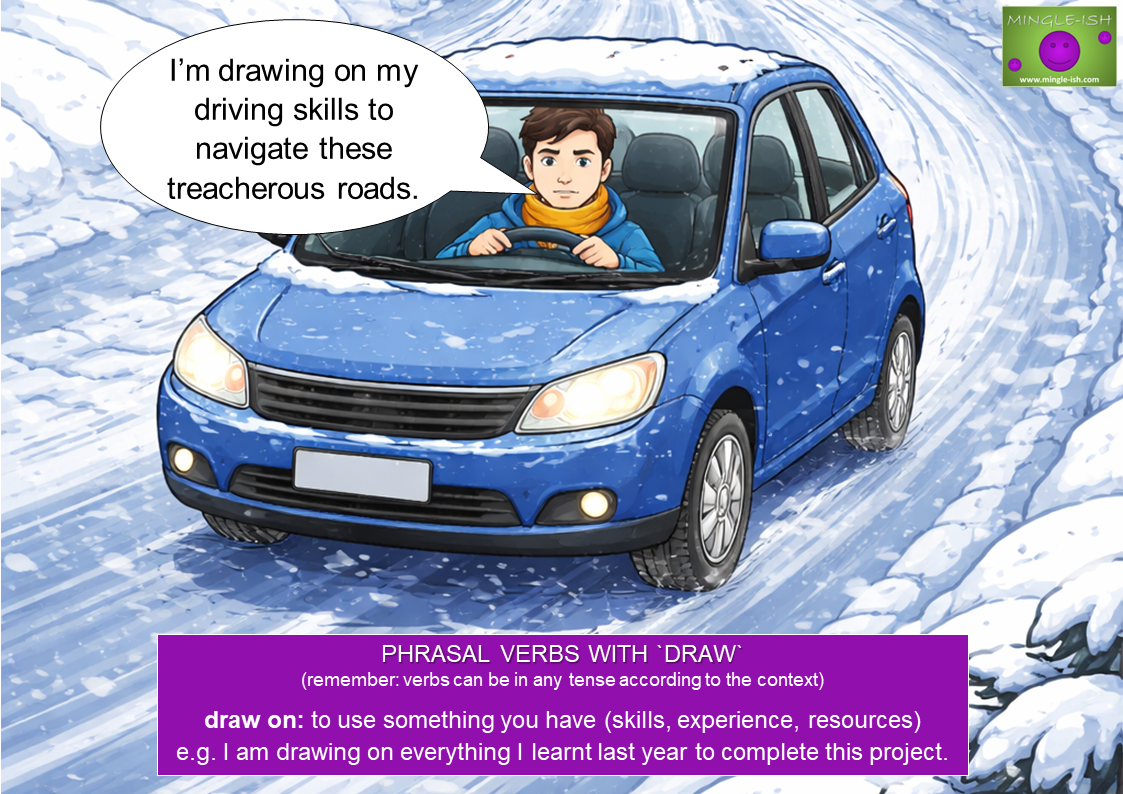
draw on
meaning: to use something you have (skills, experience, resources)
examples:
- I draw on my past experience when I make difficult decisions.
- I am drawing on everything I learnt last year to complete this project.
- I drew on my savings to pay for the repairs.
- I have drawn on my training many times in this job.
- I will draw on my notes to help me revise for the exam.
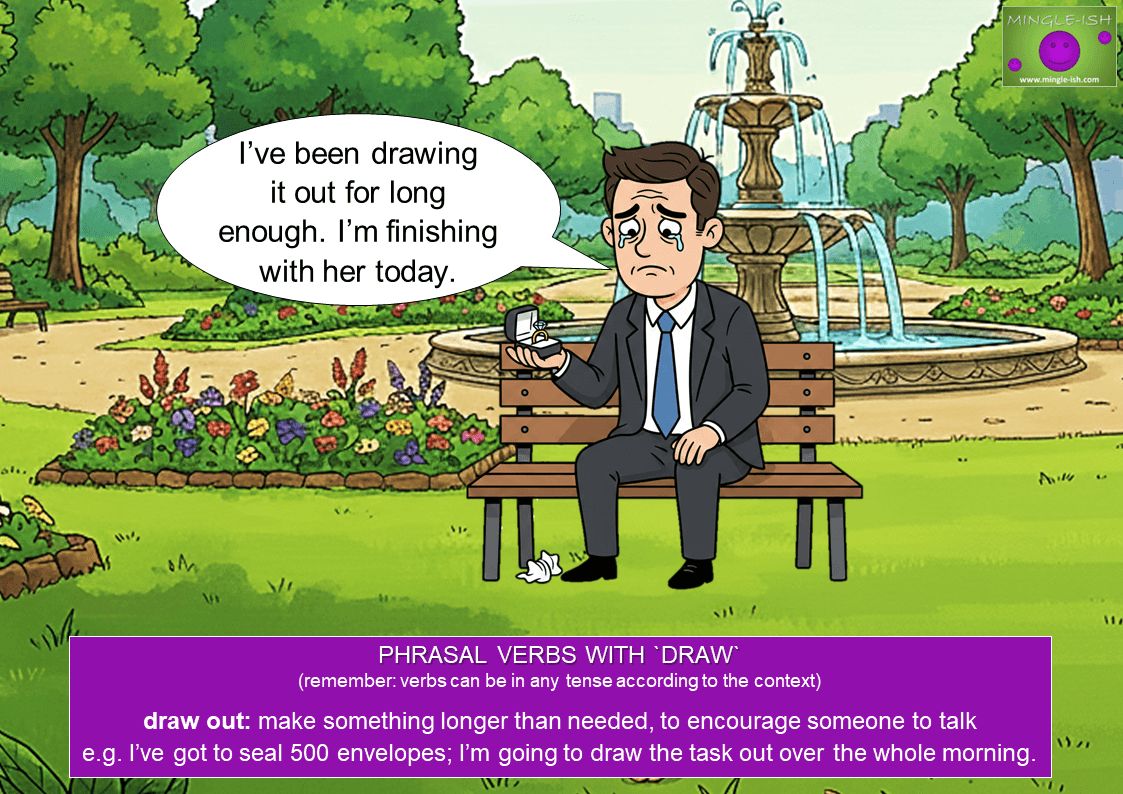
draw out
meaning 1: make something longer than needed
meaning 2: to encourage someone to talk
examples:
- I’ve got to seal 100 envelopes; I’m going to draw it out for the whole morning.
- The meeting was drawn out for hours.
- She tried to draw him out.
- He drew out the suspense.
- The teacher drew out shy students.
- They drew out the negotiations.
draw together
meaning: bring people or things closer emotionally or physically; unite or collaborate
examples:
- I draw together with my team whenever we start a new project.
- I am drawing together my friends to plan a surprise party.
- I drew together with my classmates to finish the group assignment.
- I have drawn together my family for a weekend getaway.
- I will draw together the volunteers to organise the event.

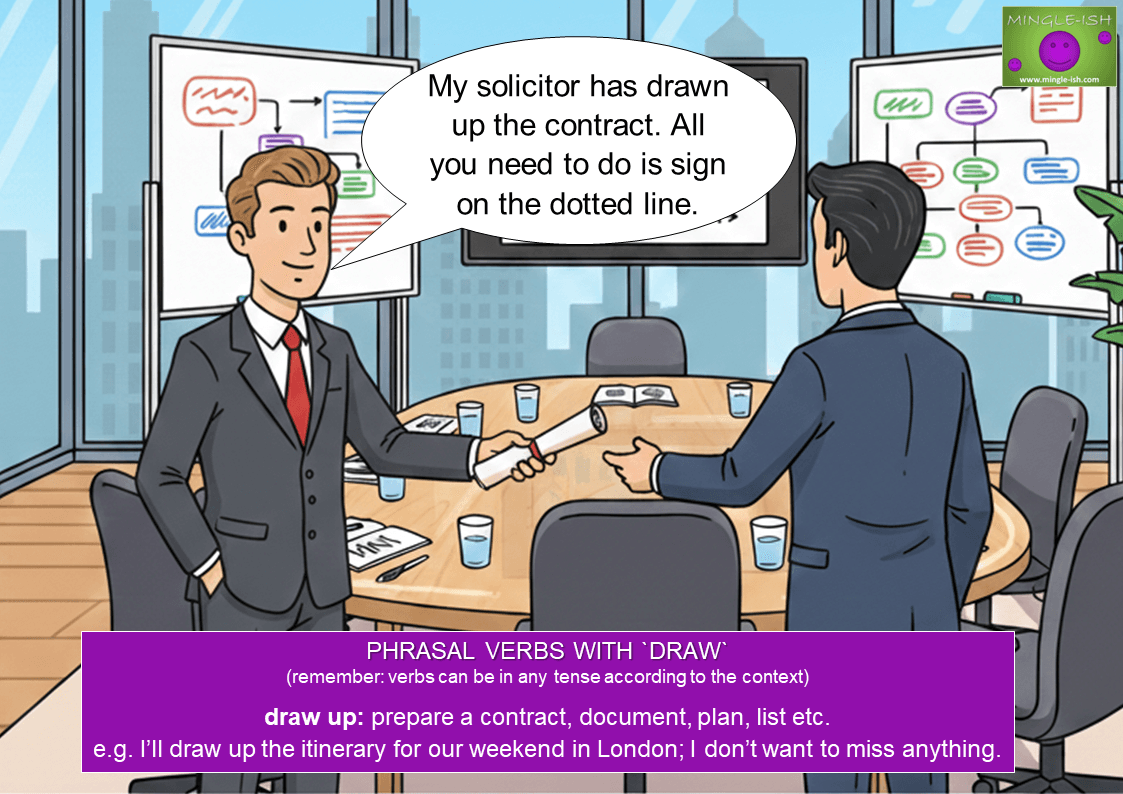
draw up
meaning 1: prepare a contract, document, plan, list etc.
meaning 2: to stop (vehicle)
examples:
- I’ll draw up the itinerary for our weekend in London: I don’t want to miss anything.
- They drew up a contract.
- She drew up a list.
- The lawyer drew up the will.
- A car drew up outside.
- The taxi drew up at the hotel.
draw upon
meaning: use your knowledge, skills, strength etc.
example:
- Tony drew upon his ICT skills to fix the broken computer.
- She drew upon her experience to solve the problem.
- The author drew upon real events for the story.
- He drew upon his savings to pay for the course.
- We can draw upon local expertise for advice.
- The team drew upon past research to make their plan.

Why “Draw” Phrasal Verbs Are Tricky for Learners
“Draw” isn’t just about pictures or pulling stuff. For ESL learners, it’s like a shape-shifting ninja: sometimes it means prepare a document (draw up), sometimes it’s using your skills (draw on), and sometimes it’s just prolonging something (draw out). To make matters spicier, some phrasal verbs are separable, some aren’t, and the meanings can be abstract as your imagination. Basically, if “draw” were a person, it’d be that friend who turns up late, wears a mask, and keeps changing the plan—but you still need to understand it!
Wrapping Up “Draw” Phrasal Verbs
So there you have it—“draw” isn’t just a boring word about pencils and paper. It can plan, pull, use, or stretch things out, and yes, it can be a little sneaky for ESL learners. The trick? See it in action, practise it, and don’t be scared to play around with it. Once you get the hang of these phrasal verbs, you’ll be drawing confidence in English faster than you can draw up a contract!
Learn More English Phrasal Verbs
If you’re loving “draw” and want to keep your phrasal verb game strong, don’t stop here! Check out our other quirky collections: explore phrasal verbs with write to see how “take” can sneak into all sorts of expressions, dive into phrasal verbs with get for everyday English magic, have fun with phrasal verbs with make and discover how to make your sentences sparkle, and zoom through phrasal verbs with go to see where “go” can take you.
Keep clicking, keep learning, and soon these phrasal verbs will stick like glue!