
The verb fall might make you think of slipping on a banana skin, but it has plenty of other tricks up its sleeve! When you combine fall with words such as apart, behind or for, you can create phrasal verbs with completely different meanings.
In this guide, you’ll discover common phrasal verbs with fall, learn what they mean and see how to use them in everyday English. Let’s take the plunge!
What does ‘fall’ mean?
The word ‘fall‘ can mean many different things. As a verb, the meanings include to lose your balance or move to a lower position.
For example:
- I fell down the stairs. (lose your balance)
- My team has fallen seven places in the league table. (move to a lower position)
Fall is an irregular verb. The past tense is fell and the past participle is fallen.
Common Phrasal Verbs with Fall
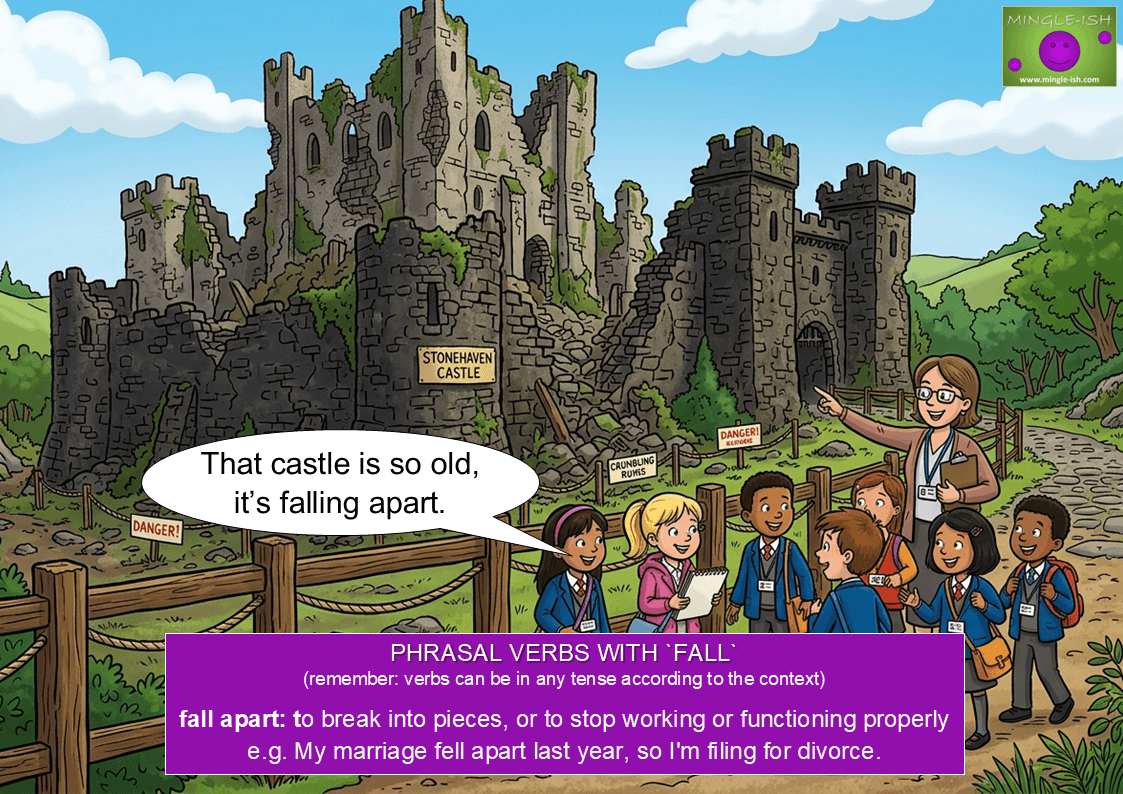
fall apart
meaning: To break into pieces, or to stop working or functioning properly. It can also describe someone becoming emotionally overwhelmed
examples:
- My old trainers are falling apart.
- She nearly fell apart when she heard the bad news.
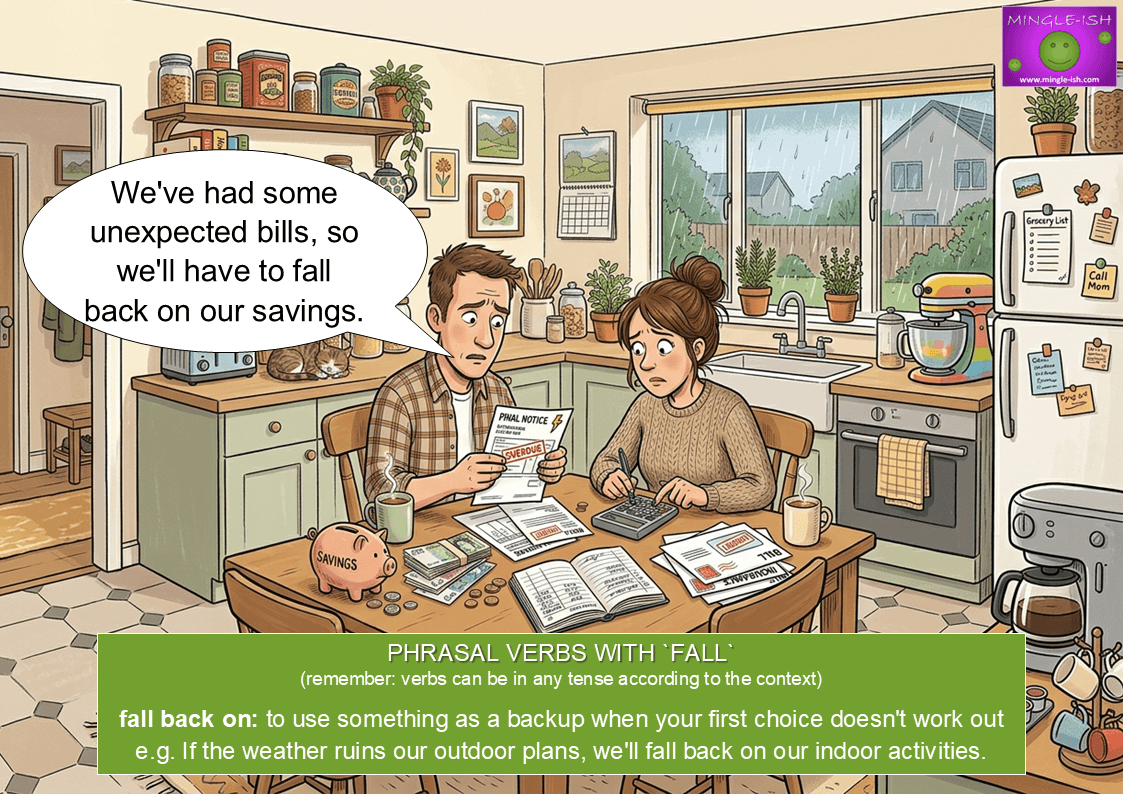
fall back on
meaning: to use something as a backup when your first choice doesn’t work out
examples:
- If I can’t find a job, I’ll fall back on my savings.
- She fell back on her experience when things got difficult.
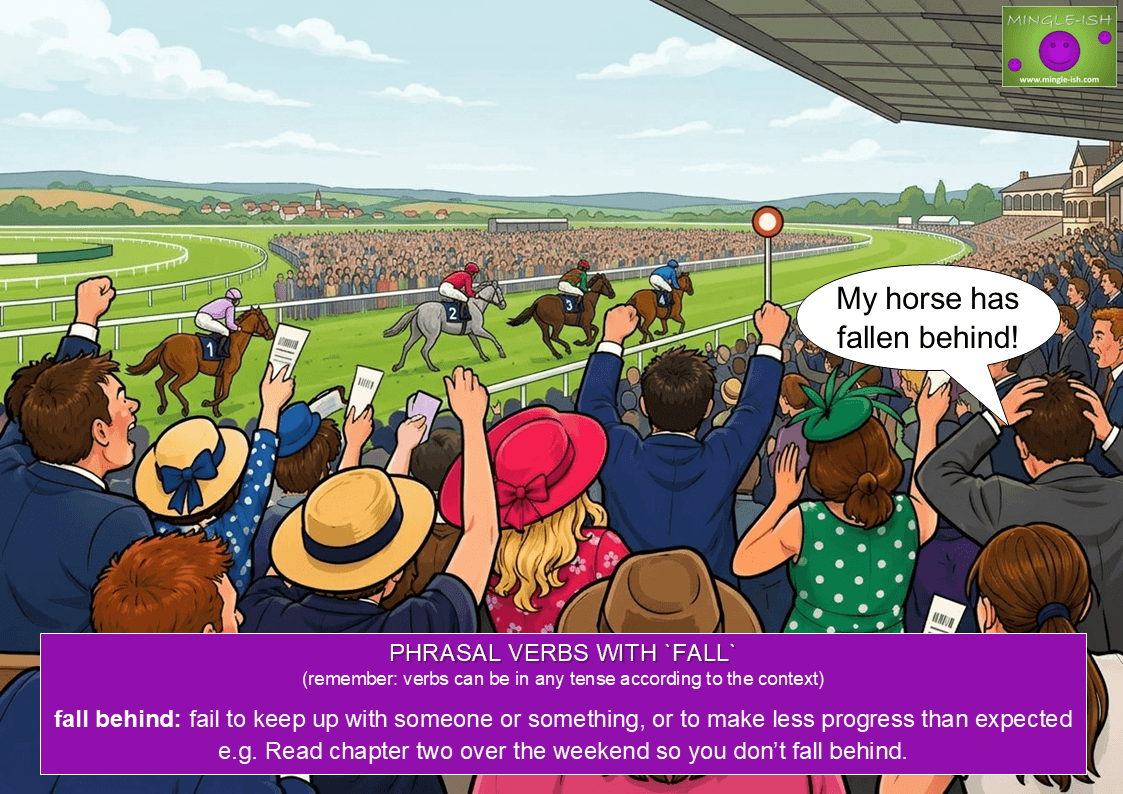
fall behind
meaning: to fail to keep up with someone or something, or to make less progress than expected
examples:
- I missed a week of lessons and fell behind with my work.
- The runner fell behind the rest of the group.
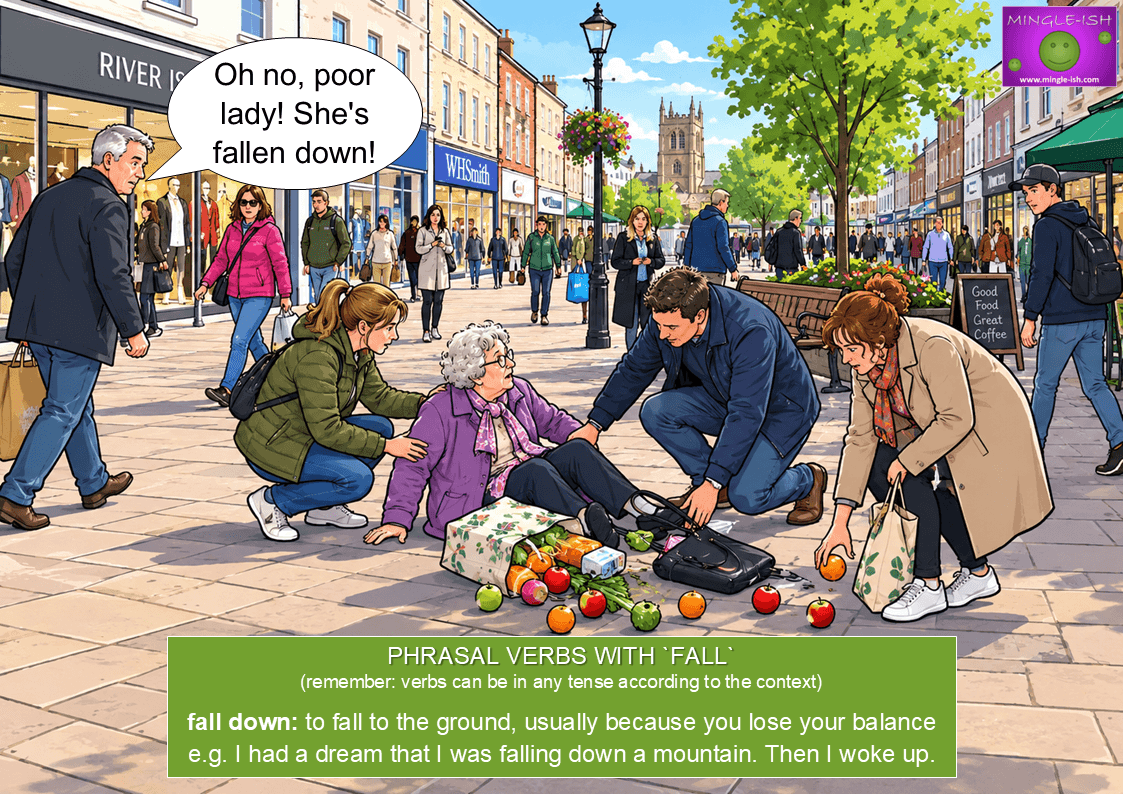
fall down
meaning: to fall to the ground, usually because you lose your balance
examples:
- I tripped over a stone and fell down. (lose your balance)
- The old wall fell down during the storm. (collapse)
fall for
meaning: to be tricked by someone or something, or to develop romantic feelings for someone
examples:
- I can’t believe I fell for that silly joke!
- He fell for her the moment they met.

fall into
meaning: to enter a particular state or situation, sometimes without intending to
examples:
- She fell into a deep sleep.
- He fell into the habit of checking his phone every few minutes.

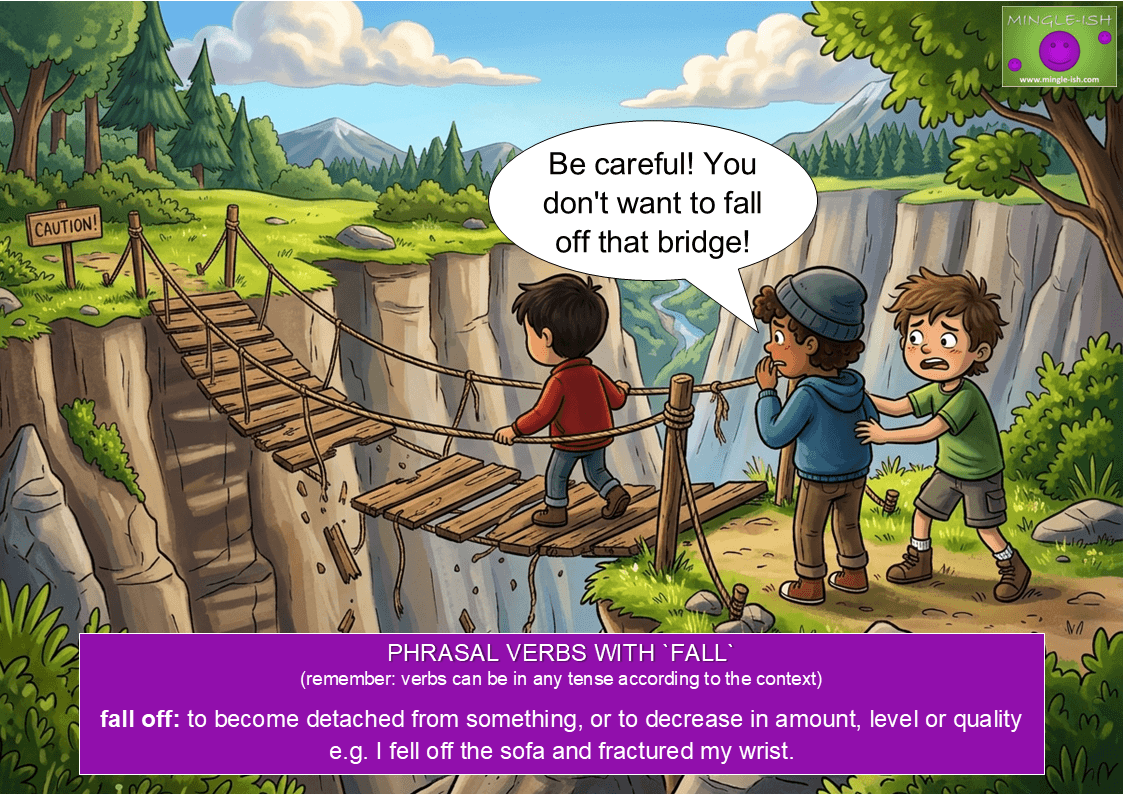
fall off
meaning: to become detached from something, or to decrease in amount, level or quality
examples:
- The sign fell off the wall.
- Sales fell off towards the end of the year.
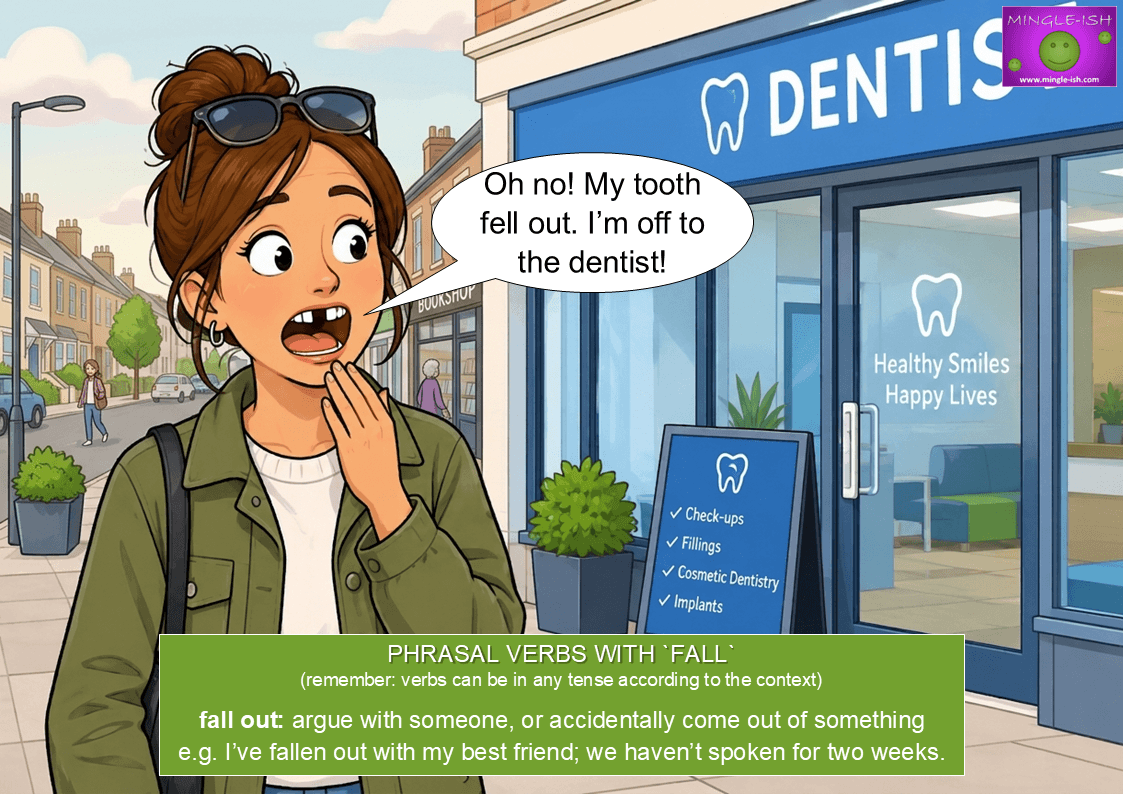
fall out
meaning: To have an argument or disagreement with someone. It can also mean to come out of something accidentally.
examples:
- The two friends fell out over a misunderstanding.
- My phone fell out of my pocket.
fall over
meaning: To lose your balance and land on the ground.
examples:
- Be careful not to fall over that bag!
- He tripped on the pavement and fell over.

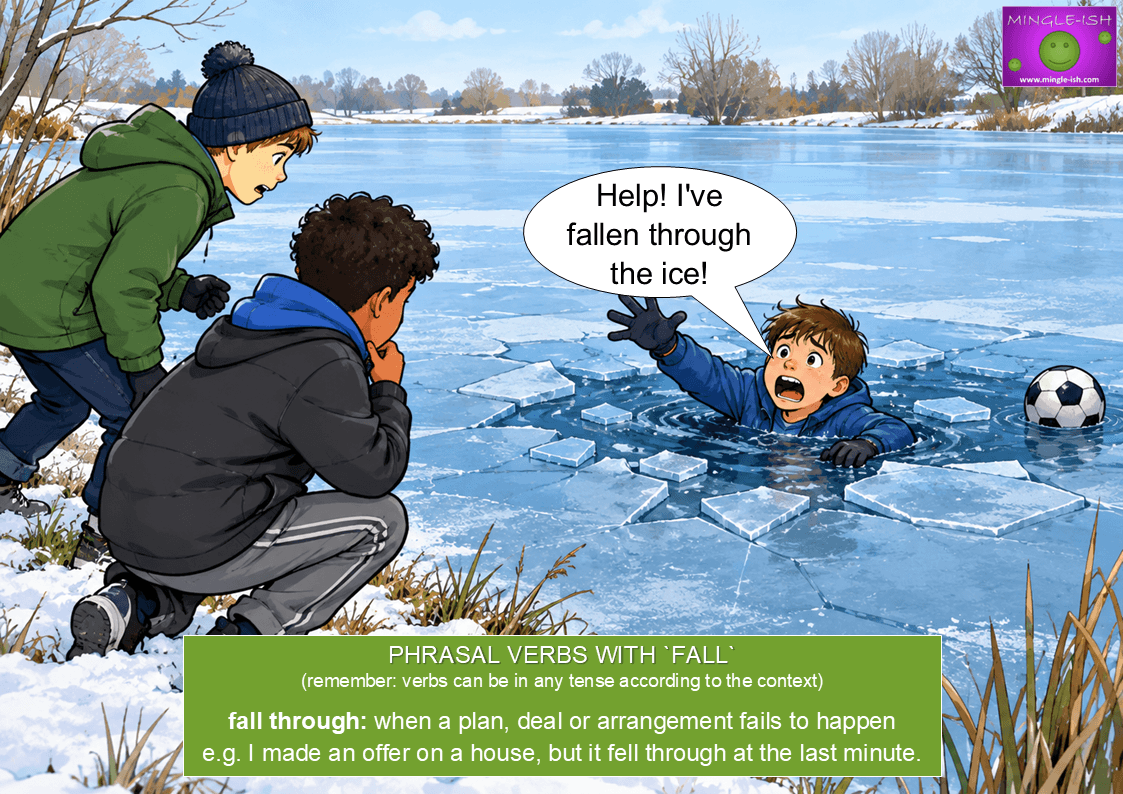
fall through
meaning: when a plan, deal or arrangement fails to happen
examples:
- Our holiday plans fell through when the flight was cancelled.
- The business deal fell through at the last minute.
Test Your Knowledge: Phrasal Verbs with Fall Quiz
Ready to put your phrasal verb skills to the test? Our video quizzes are coming soon!
In the meantime, head over to our YouTube Grammar Quizzes playlist and try some of our other fun English grammar challenges.
Conclusion
And there you have it! The verb fall can do much more than describe someone taking a tumble. From plans that fall through to people who fall for a trick, these phrasal verbs pop up in all sorts of everyday situations.
The best way to remember them is to learn each one in context and practise using it in your own sentences. Keep at it, and you’ll soon stop falling behind!
Keep Learning with Mingle-ish
Ready to keep building your English skills? Explore these related guides and put your vocabulary and grammar knowledge to the test.
- Phrasal Verbs with Carry: Discover more common phrasal verbs and their meanings.
- Irregular Verbs in English: Learn the different forms of irregular verbs.
- Idioms and Expressions in English: Explore more everyday English expressions.
- English Grammar Quizzes: Head over to our YouTube playlist for more grammar challenges.