
Phrasal verbs are a key part of everyday English, but they can be tricky to learn. In this guide, you will learn common phrasal verbs with “wear”, their meanings, and how to use them in real-life sentences. This is perfect for ESL and EFL learners who want to improve their vocabulary and sound more natural when speaking English.
What does ‘wear’ mean?
The word “wear” has several meanings in English. As a verb, it most commonly means to have something on your body, such as clothes or accessories. It can also mean to become damaged or gradually erode over time.
For example:
- I’ll wear a dress and heels to the party. (have on your body)
- The dentist said my teeth are a bit worn. (eroded over time)
“Wear” is an irregular verb. Its past tense is “wore”, and its past participle is “worn”.
Common Phrasal Verbs with “Wear”
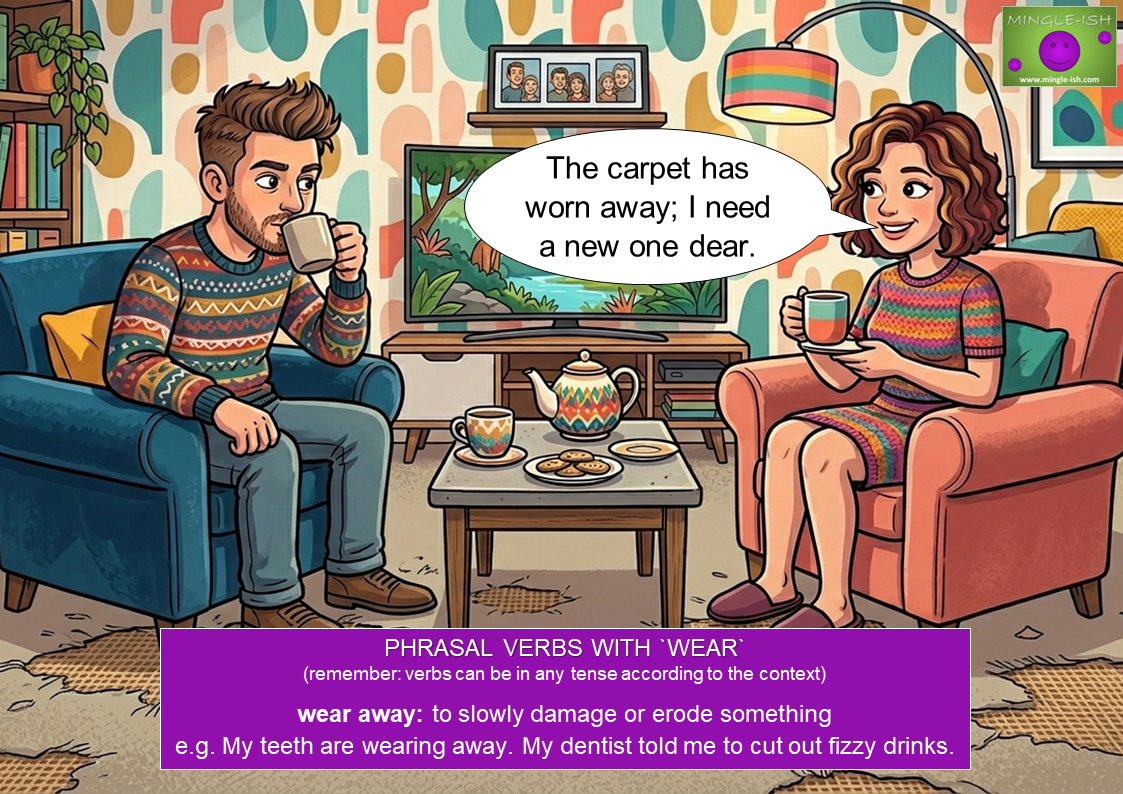
wear away
meaning: to slowly damage or erode something
examples:
- My teeth are wearing away. My dentist told me to cut out fizzy drinks.
- The constant dripping water wears away the stone over time.
- The waves wore away the coastline during the storm.
- The wind has slowly worn away the surface of the rock.
- The paint is wearing away because of the harsh weather.
- By next year, the path will have worn away even more.
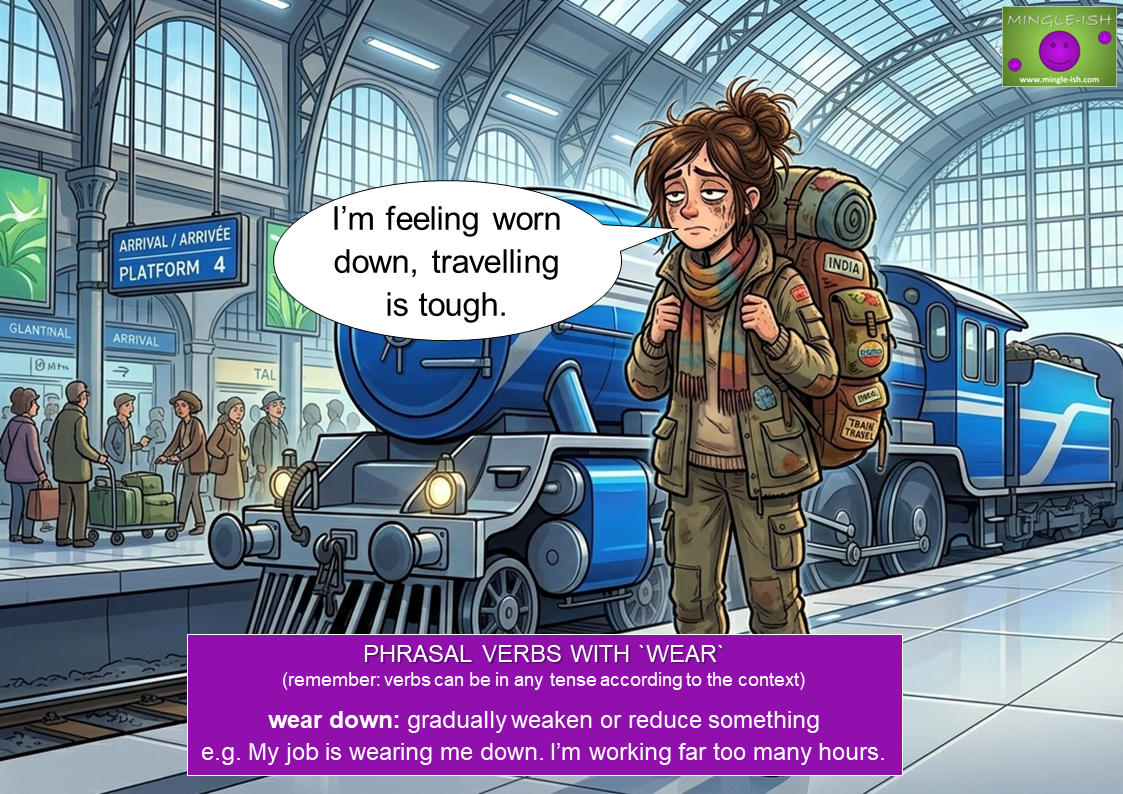
wear down
meaning: gradually weaken or reduce something
examples:
- My job is wearing me down. I’m working far too many hours.
- The constant noise wears me down after a while.
- The long meeting wore everyone down by the end of the day.
- All the stress has really worn her down lately.
- The endless complaints are wearing him down.
- By the end of the week, the workload will have worn them down.
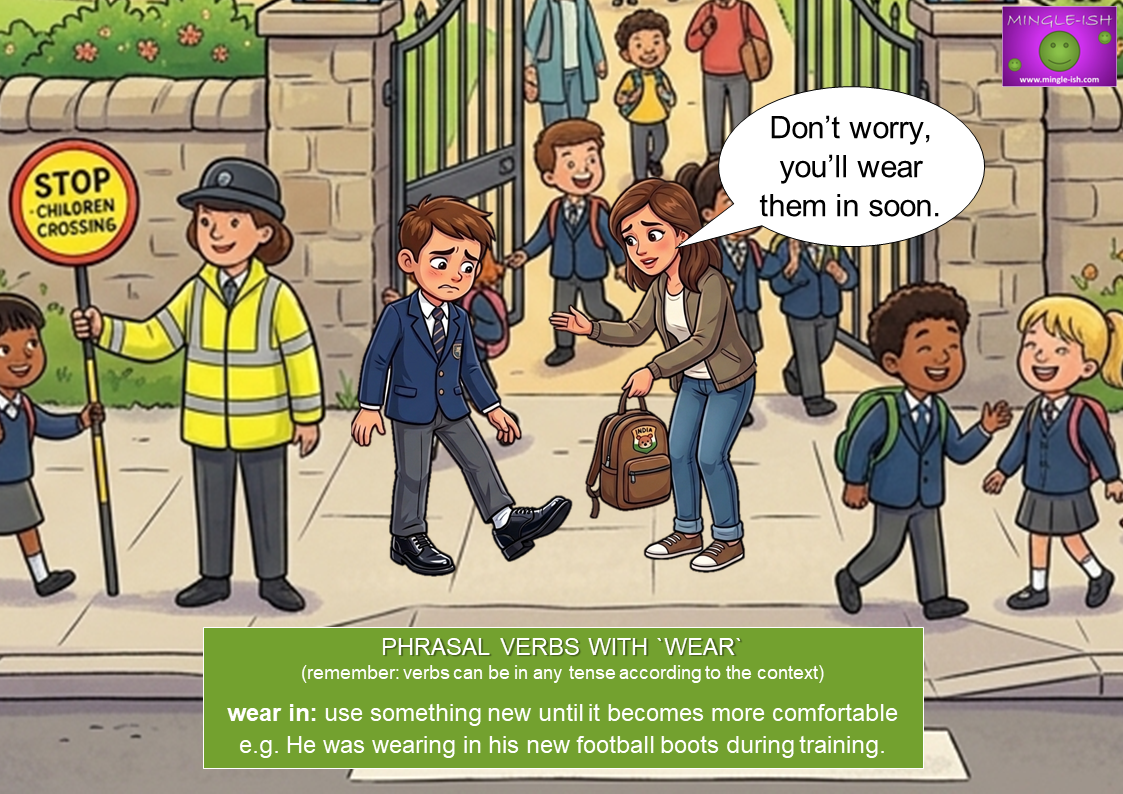
wear in
meaning: use something new until it becomes more comfortable
examples:
- He was wearing in his new football boots during training.
- These boots feel tight, but I’ll wear them in after a few days.
- I am wearing in my new trainers before the trip.
- I wore in my jacket, and now it fits perfectly.
- I have worn in these shoes, so they are much more comfortable now.
- You will wear in that coat after a few wears.
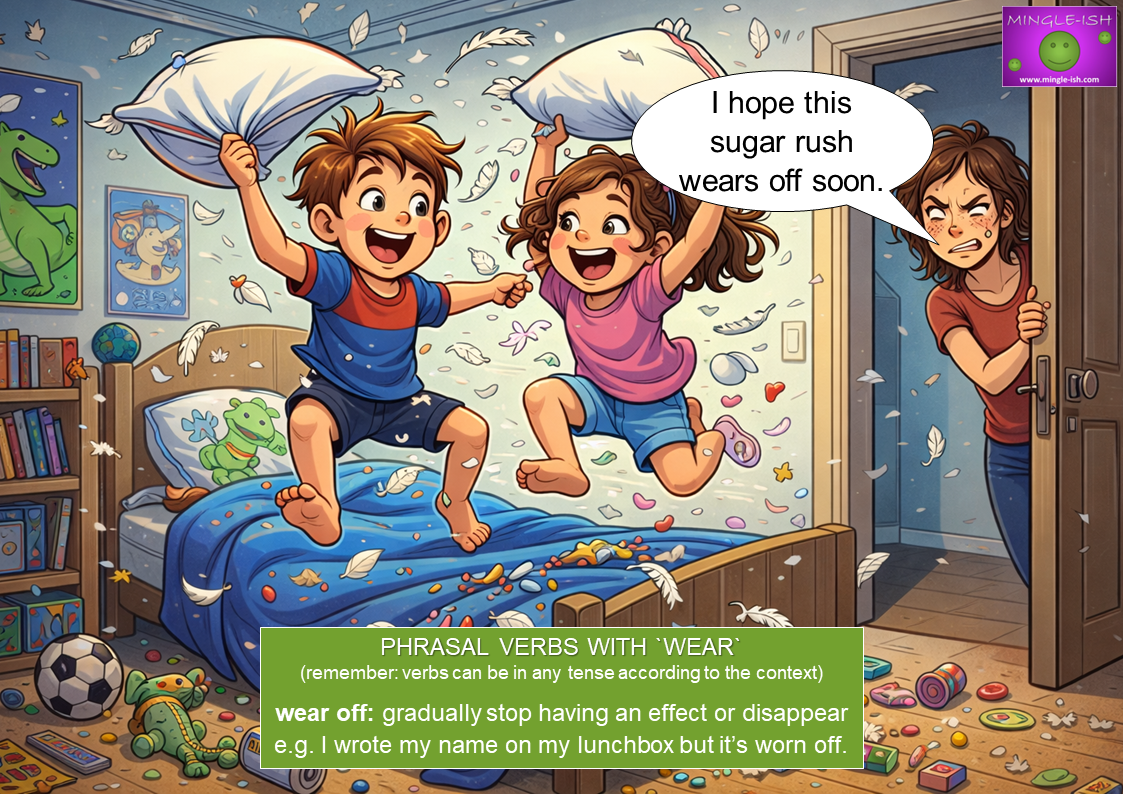
wear off
meaning: gradually stop having an effect or disappear
examples:
- I wrote my name on my lunchbox but it’s worn off.
- The effect of the medicine wears off after a few hours.
- The excitement from the party wore off the next day.
- The numb feeling has worn off completely now.
- The smell is slowly wearing off.
- By tomorrow morning, the effects will have worn off.
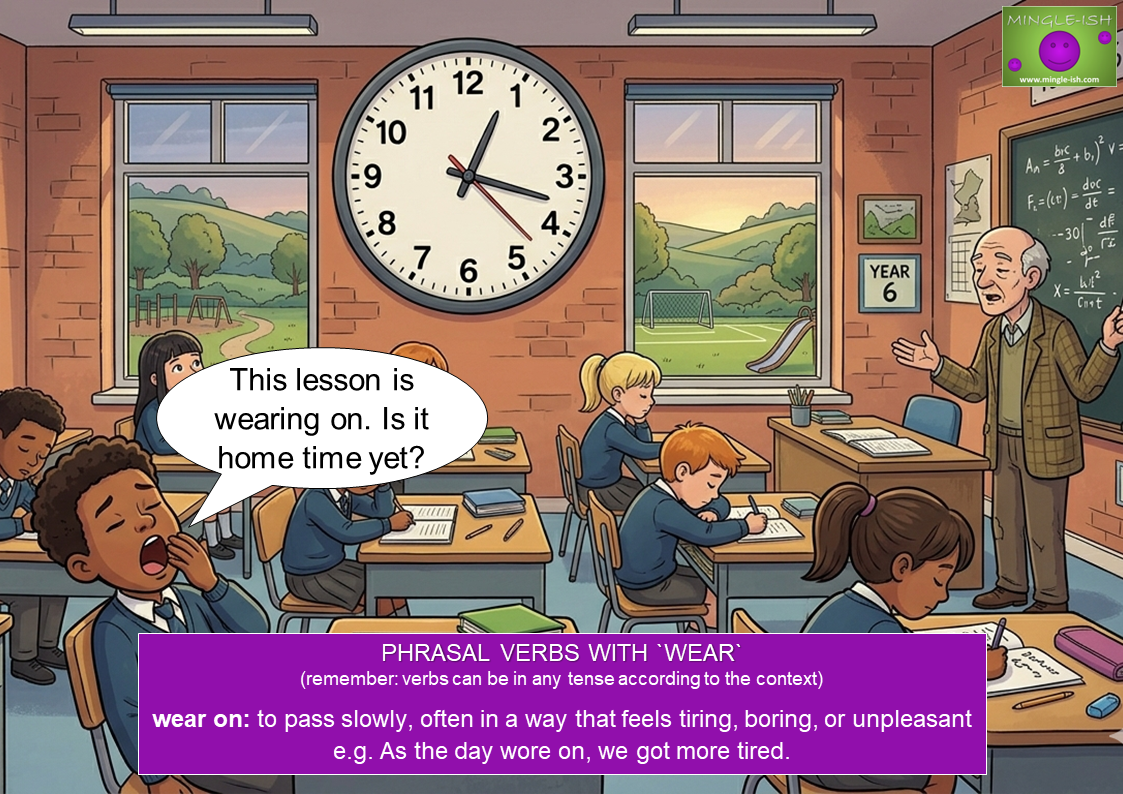
wear on
meaning: to pass slowly, often in a way that feels tiring, boring, or unpleasant
examples:
- As the day wore on, we got more tired.
- The meeting wears on, and everyone starts to lose focus.
- The afternoon is wearing on, and I am getting tired.
- The journey wore on, and we became really bored.
- The lecture was wearing on, and students were struggling to stay awake.
- The day has worn on, and I have lost all my energy.
- The evening will wear on if nothing interesting happens.
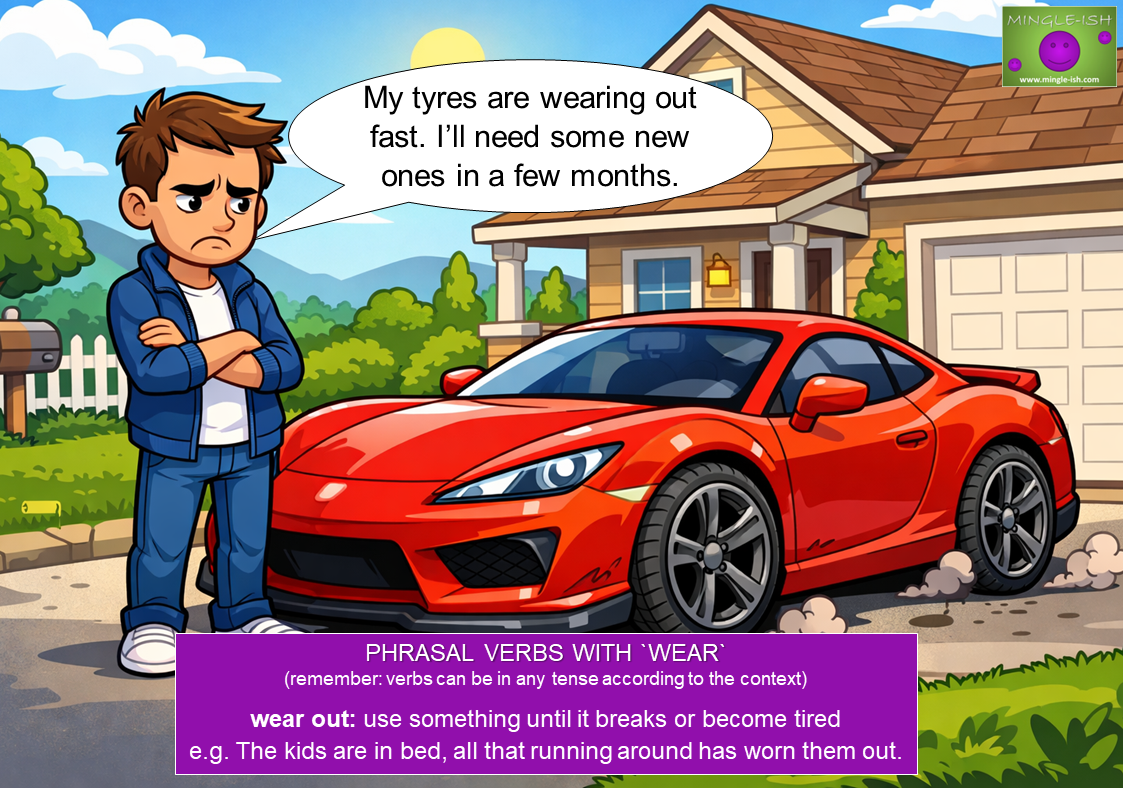
wear out
meaning: use something until it breaks or become tired
examples:
- The kids are in bed, all that running around has worn them out.
- My shoes wear out quickly because I walk a lot every day.
- The kids are wearing out their new trampoline already.
- I wore out my favourite jumper last winter.
- If you keep running on that track, you will wear out your sneakers.
- I have worn out three pairs of boots this year.
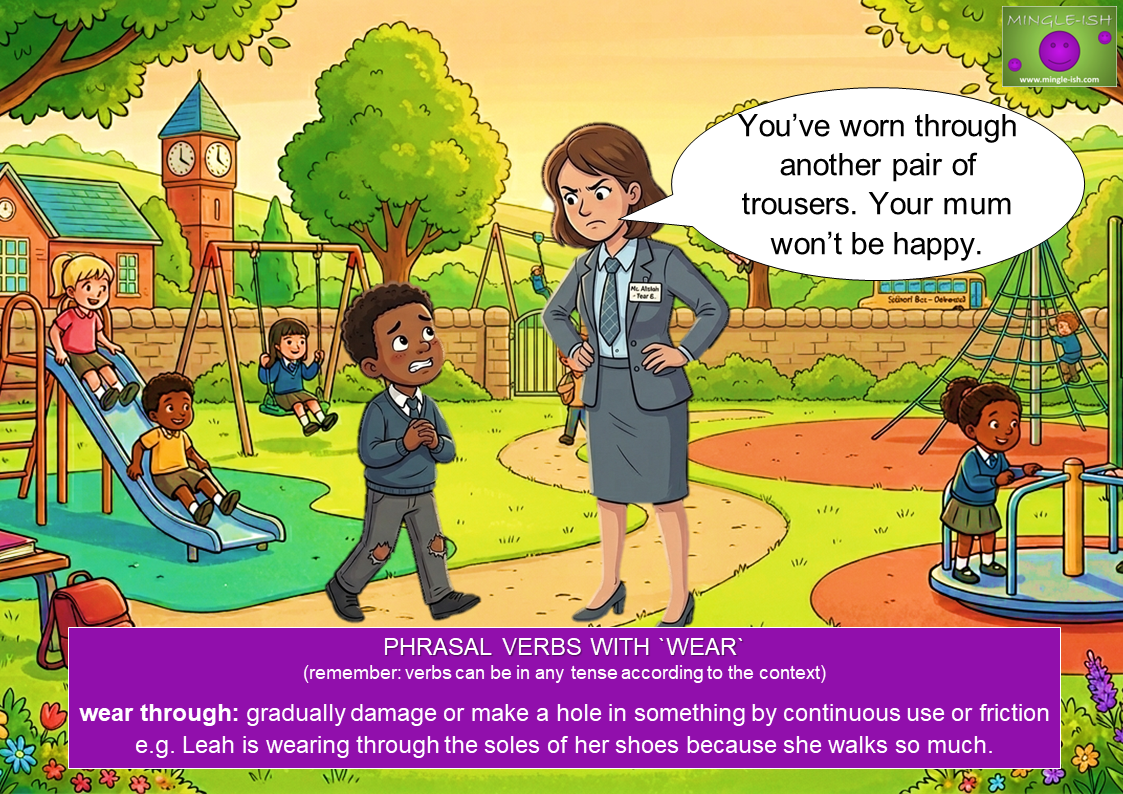
wear through
meaning: gradually damage or make a hole in something by continuous use or friction
examples:
- The carpet wears through quickly in high-traffic areas.
- She is wearing through the soles of her shoes because she walks so much.
- His jeans wore through at the knees after months of daily wear.
- I have worn through three pairs of gloves this winter.
- If you keep using that bag every day, it will wear through sooner than you expect.
- The children’s constant sliding on the floor was wearing through the rug.
Phrasal Verbs with “Wear” Quiz
Think you know phrasal verbs with “wear”? Time to prove it. This quick quiz will test what you really remember and show you where the gaps are. Jump in and see how much sticks.
Common Mistakes
These wear phrasal verbs can be sneaky, so watch out!
❌ Mixing up wear out and wear off – wear out is about being exhausted or something breaking, wear off is when stuff disappears slowly. “I’m worn out after work” isn’t the same as “The smell wore off after an hour.”
❌ Tense trouble – Don’t get lost in wore/worn. “I wore through my shoes” vs “I have worn through my shoes” – little changes, big difference.
❌ Forgetting the passive – Some forms love being passive: “The carpet is worn out,” “The paint has worn off.” Skipping this makes your sentence sound… off.
❌ Confusing wear through and wear out – wear through = hole alert, wear out = tired or broken. “Kids wore through the rug” ≠ “The marathon wore me out.”
❌ Literal brain trap – Don’t take them too literally! “The excitement wore out after a week?” Nah, it wore off.
Keep these in mind and you’ll be a wear pro in no time.
Final Thoughts
Wear phrasal verbs pop up everywhere – talking about being knackered, stuff disappearing, or things slowly falling apart. The trick? Keep using them in real sentences, mess around with different tenses, and you’ll start spotting them everywhere.
Hot Tip: Think of wear verbs like your clothes and energy: wear out = you after a long day, totally knackered, “I’m worn out,” wear off = perfume or magic fading, disappearing over time, “The smell wore off,” wear through = socks with holes at the toes, damaged until it’s gone, “I wore through my shoes.” Picture it, say it, use it – and these sneaky little verbs will stick better than gum under a school desk.
Further Study
If you’ve enjoyed getting your head around wear phrasal verbs, why stop there? Dive into more of my phrasal verbs pages and keep building your English superpowers – from tricky action verbs to those sneaky state verbs that love to confuse learners. You might also fancy checking out my idioms section for all those fun expressions that make your English sound way more natural.
Don’t forget to swing by my YouTube channel for loads of quizzes, lessons, and bite-sized challenges. Test your skills with irregular verbs, tackle compound verbs, or brush up on topics like adjectives, conditionals, and superlatives – perfect for ESL and EFL learners. Keep exploring, keep practising, and soon these tricky little verbs and expressions will be second nature.