
Phrasal verbs with walk
Learn the most common phrasal verbs with walk and discover how native English speakers use them in everyday conversations. Whether you’re an English learner, an ESL student, or simply want to build your English vocabulary, you’ll find clear meanings, real-life examples, and useful tips to help you sound more natural and confident. Don’t forget to put your knowledge to the test with the quiz at the end!
What does ‘walk’ mean?
The word ‘walk‘ can have several different meanings. As a verb, it can mean to move by lifting and placing one foot in front of the other at a regular pace or to escort someone on foot.
For example:
- We spent five hours walking along the beach. (moving by lifting and placing one foot in front of the other)
- The bouncers walked the intoxicated man to a waiting taxi. (escorted him on foot)
Walk is a regular verb, so its past tense and past participle are both walked.
Having trouble pronouncing regular verbs in the past tense? Check out my guide to pronouncing the -ed ending correctly. There are only three rules to remember – I promise!
List of phrasal verbs with walk
Below, you’ll find a list of the most common phrasal verbs with walk, along with their meanings, real-life example sentences, and picture examples to help you remember them. Let’s get walking!
walk around
meaning: to move from place to place without a specific destination
examples:
- I walked around the city centre yesterday and discovered some great little shops.
- She often walks around the park after work to relax.
- We were walking around the museum when we found an interesting old painting.
- He has walked around the neighbourhood many times, but he still gets lost sometimes.

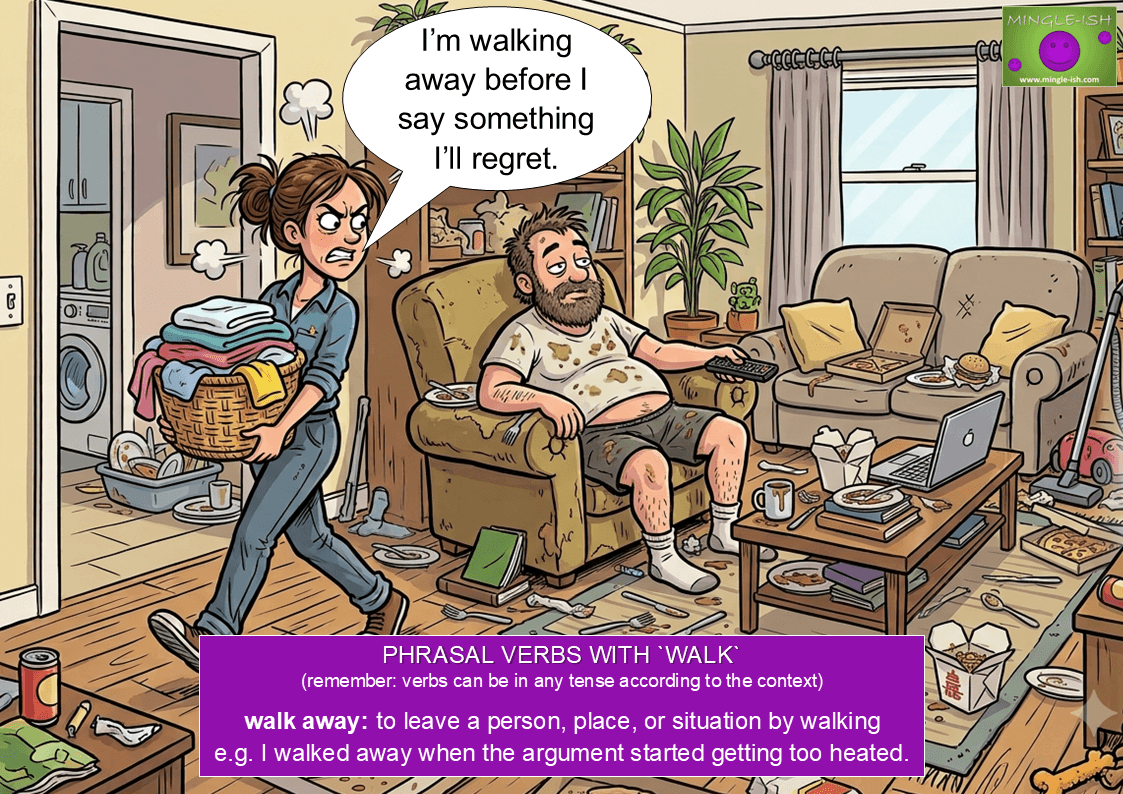
walk away
meaning: to leave a person, place, or situation by walking.
examples:
- I walked away when the argument started getting too heated.
- She always walks away when someone tries to upset her.
- If you feel uncomfortable, just walk away.
- He has walked away without saying goodbye several times.
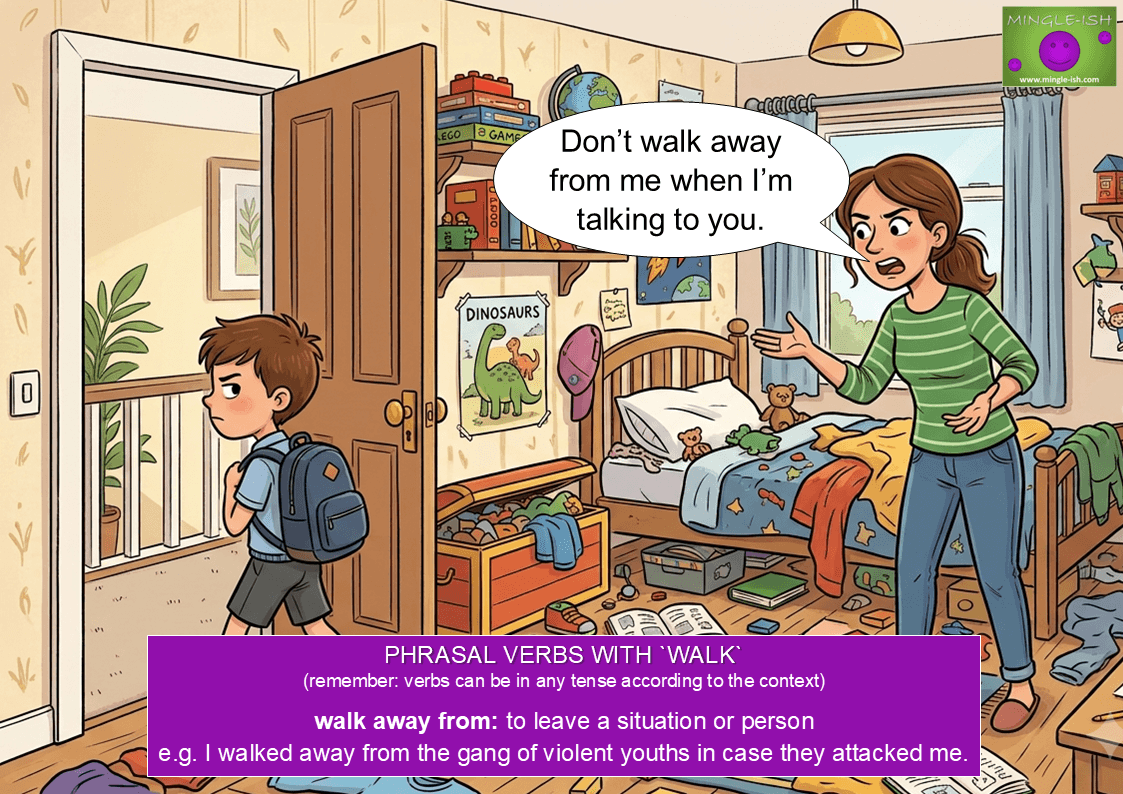
walk away from
meaning: to leave a person, relationship, job, opportunity, or situation behind, or to stop being involved in something
examples:
- I walked away from the gang of violent youths in case they attacked me.
- She walked away from a high-paying job to start her own business.
- If the deal isn’t fair, walk away from it.
- He has walked away from several arguments rather than making the situation worse.
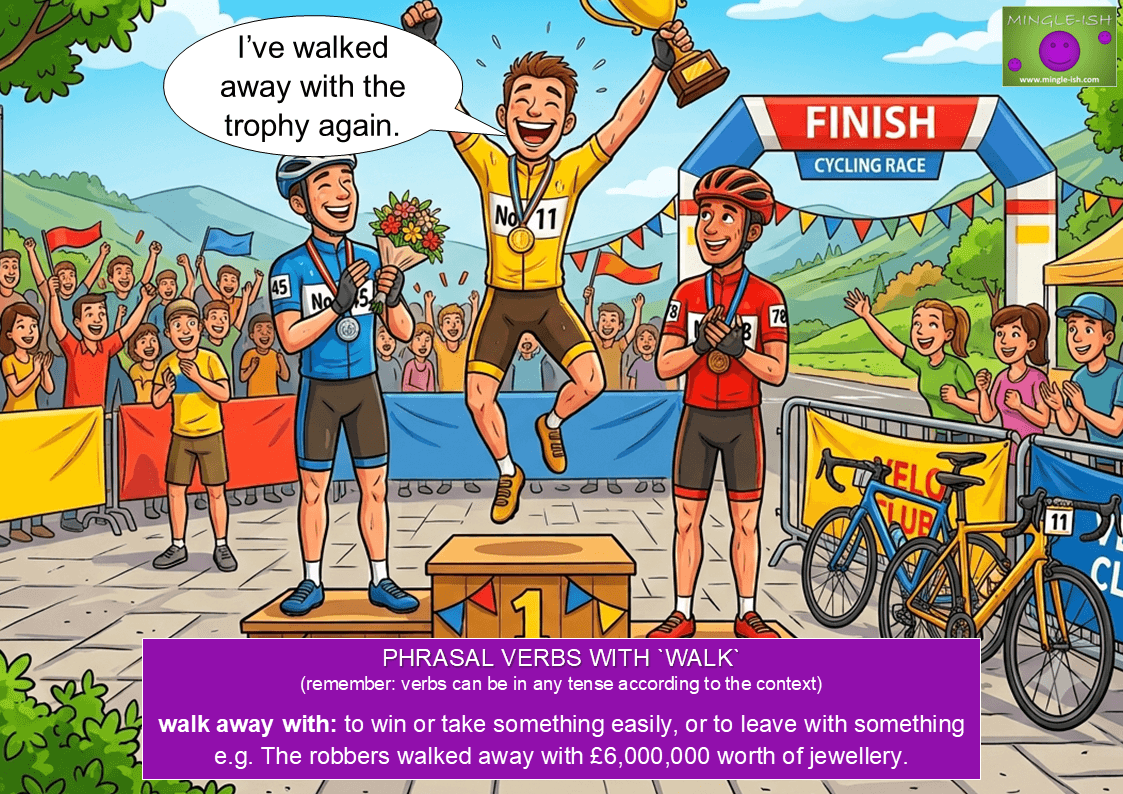
walk away with
meaning: to win or take something easily, or to leave with something
examples:
- She walked away with the first prize after an outstanding performance.
- He walks away with the award almost every year.
- If you answer all the questions correctly, you could walk away with a £500 voucher.
- They’ve walked away with three trophies this season.
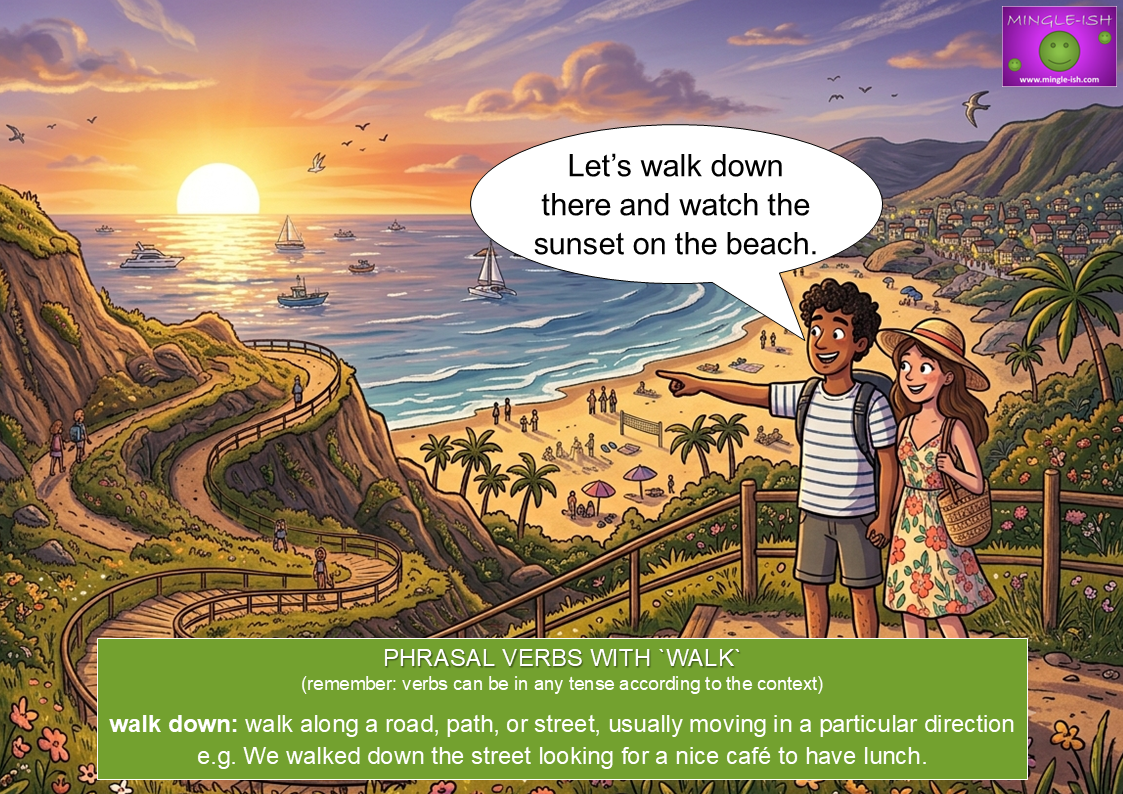
walk down
meaning: to walk along a road, path, or street, usually moving in a particular direction
examples:
- We walked down the street looking for a nice café to have lunch.
- She walks down the same path every morning on her way to work.
- I was walking down the beach when I saw a beautiful sunset.
- They have walked down this road many times, but they still enjoy the view.
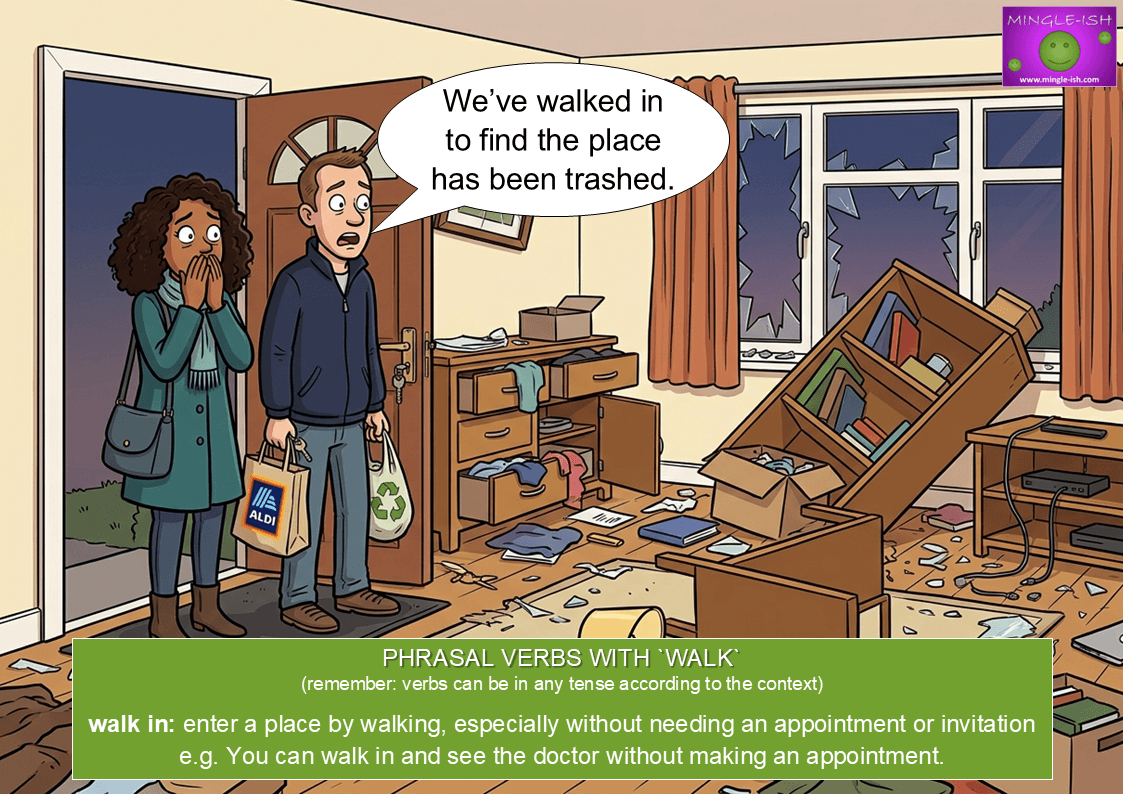
walk in
meaning: to enter a place by walking, especially without needing an appointment or invitation
examples:
- I walked in and saw everyone decorating the room for the party.
- She usually walks in just before the meeting starts.
- You can walk in and see the doctor without making an appointment.
- They have walked in on several surprises over the years.
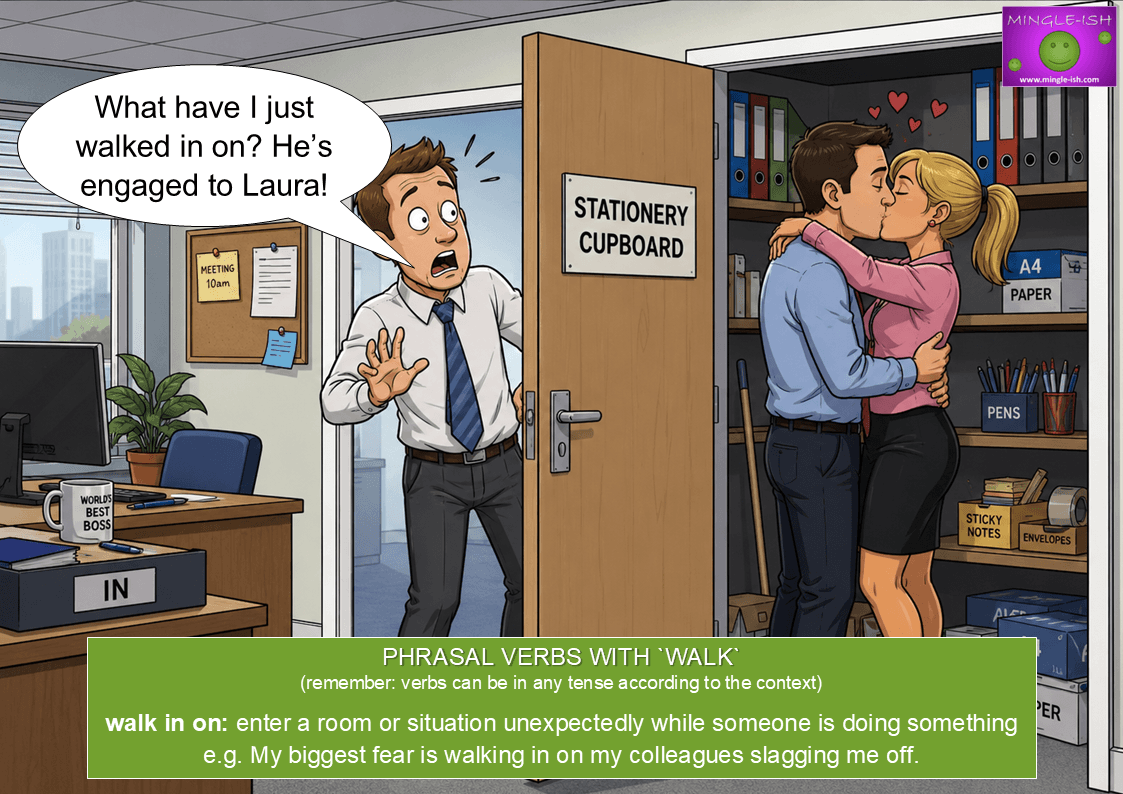
walk in on
meaning: to enter a room or situation unexpectedly while someone is doing something.
examples:
- I walked in on my brother while he was changing clothes.
- She always walks in on important conversations at the worst possible moment.
- Be careful not to walk in on someone when they are in a private meeting.
- They have walked in on their children having secret parties several times.
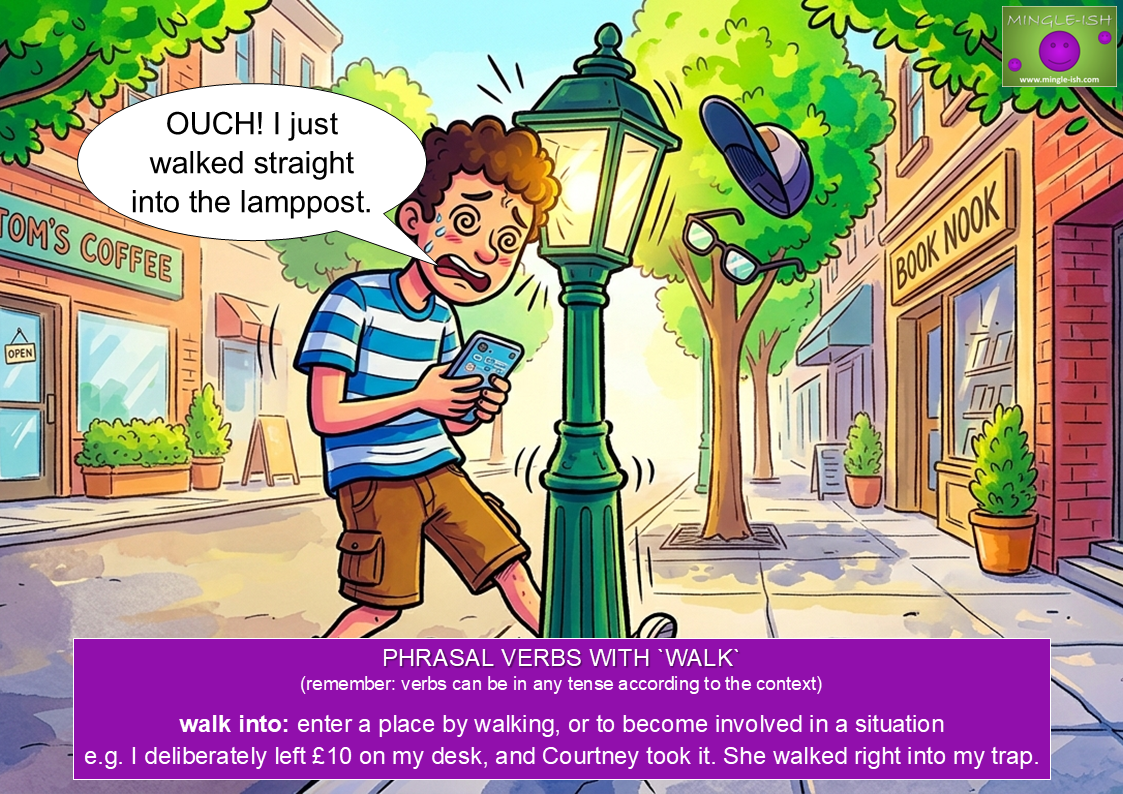
walk into
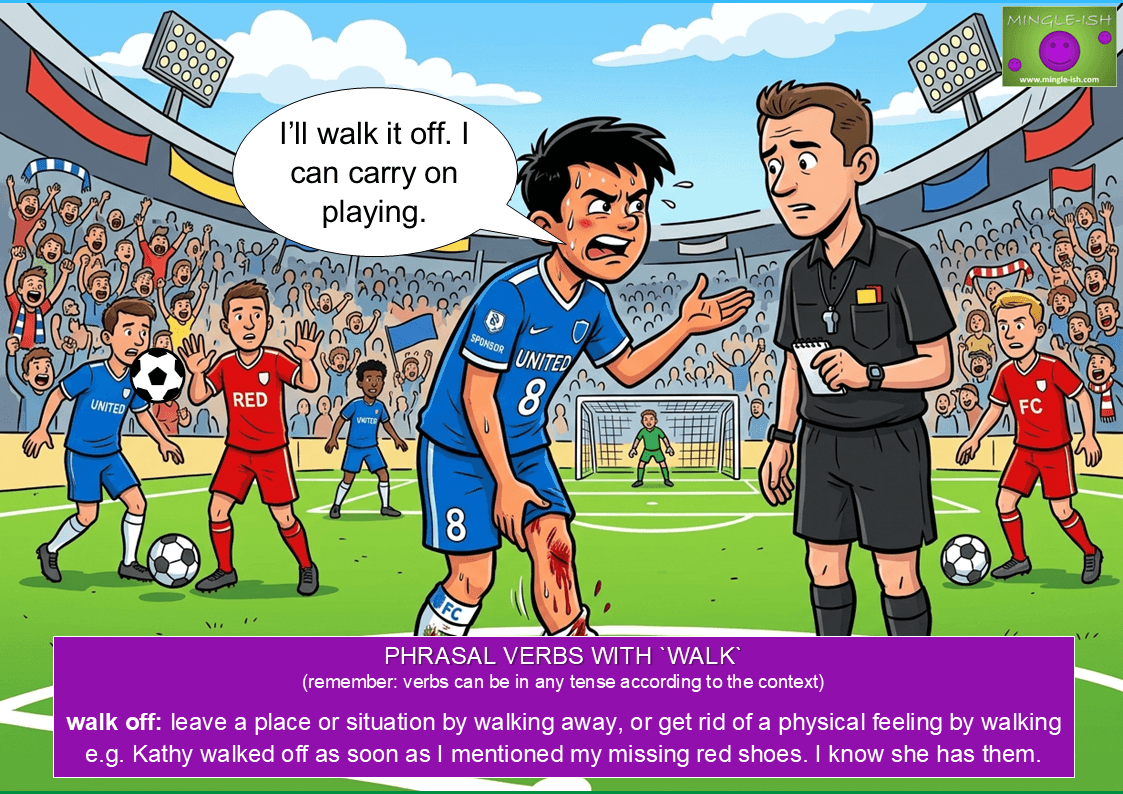
walk off
meaning: to leave a place or situation by walking away, often suddenly or because you are upset, angry, or disappointed, or get rid of a physical feeling by walking
examples:
- He walked off without saying goodbye after the argument.
- She walks off whenever she gets frustrated.
- If they refuse to listen, just walk off and don’t waste your time.
- They have walked off the pitch in protest after the referee’s decision.
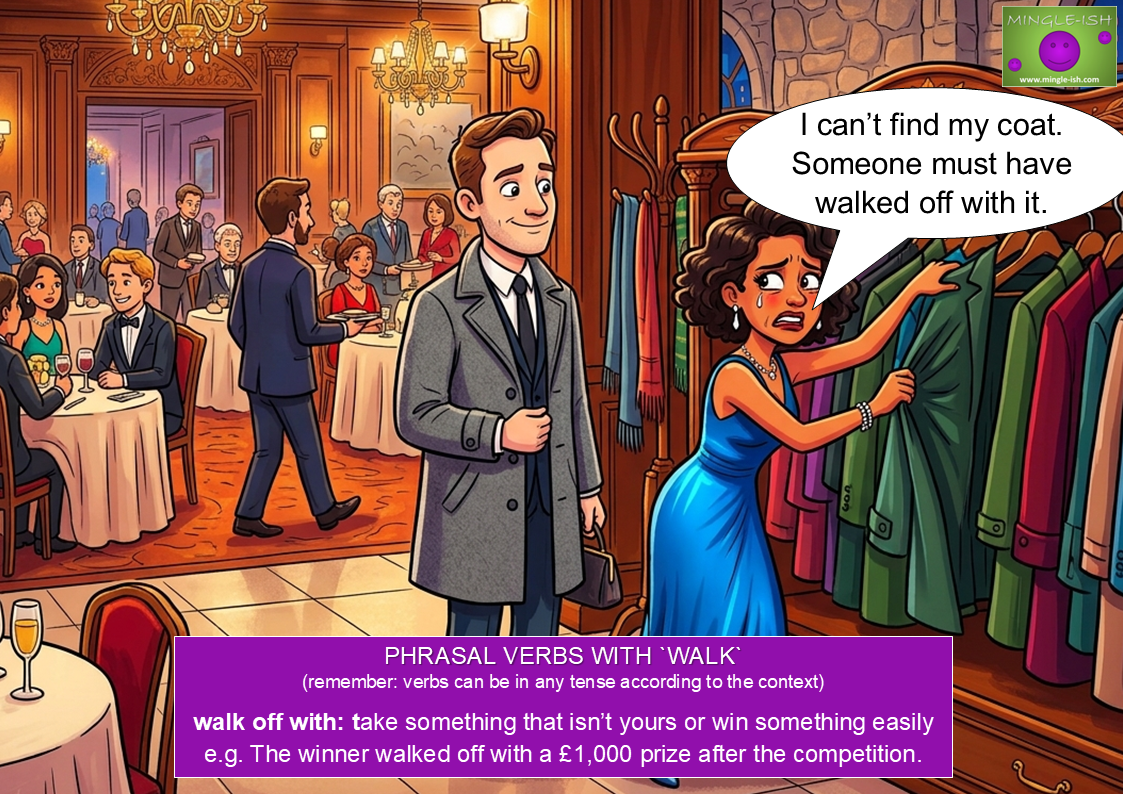
walk off with
meaning: to take something, especially something that does not belong to you, or to win something easily
examples:
- Someone walked off with my umbrella while I was shopping.
- He often walks off with other people’s ideas and claims they are his own.
- The winner walked off with a £1,000 prize after the competition.
- They have walked off with several awards this year.
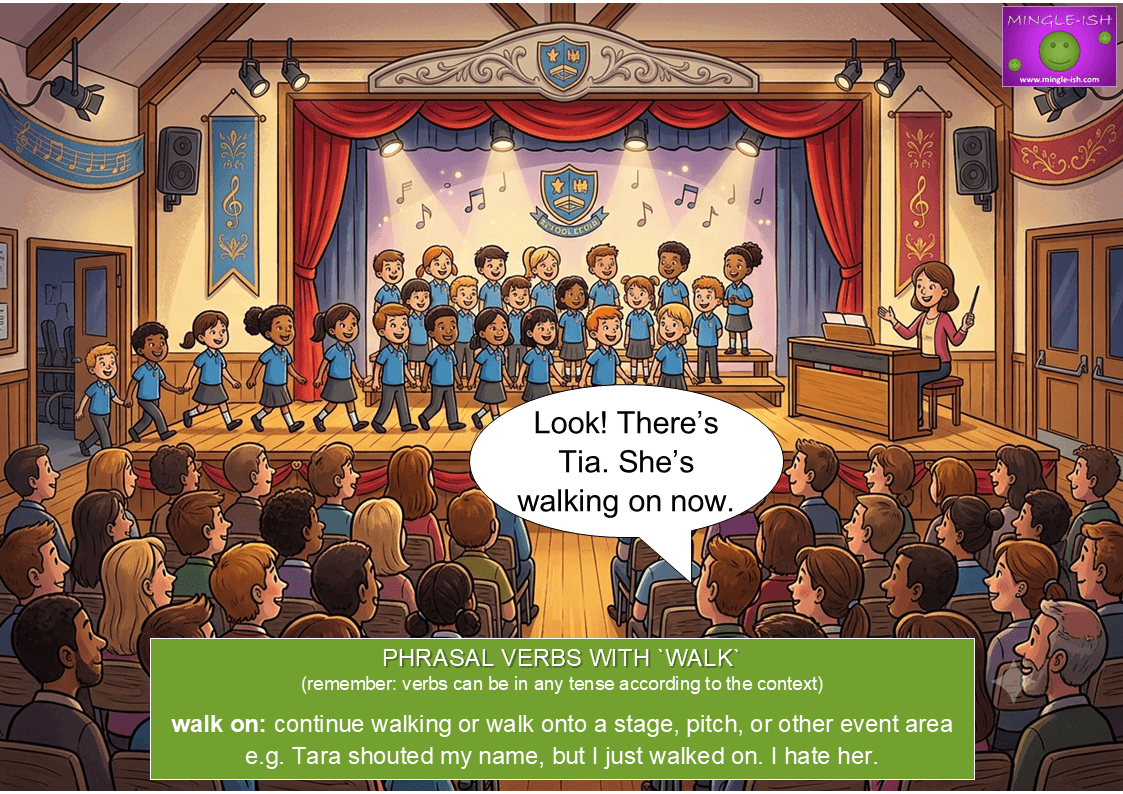
walk on
meaning: to continue walking, or to walk onto a stage, pitch, or other area where an event is taking place
examples:
- We walked on until we reached the top of the hill.
- She walks on stage with confidence before every performance.
- After your break, just walk on and follow the signs.
- The players have walked on to the pitch for the second half.
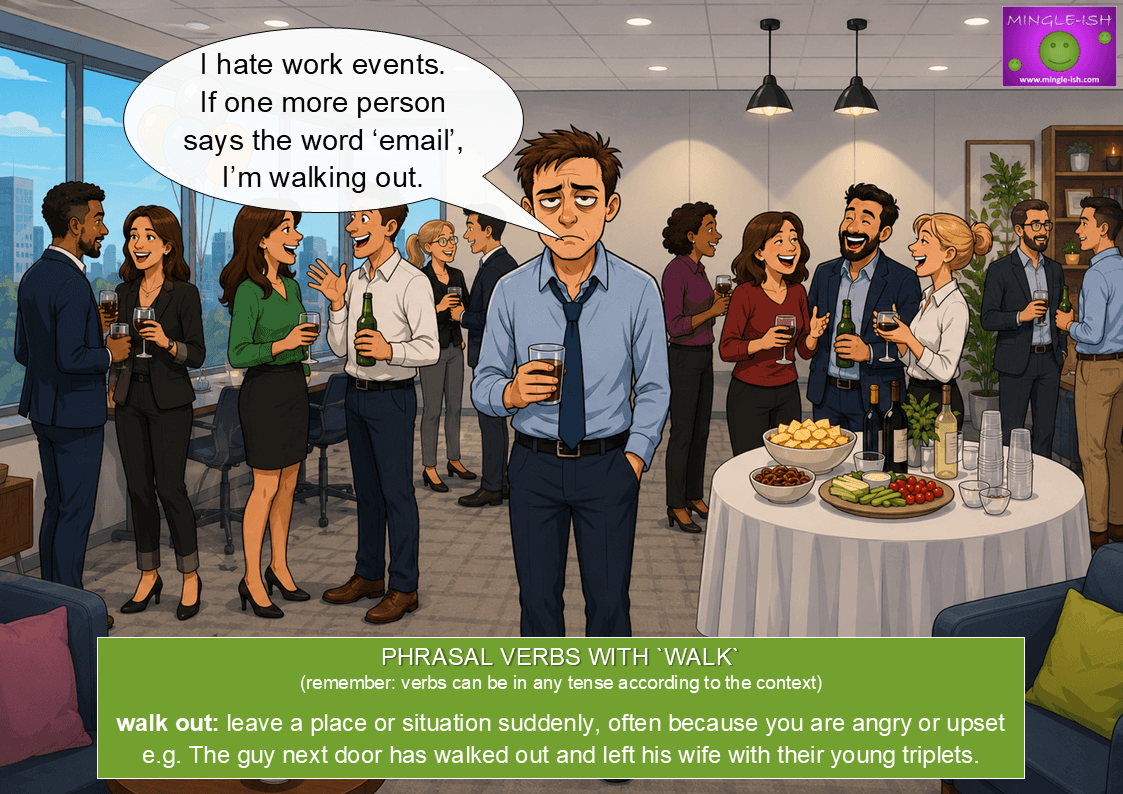
walk out
meaning: to leave a place, meeting, or situation suddenly, often because you are angry, upset, or unwilling to stay
examples:
- She walked out of the meeting after the argument became heated.
- He walks out whenever someone criticises him.
- If they won’t listen to your concerns, walk out and don’t look back.
- Several employees have walked out in protest over the new working conditions.
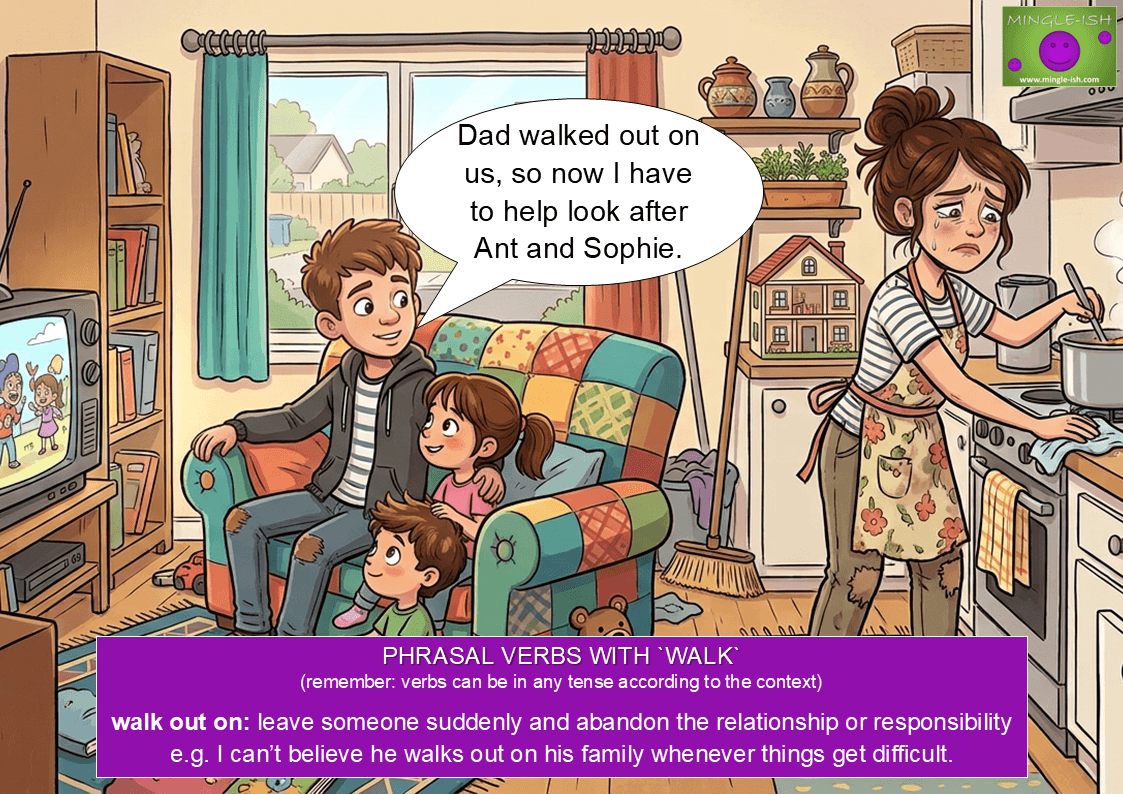
walk out on
meaning: to leave a person, especially a partner or family, suddenly and permanently, often abandoning your responsibilities or ending the relationship
examples:
- Her husband walked out on her after ten years of marriage and left her to raise their two children alone.
- I can’t believe he walks out on his family whenever things get difficult.
- If he walks out on you again, you need to decide whether you can trust him anymore.
- They had been struggling for months, and he has finally walked out on his partner.
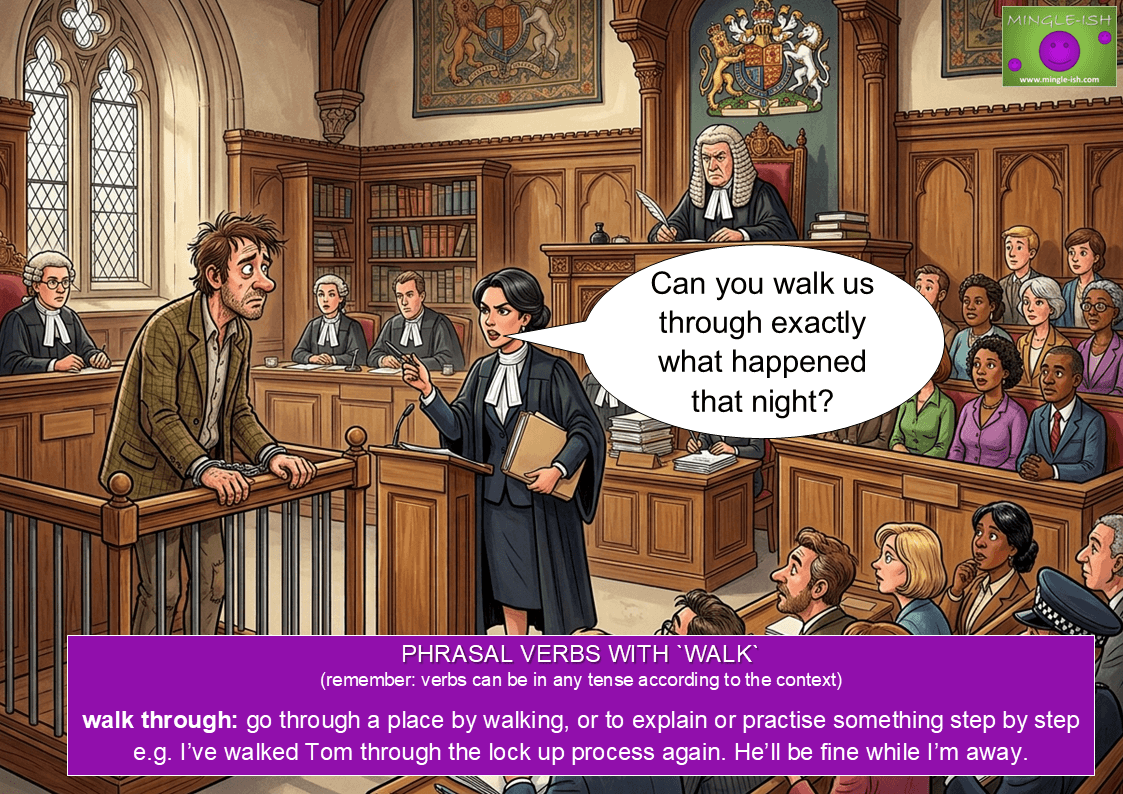
walk through
meaning: to go through a place by walking, or to explain or practise something step by step
examples:
- We walked through the park on our way to the station.
- She walks through the safety procedures with every new employee.
- I’ll walk you through the instructions if you get stuck.
- The teacher has walked the class through the experiment several times.
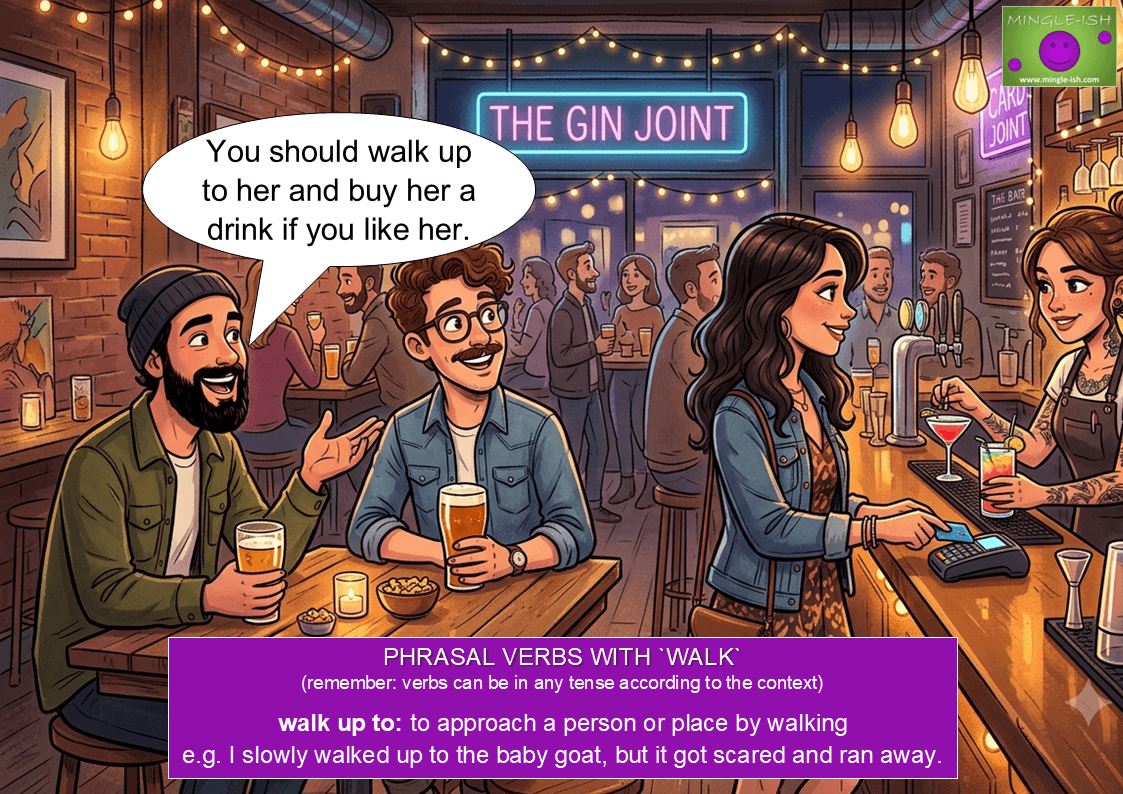
walk up to
meaning: to approach a person or place by walking
examples:
- I walked up to the receptionist and asked for directions.
- She walks up to strangers with confidence and starts conversations.
- Just walk up to the ticket desk if you need any help.
- They have walked up to the front door several times but never knocked.
Commonly Confused Walk Phrasal Verbs
Some phrasal verbs with walk can be a little tricky because they look and sound very similar. But don’t worry, you’re not alone! Below, we’ll compare some commonly confused walk phrasal verbs to help you understand the small differences and use them correctly.
Walk By vs Walk Past
These are extremely similar and are often used interchangeably.
Walk by
Pass someone or something while walking without stopping.
Walk past
Pass someone or something while walking without stopping.
The main difference is that walk by is more common in American English, while walk past is more common in British English. In many situations, either one can be used.
Walk In vs Walk Into
Walk in = enter.
- She walked in.
Walk into = enter something specific or become involved in a situation.
- She walked into the room.
- He walked into trouble.
Walk Away vs Walk Out
People often confuse these.
Walk away
Leave a person or situation.
Often means choosing not to continue.
- She walked away from the argument.
Walk out
Leave suddenly, often because you’re angry or protesting.
- He walked out of the meeting.
Walk Away With vs Walk Off With
These overlap.
Walk away with
Usually win a prize or award.
- She walked away with first prize.
Walk off with
Take something away (often without permission), or win a prize.
- Someone walked off with my wallet.
They walked off with the trophy.
Walk In vs Walk In On
Easy to confuse.
Walk in
Enter.
Walk in on
Enter unexpectedly while someone is doing something.
Walk On vs Walk Through
Walk on
Continue walking or step onto a stage.
Walk through
Go through somewhere or explain something step by step.
Walk Up To vs Walk Over To
These are extremely similar.
Walk up to
Approach someone or something.
Walk over to
Walk to someone or something, usually over a short distance.
Many native speakers use them interchangeably.
Walk Around vs Walk Round
Excellent if you’re using British English.
Walk around is more common worldwide and in American English.
Walk round is common in British English.
Common Mistakes with Phrasal Verbs with Walk
Even advanced English learners can trip over phrasal verbs with walk. They might look simple, but those tiny words after walk can completely change the meaning. Let’s look at some common mistakes and how to fix them.
❌ Using walk instead of walk away
Incorrect: I walked from the argument because I was angry.
Correct: I walked away from the argument because I was angry.
Walk away means to leave a situation, especially when you choose not to continue.
❌ Confusing walk out and walk away
Incorrect: She walked out from the relationship because it was unhealthy.
Correct: She walked away from the relationship because it was unhealthy.
Walk away from is often used when leaving a relationship, opportunity, or situation behind. Walk out usually suggests leaving suddenly, often because someone is angry, upset, or protesting.
❌ Forgetting the preposition after walk into
Incorrect: He walked trouble without realising.
Correct: He walked into trouble without realising.
Remember, walk into needs into when you mean becoming involved in a situation or problem.
❌ Mixing up walk in and walk in on
Incorrect: I walked in my parents while they were talking.
Correct: I walked in on my parents while they were talking.
Walk in on means to enter unexpectedly while something is happening.
❌ Mixing up walk off with and walk away with
Incorrect: She walked off with the first prize.
Correct: She walked away with the first prize.
Use walk away with when someone wins something, such as a prize, award, or competition. Walk off with usually means taking something away, often without permission, although it can sometimes also mean winning something.
❌ Forgetting that walk through needs an object
Incorrect: Can you walk through the instructions?
Correct: Can you walk me through the instructions?
Walk through means to explain or guide someone through something step by step.
Frequently Asked Questions About Phrasal Verbs with Walk
Got questions about phrasal verbs with walk? You’re not alone! These little word combinations can be surprisingly tricky. Here are some of the most common questions English learners ask.
What are the most common phrasal verbs with walk?
Some of the most common walk phrasal verbs include walk away, walk out, walk into, walk in, walk through, walk up to, walk off, walk past, and walk around. Each one has its own meaning, so the little word after walk is very important!
How many phrasal verbs with walk are there?
There are many phrasal verbs and expressions using walk, but the number you’ll need in everyday English is much smaller. Learning the most common ones will help you understand native speakers and sound more natural.
What is the difference between walk away and walk out?
Both can mean leaving a situation, but there is a small difference. Walk away usually means choosing to leave a person, problem, or situation behind. Walk out often suggests leaving suddenly, especially because someone is angry, upset, or protesting.
What is the difference between walk in and walk into?
Walk in usually means entering a place, often without an appointment or invitation. Walk into can mean entering a specific place, but it can also mean becoming involved in a situation, often unexpectedly.
Is walk past the same as walk by?
Almost! Both mean passing someone or something while walking without stopping. Walk past is more common in British English, while walk by is more common in American English. In many situations, you can use either one.
What is the difference between walk away with and walk off with?
These two can be confusing! Walk away with usually means to win or receive something, such as a prize or award. Walk off with can mean taking something away, often without permission, but it can also sometimes mean winning something.
How can I remember phrasal verbs with walk?
Don’t focus only on the word walk. The small word that comes after it is the magic ingredient! Words like away, out, into, and through completely change the meaning. Learn them in real-life sentences, and they’ll stick much more easily.
Are phrasal verbs with walk used in everyday English?
Yes! Native speakers use walk phrasal verbs all the time in conversations, stories, workplaces, and everyday situations. Learning these expressions will help you understand natural English and communicate more confidently.
Keep Learning: Explore More English Lessons
Enjoyed learning phrasal verbs with walk? Don’t stop here! English is full of interesting expressions, and there are plenty more lessons waiting for you.
Why not explore more phrasal verbs, discover the meanings behind common English idioms, or test your knowledge with fun quizzes and vocabulary challenges? The more expressions you learn, the easier it becomes to understand native speakers and sound more natural in everyday conversations.
🎥 Prefer learning with videos? Head over to our YouTube channel for more bite-sized English lessons, grammar explanations, idiom quizzes, and vocabulary videos.
Keep exploring, keep learning, and remember… every new word is another step towards confident English!