
Green is everywhere in English, and it doesn’t always have much to do with grass, trees or vegetables. We use green in all sorts of idioms and expressions to talk about jealousy, money, inexperience, nature and even feeling unwell.
From being green with envy when someone has something you want to being green around the gills when you’re feeling sick, these expressions can be rather confusing if you take them literally.
Here are some common green idioms, with simple meanings and examples to help you understand how they’re used.
What are green idioms?
Green idioms are English expressions that contain the word green but have a meaning that isn’t necessarily connected to the colour.
For example, if someone is green with envy, they haven’t suddenly turned green. They’re extremely jealous of someone or something.
Learning these expressions can help you understand everyday English and make your own English sound more natural.
Common green idioms
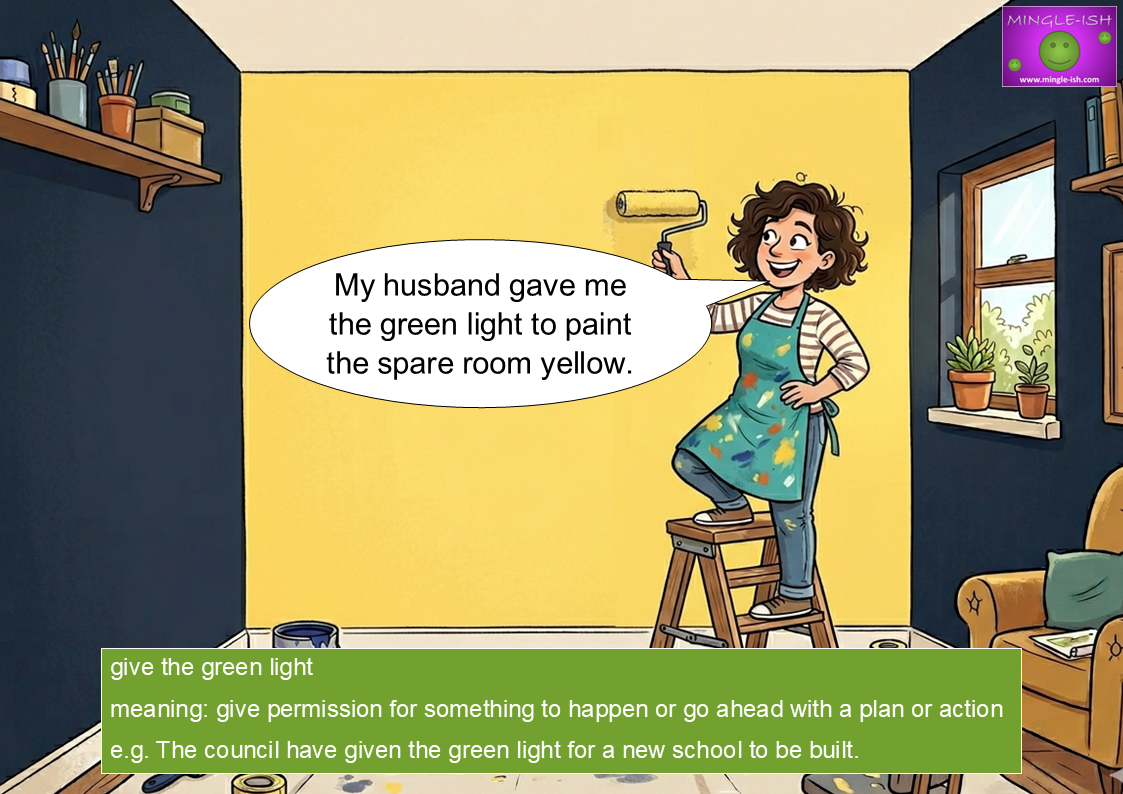
give the green light
meaning – give permission for something to happen or go ahead with a plan or action
example – The council have given the green light for a new school to be built.
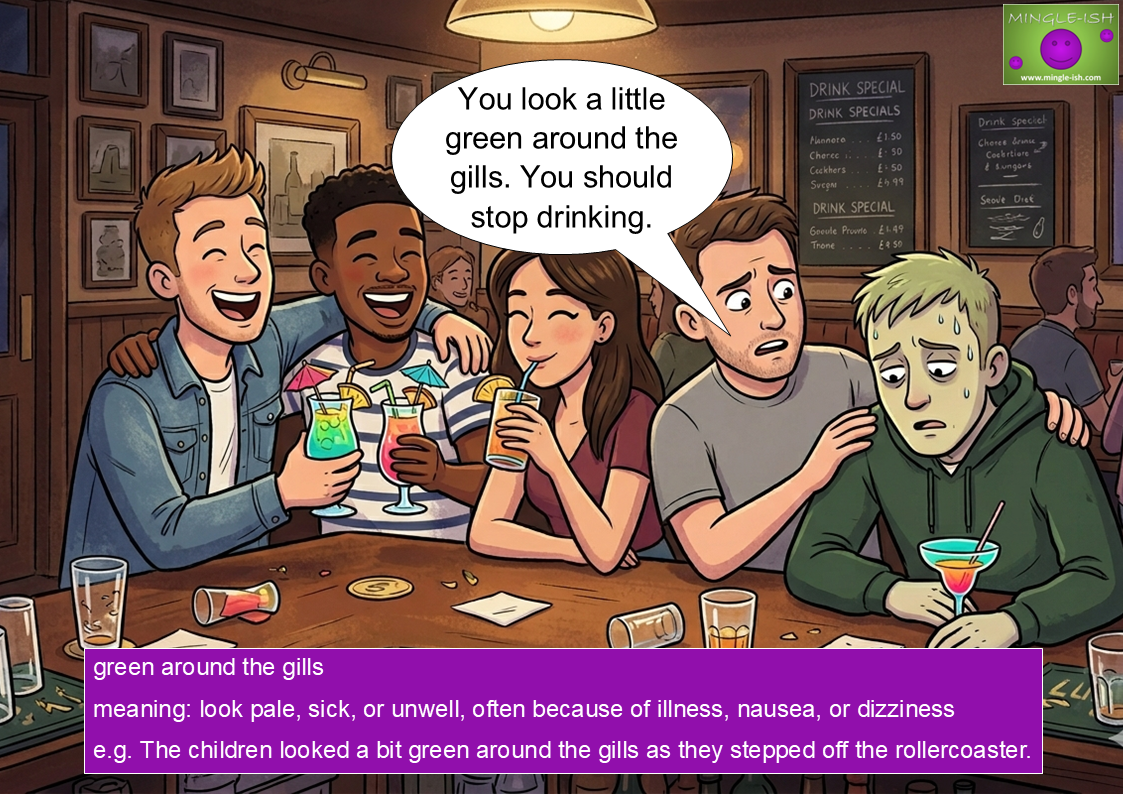
green around the gills
meaning – look pale, sick, or unwell, often because of illness, nausea, or dizziness
example – The children looked a bit green around the gills as they stepped off the rollercoaster.
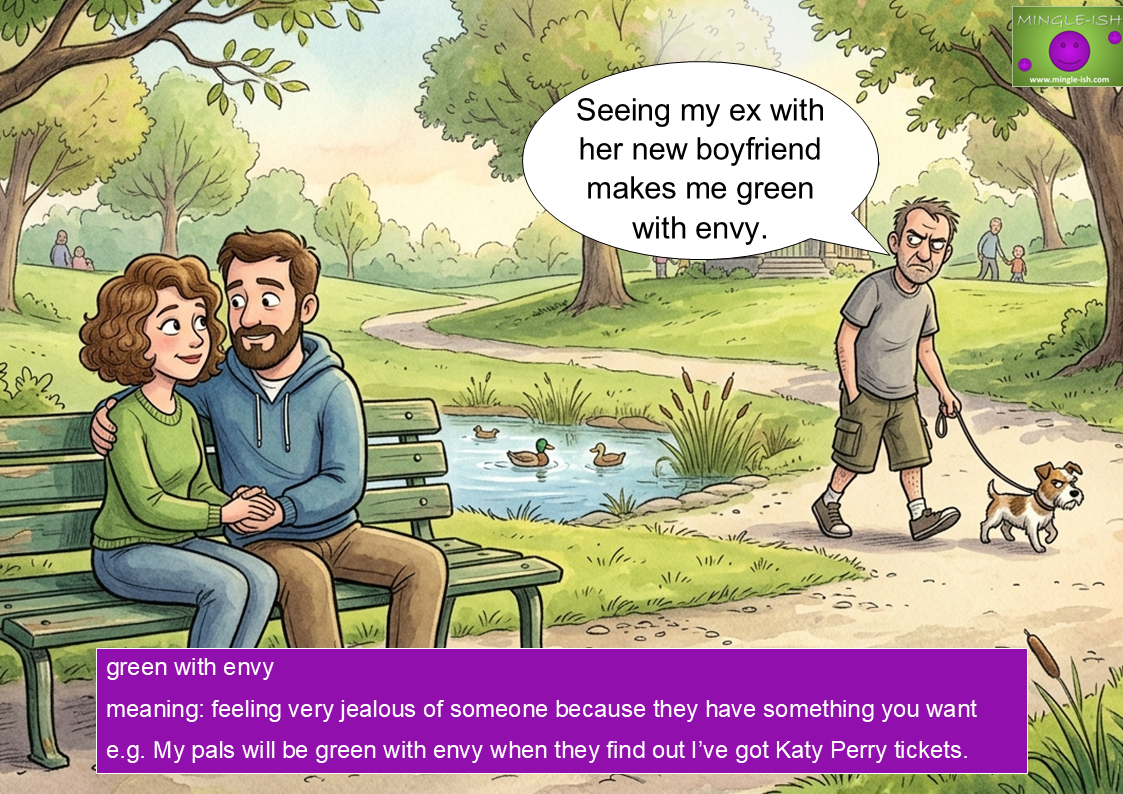
green with envy
meaning – feeling very jealous of someone because they have something you want
example – My pals will be green with envy when they find out I have Katy Perry tickets.
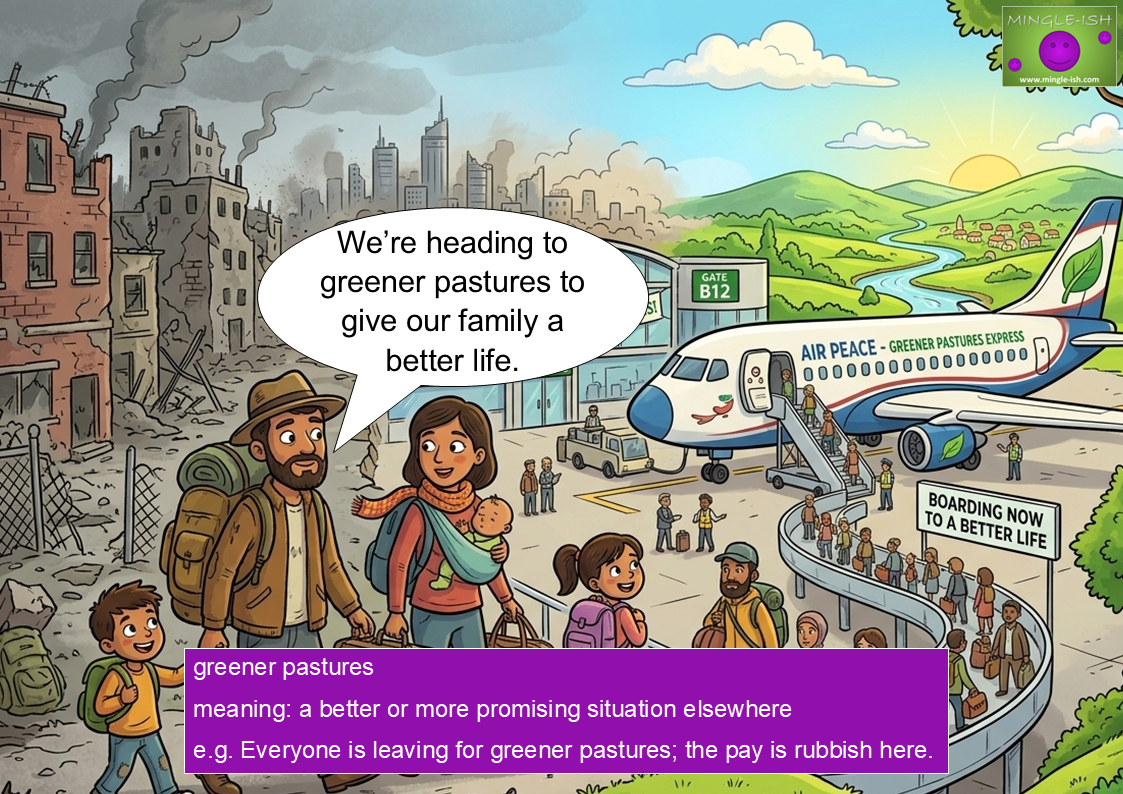
greener pastures
meaning – a better or more promising situation elsewhere
example – Everyone is leaving for greener pastures; the pay is rubbish here.
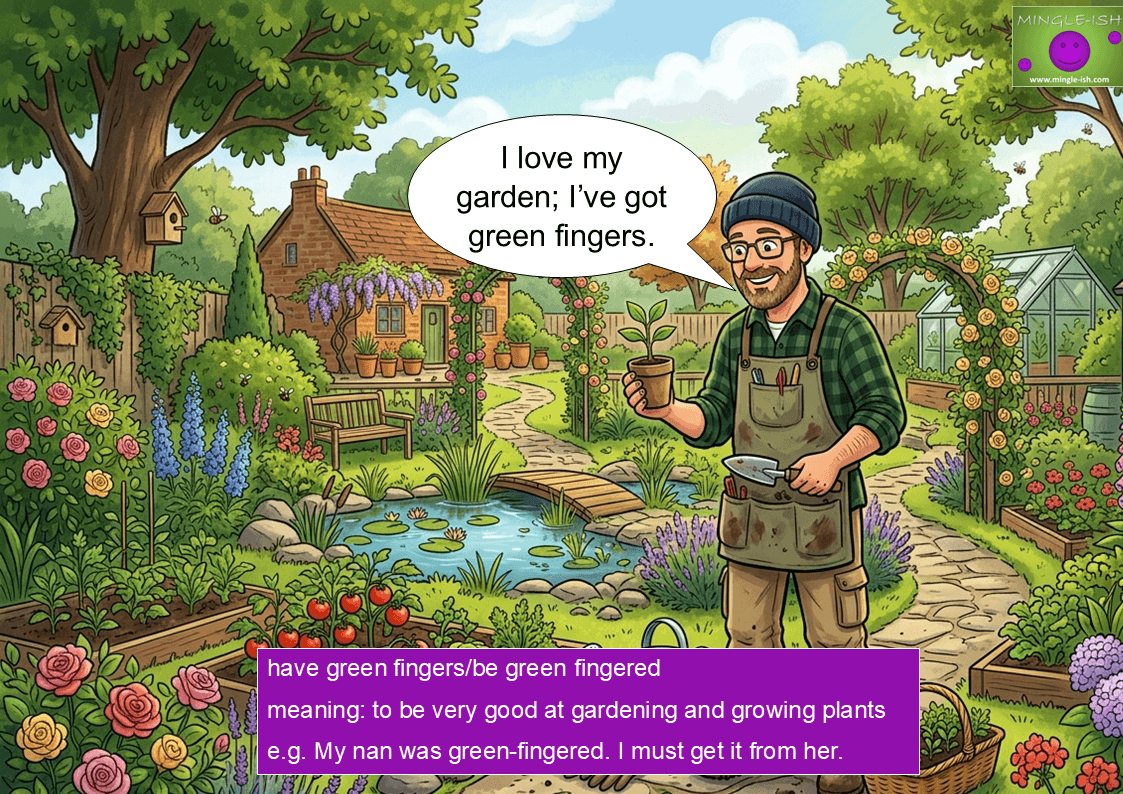
have green fingers/green fingered
meaning – good at gardening
example – My nan was green fingered. I must get it from her.
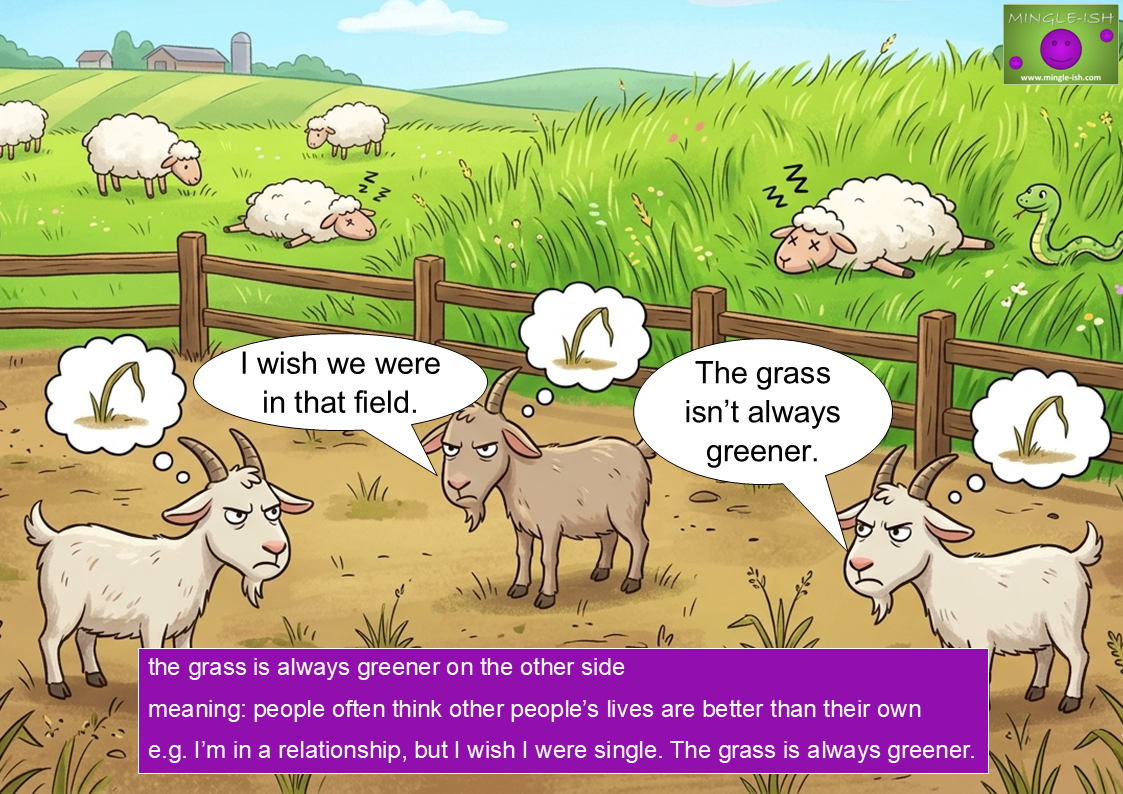
the grass is always greener on the other side
meaning – people often think other people’s lives are better than their own
example – I’m in a relationship, but I wish I were single. The grass is always greener.
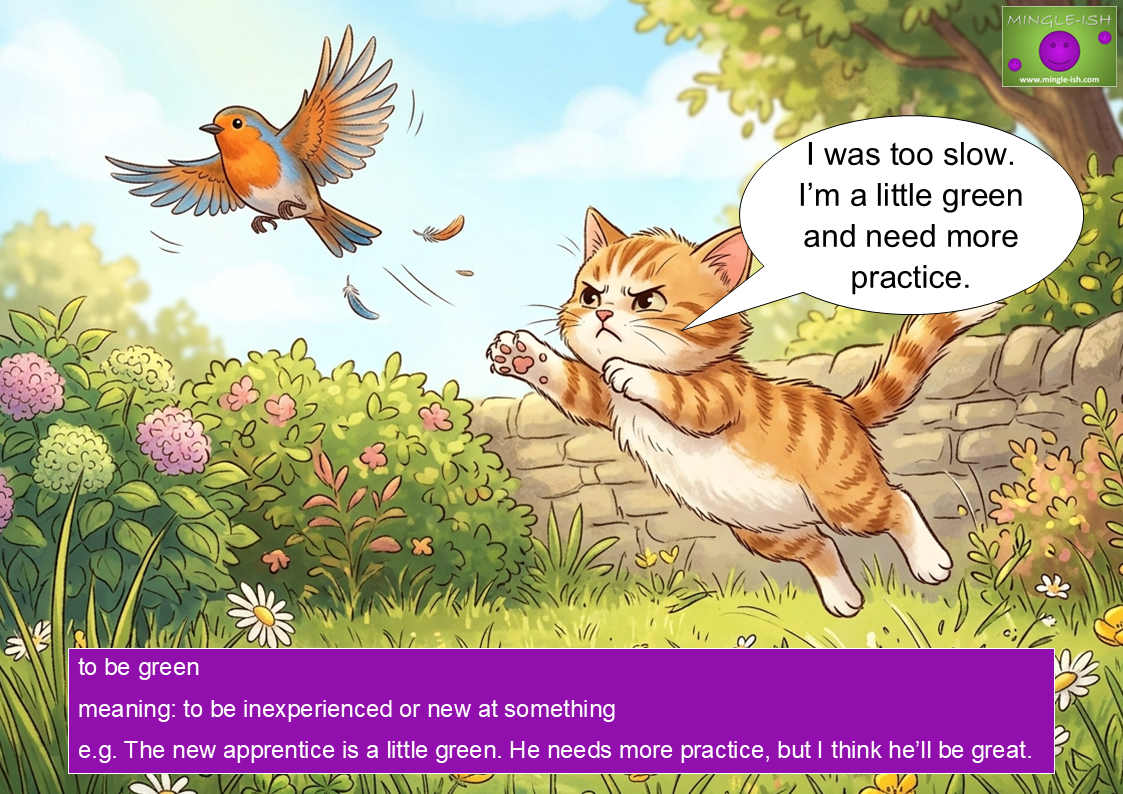
to be green
meaning – to be inexperienced or new at something
example – The new apprentice is a little green. He needs more practice, but I think he’ll be great.
Why do we use green in English idioms?
The colour green has developed lots of different associations in English. It can represent jealousy, as in green with envy, while green fingers are associated with gardening and greenhorn describes someone who is inexperienced.
Green is also strongly connected with nature and the environment, which is why we use expressions such as go green when talking about becoming more environmentally friendly.
As with other colour idioms, the same colour can have several completely different meanings depending on the expression. That’s what makes them interesting – and occasionally rather confusing!
Green Idioms Quiz
Think you’ve got your green idioms all figured out? Put your knowledge to the test with this quick quiz on green idioms. Can you match each colourful expression to its correct meaning?
And if you enjoy this one, head over to the Mingle-ish YouTube channel for plenty more English quizzes to test your skills.
Further learning
Enjoyed getting to grips with these blue idioms? Don’t stop here – English has plenty more strange, wonderful and slightly confusing expressions waiting for you.
If you like idioms, why not explore our Phrasal Verbs and discover why look up, look after and look out can mean completely different things?
Or, if you enjoy the more peculiar side of English, take a look at our Eggcorns and Mondegreens pages. They’re full of phrases that people have heard slightly differently – sometimes for years – without realising they’ve got them wrong.
There’s plenty more linguistic weirdness where that came from!