
The word “combine” is one of those English words that looks simple, but can trip learners up if you don’t know the context. It’s a homograph, which basically means it has more than one meaning depending on how it’s used. In this guide, we’ll break it down in a really simple way, with clear examples so you can actually use it without second-guessing yourself.
What Does “Combine” Mean?
In simple terms, “combine” can mean to bring things together so they become one thing, or it can be a big farming machine used during harvest time. Same spelling, totally different vibes depending on the sentence.
Examples:
- We can combine the flour and sugar to make the cake.
- The farmer drove the combine across the field.
Combine as a noun (the big farming machine)
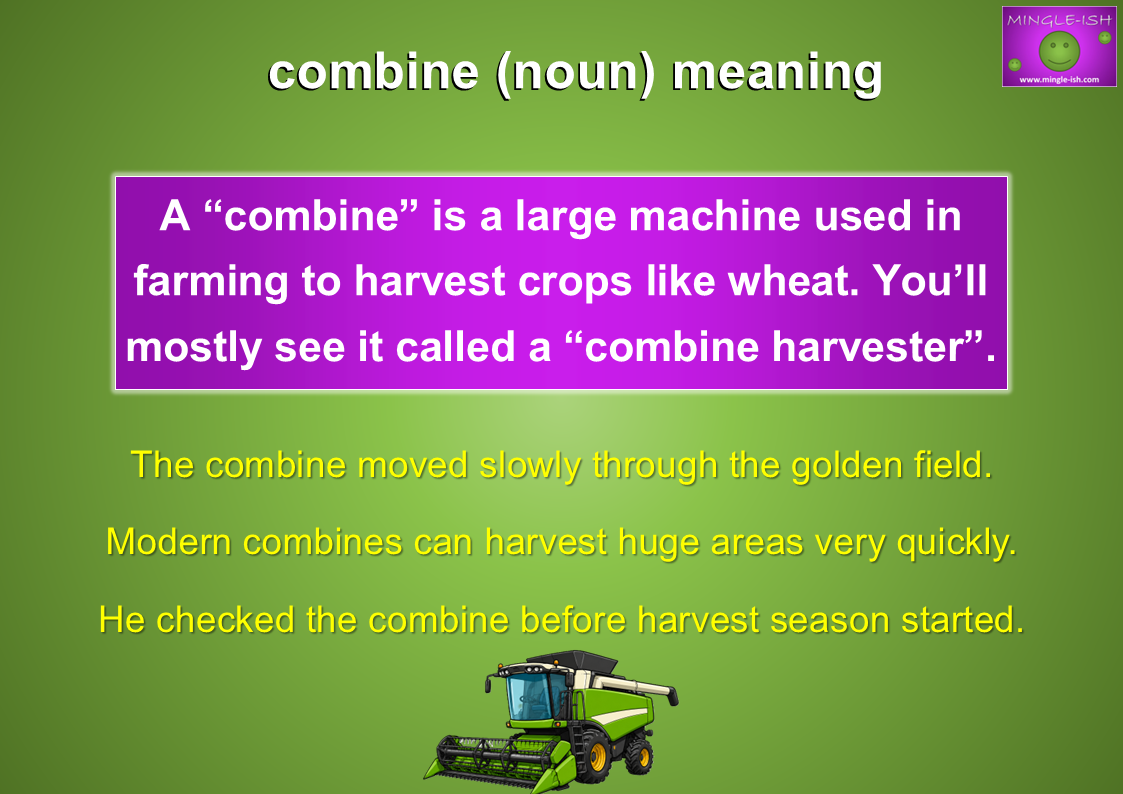
This one throws people a bit, because it’s very specific. A “combine” is a large machine used in farming to harvest crops like wheat. You’ll mostly see it called a “combine harvester”.
Examples:
- The combine moved slowly through the golden field.
- Modern combines can harvest huge areas very quickly.
- He checked the combine before harvest season started.
Combine as a verb (joining things together)
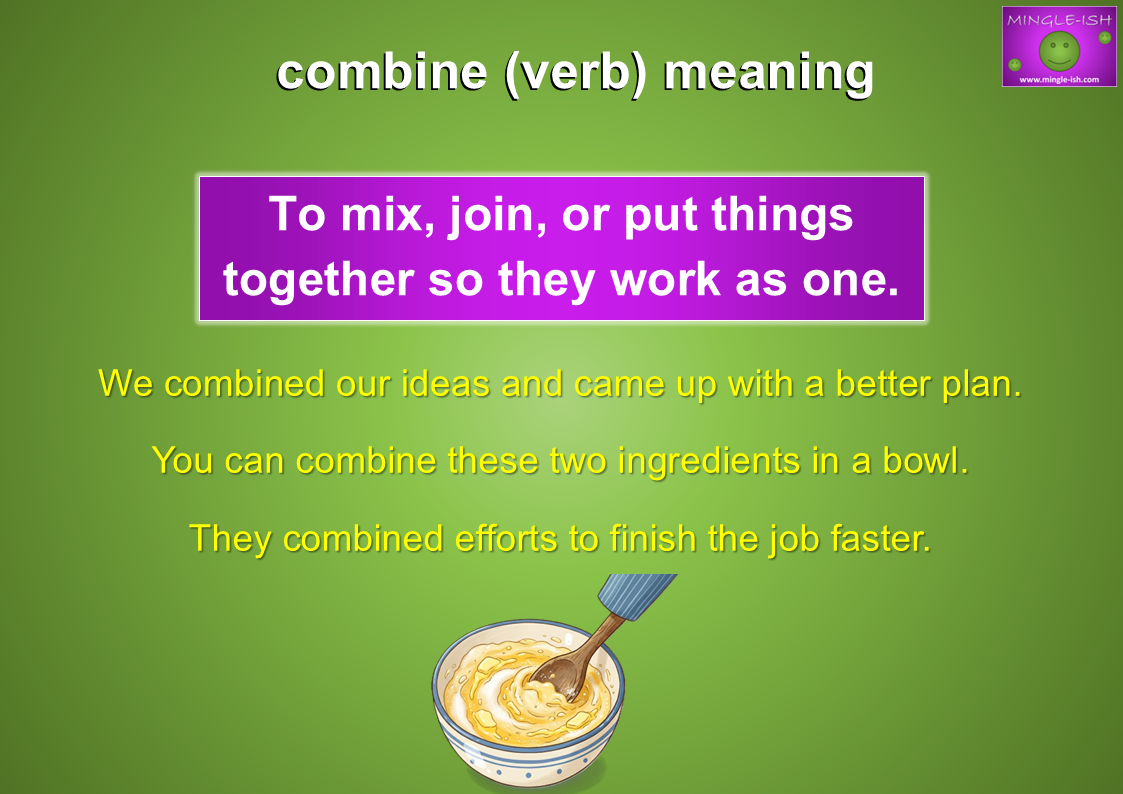
This is the one you’ll see most often in everyday English. It just means to mix, join, or put things together so they work as one.
Examples:
- We combined our ideas and came up with a better plan.
- You can combine these two ingredients in a bowl.
- They combined efforts to finish the job faster.
How to pronounce “combine” (stress changes everything)
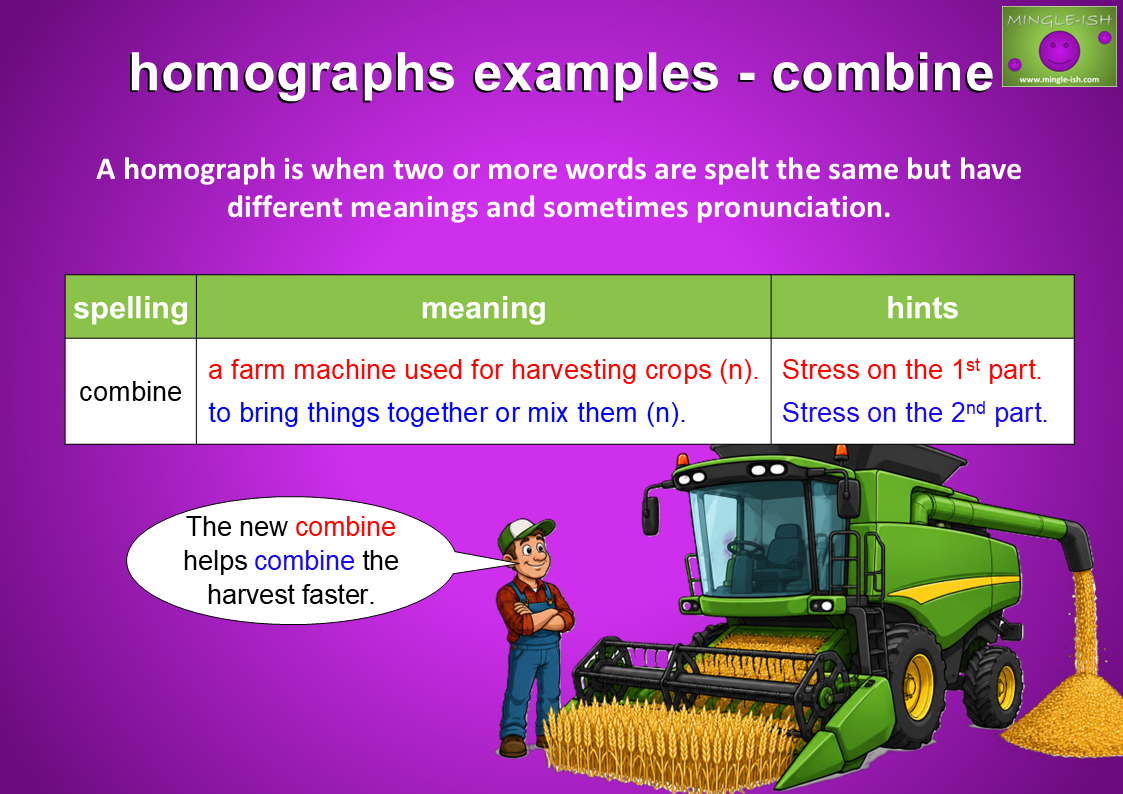
“Combine” is pronounced differently depending on whether it’s a verb or a noun, even though the spelling stays the same.
As a noun (the farming machine), the stress is on the first syllable: COM-bine.
Example: “The COM-bine is in the field.”
As a verb (to join things together), the stress is on the second syllable: com-BINE.
Example: “We com-BINE the ingredients.”
A simple way to remember it is this: verbs push forward, so the stress goes at the end, nouns feel more grounded, so the stress stays at the start.
Further study
If you’ve enjoyed this page, there’s a good chance you’ll like a few of the other ones too. Homophones and homonyms are the next logical step if you like words that enjoy causing confusion for a living, and sentence stress plus voiced and voiceless sounds will help everything start to sound much more natural when you speak. And if reading is starting to feel like hard work, you can always pop over to my YouTube channel where I go through all of this in a more visual, less “head hurts” kind of way.