
The word “desert” is one of those English words that can be confusing because it has more than one meaning and pronunciation. It’s a homograph, which means it is spelled the same way but can have different meanings depending on the context. In this guide, we’ll break down each meaning of “desert” in a simple way, with clear examples to help you understand and use it correctly.
What Does “Desert” Mean?
In simple terms, “desert” can refer to a large, dry area of land, or it can mean to abandon someone or something. Although the spelling stays the same, the meaning changes depending on the context and pronunciation. This makes “desert” a useful example of a homograph in English.
Examples:
- The travellers crossed the desert during the hottest part of the day.
- The soldier was punished for deserting his post.
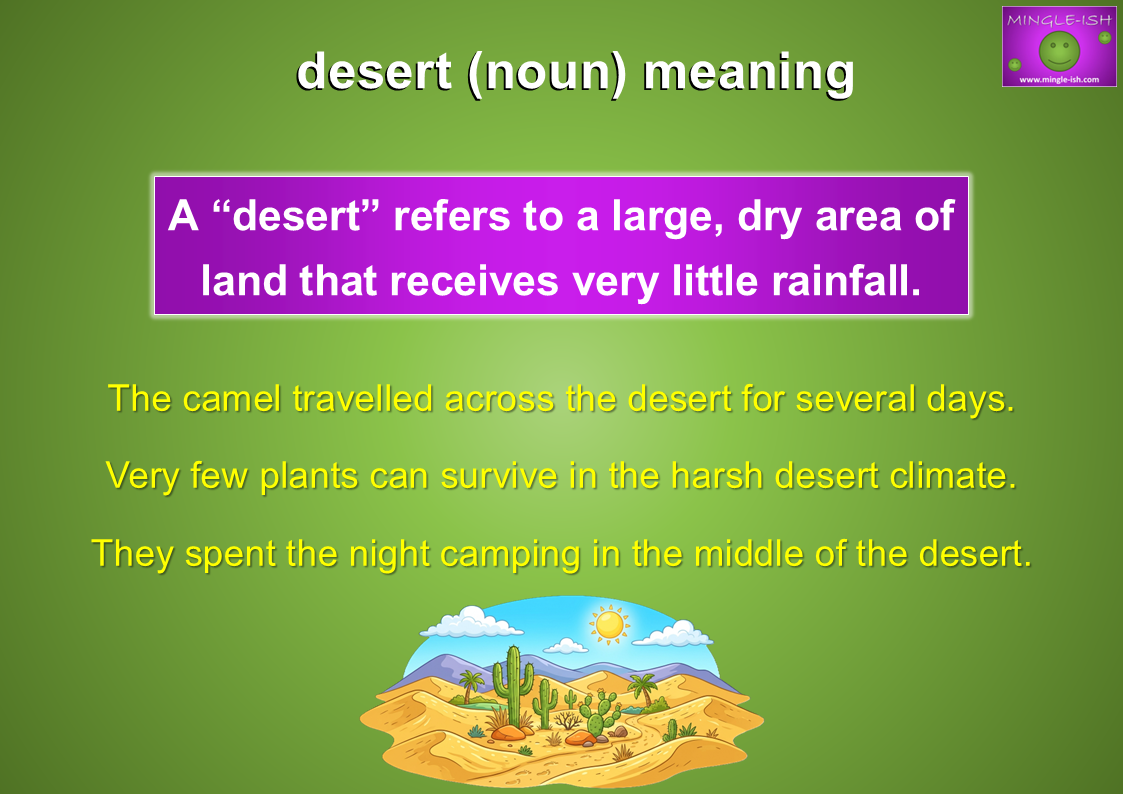
Desert as a noun (a large, dry area of land)
This meaning of “desert” refers to a large, dry area of land that receives very little rainfall. Deserts are often associated with sand, extreme temperatures, and very little vegetation, although not all deserts are covered in sand.
Examples:
- The camel travelled across the desert for several days.
- Very few plants can survive in the harsh desert climate.
- They spent the night camping in the middle of the desert.
Desert as a verb (to abandon someone or something)
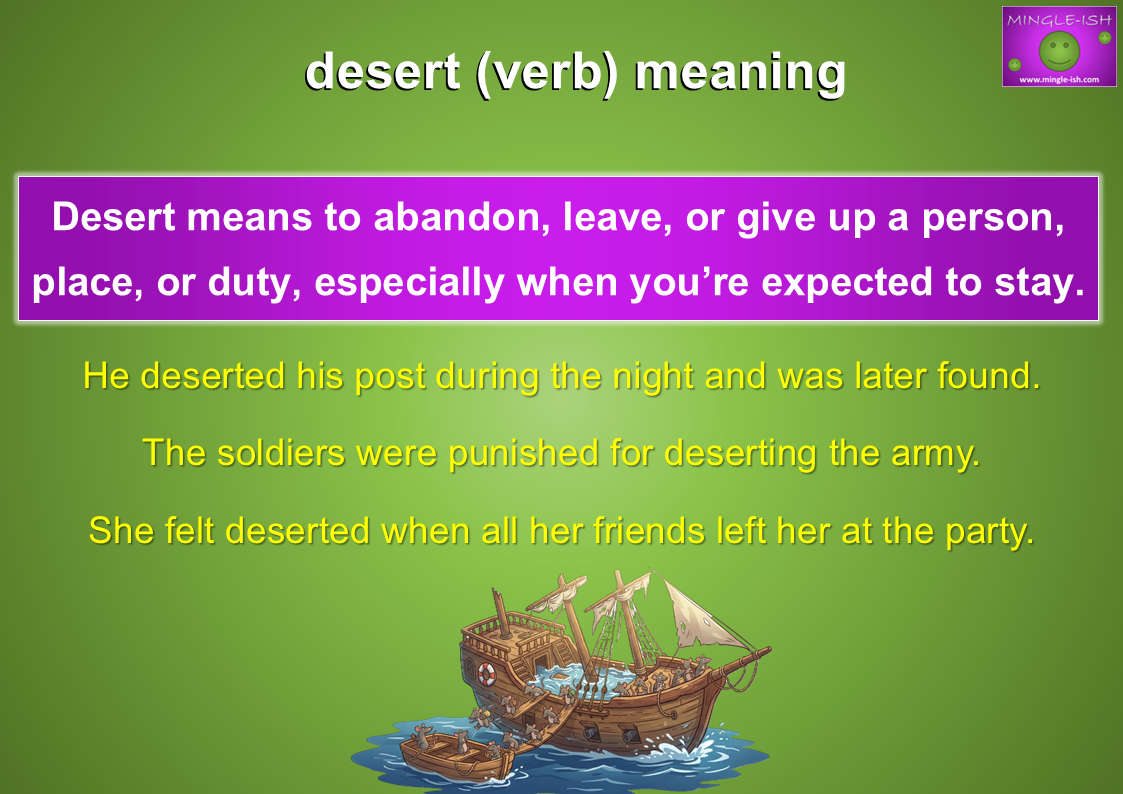
This is the one you’ll see most often in English when talking about leaving or abandoning someone or something. It just means to abandon, leave, or give up a person, place, or duty, especially when you’re expected to stay.
Examples:
- He deserted his post during the night and was later found.
- The soldiers were punished for deserting the army.
- She felt deserted when all her friends left her at the party.
How to pronounce “desert” (stress changes everything)
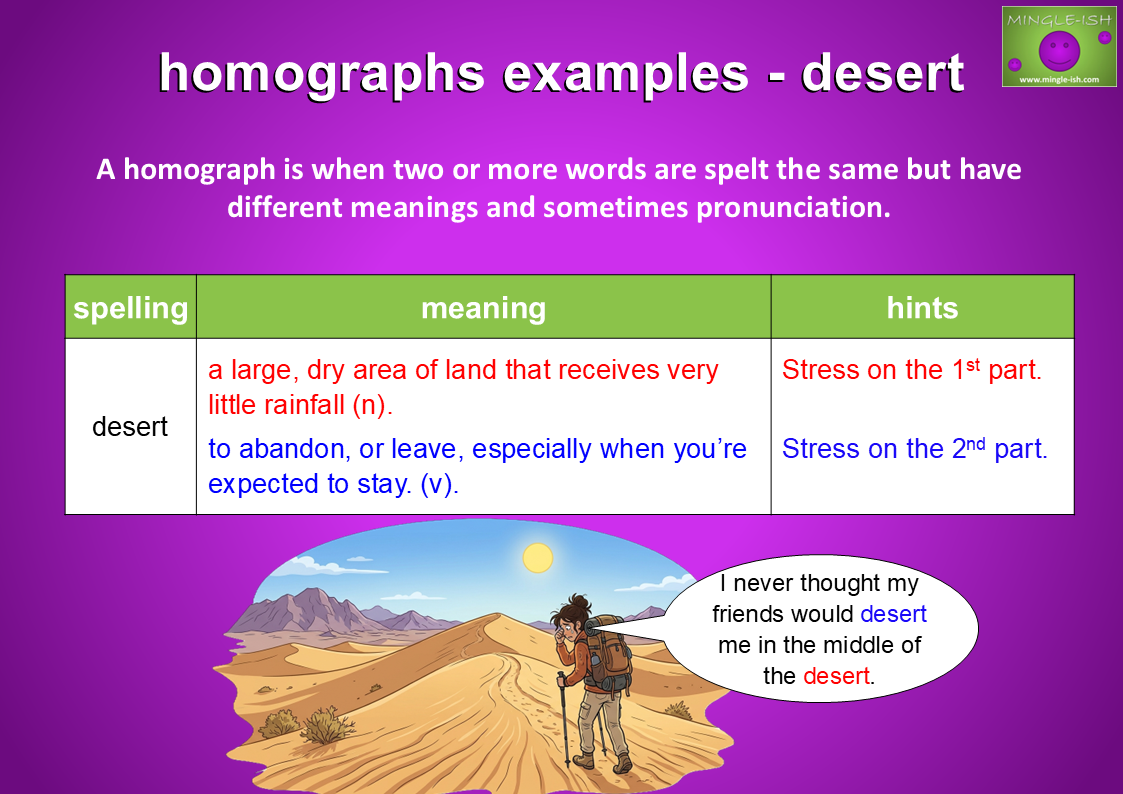
“Desert” is a homograph because it can be a noun or a verb, and the pronunciation changes depending on the meaning, even though the spelling stays the same.
As a noun (a dry, sandy area of land), the stress is on the first syllable: DEZ-ert.
Example: “The DEZ-ert was extremely hot during the day.”
As a verb (to abandon or leave someone/something), the stress is on the second syllable: de-ZERT.
Example: “He would never de-ZERT his friends in a crisis.”
A simple way to remember it is this: nouns usually sound more steady, so the stress stays at the start, while verbs feel like action moving forward, so the stress shifts to the end.
Test Yourself: Dessert Homographs Quiz
Think you know your dessert homographs? Put your knowledge to the test!
Watch the video and see if you can choose the correct meaning and pronunciation of each homograph before the answers are revealed. How many can you get right?
Further study
If you’ve enjoyed this page, there’s a good chance you’ll like a few of the other ones too. Homophones and homonyms are the next logical step if you like words that enjoy causing confusion for a living, and sentence stress plus voiced and voiceless sounds will help everything start to sound much more natural when you speak. And if reading is starting to feel like hard work, you can always pop over to my YouTube channel where I go through all of this in a more visual, less “head hurts” kind of way.