
English phrasal verbs really do love causing chaos, don’t they? Just when you think you’ve mastered the word “slip”, the English language casually throws in slip up, slip out, slip away, and about 47 other versions to confuse everybody. Lovely stuff.
In this guide, you’ll learn the most common phrasal verbs with “slip”, what they mean, and how to use them naturally in everyday English. Whether you’re an ESL learner, an EFL student, or just somebody trying not to completely slip up in conversations, this page has you covered.
What Are Phrasal Verbs with “Slip”?
Phrasal verbs are made by combining a verb with another word, usually a preposition or adverb. The meaning often changes completely, because apparently English enjoys making life difficult.
With “slip”, phrasal verbs usually relate to:
- mistakes
- movement
- escaping
- speaking accidentally
- or things happening quietly or secretly.
Some are formal, some are casual, and some are incredibly useful in everyday conversations.
Phrasal Verbs with “Slip” List
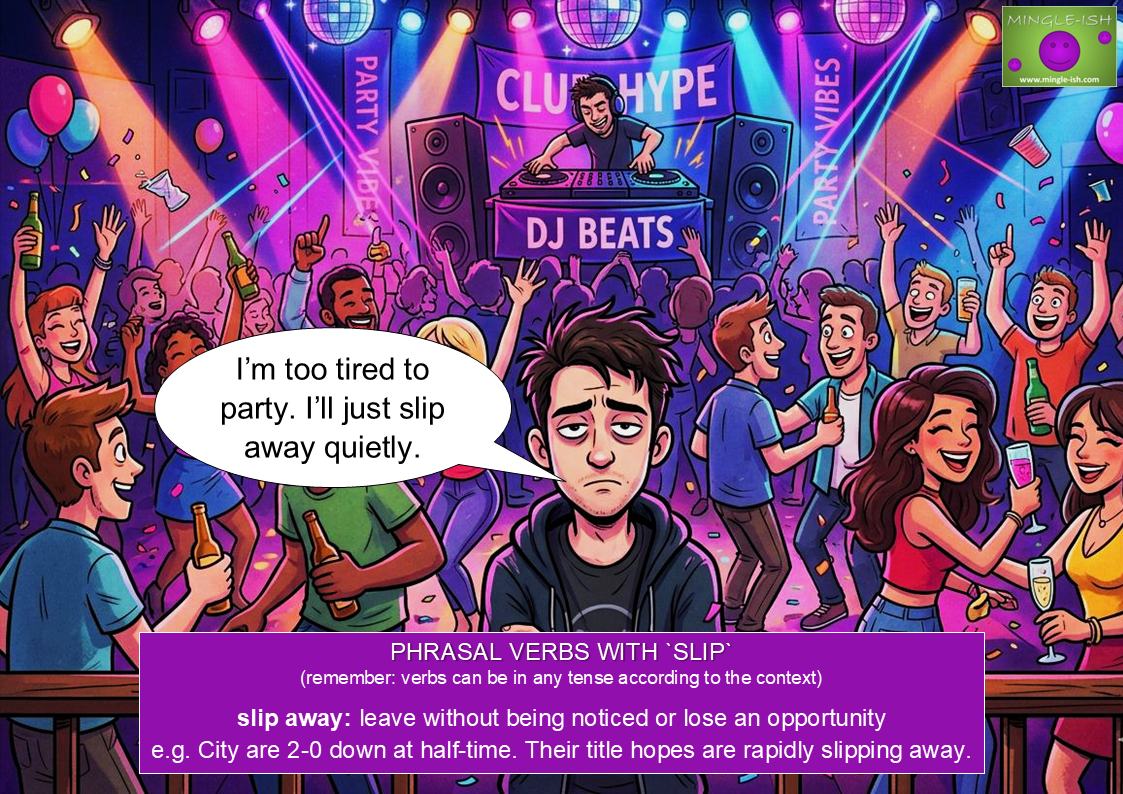
slip away
meaning: to leave quietly without being noticed, or to gradually lose something such as an opportunity, chance, or hope.
examples:
- City are 2-0 down at half-time. Their title hopes are rapidly slipping away.
- She slipped away from the party before anyone noticed she had gone.
- By the time we reacted, the opportunity had already slipped away.
- If you do not practise your English regularly, your confidence can slowly slip away.
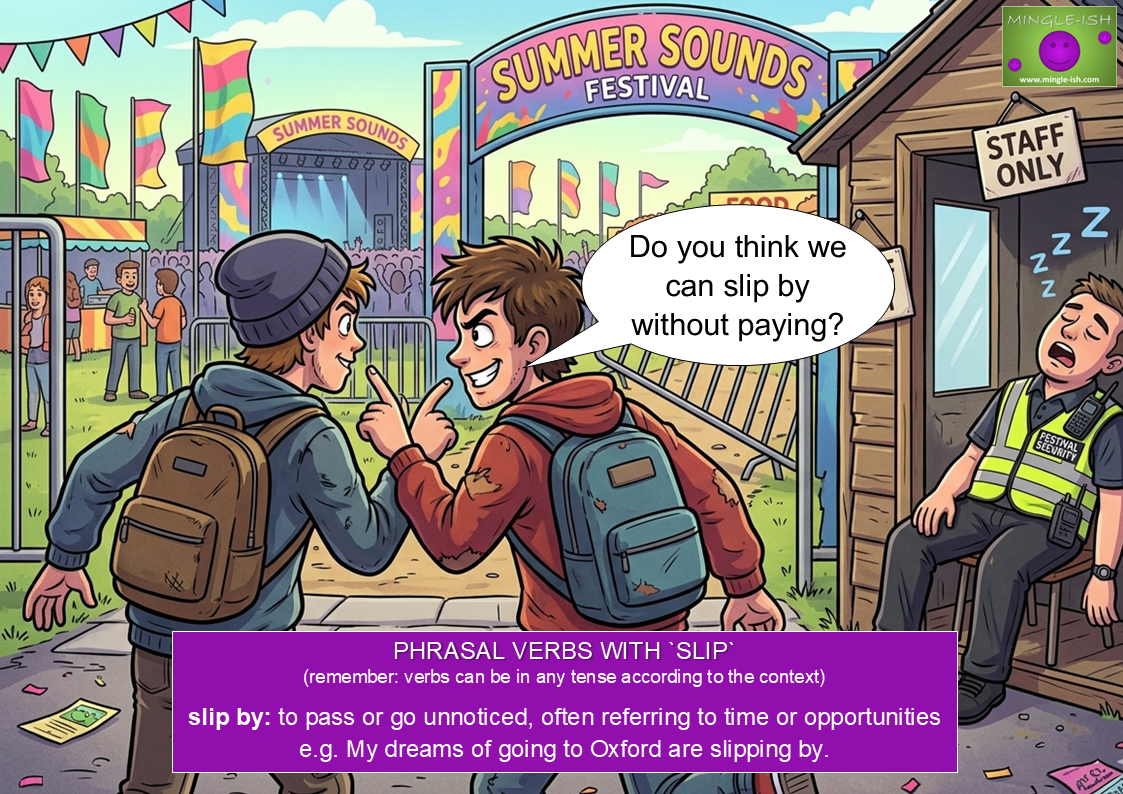
slip by
meaning: to pass or go unnoticed, often referring to time or opportunities.
examples:
- The weekend slipped by so quickly that I did not finish my homework.
- While we were chatting, the afternoon was slipping by.
- Several good opportunities have slipped by because they waited too long.
- If you are not careful, important moments can slip by unnoticed.
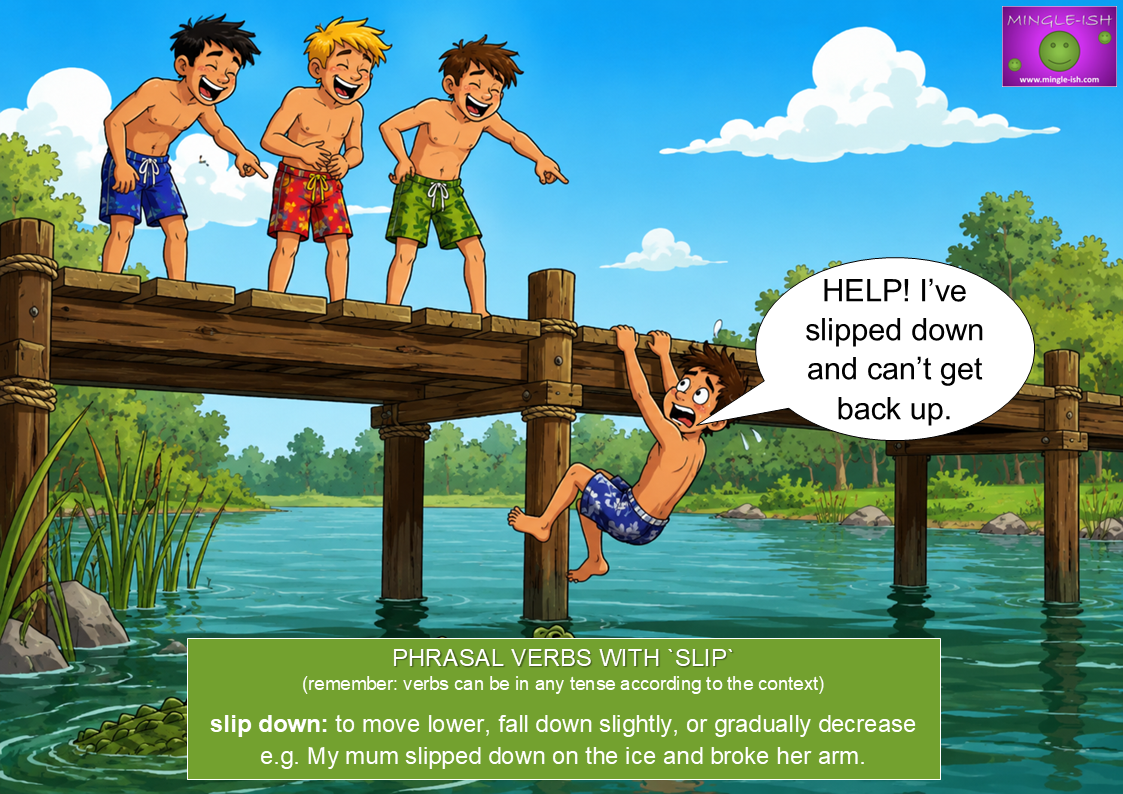
slip down
meaning: to move lower, fall down slightly, or gradually decrease.
examples:
- The child slipped down the slide laughing excitedly.
- Temperatures have been slipping down throughout the week.
- His glasses slipped down his nose while he was reading.
- If profits continue to slip down, the company may need to cut costs.
slip in
meaning: to enter quietly or unnoticed, or to add something casually without attracting attention.
examples:
- She slipped in through the back door while everyone was distracted.
- He was slipping in a few jokes during the presentation.
- I have slipped in some useful tips for the exam throughout this guide.
- If you are not careful, advertisers can slip in hidden costs.

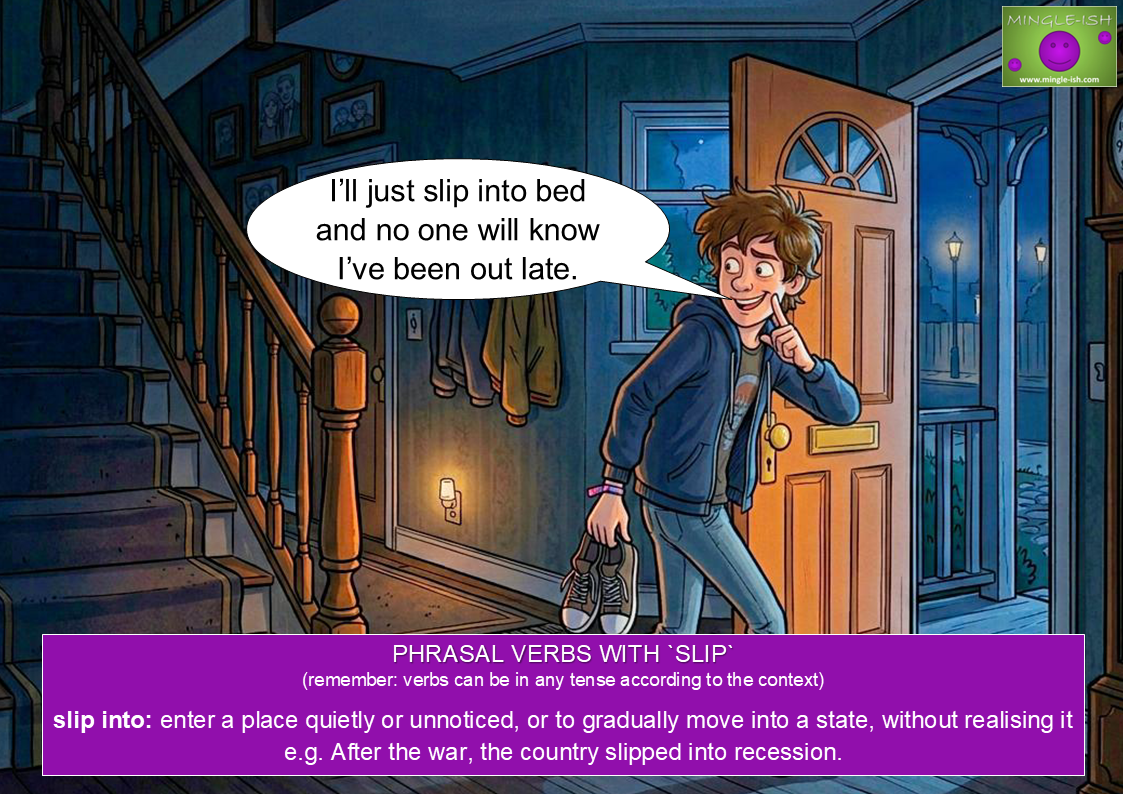
slip into
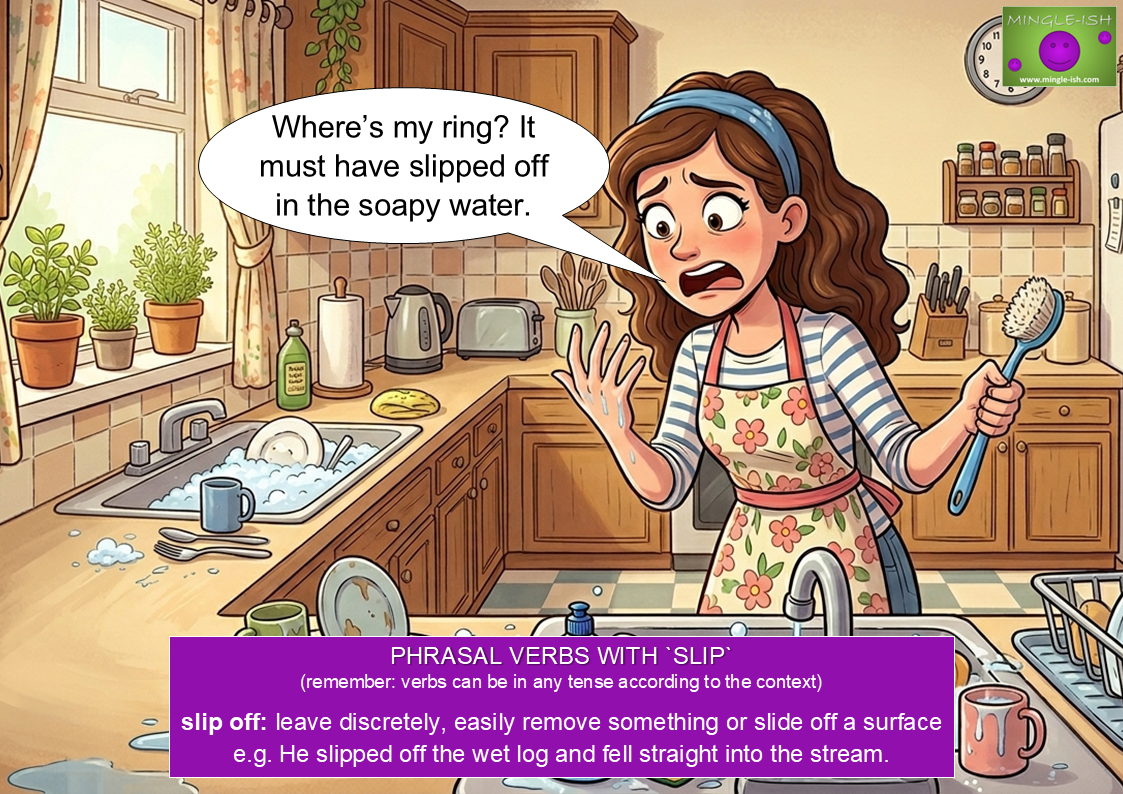
slip off
meaning: to leave a place quietly without being noticed, to remove something easily and smoothly, or to slide off a surface or lose grip and fall away from something
examples:
- He slips off early from the party without saying goodbye to anyone.
- She slipped off her shoes as soon as she got home and relaxed on the sofa.
- I have slipped off for a quick break while nobody was looking.
- They will slip off before the meeting ends to avoid the rush.
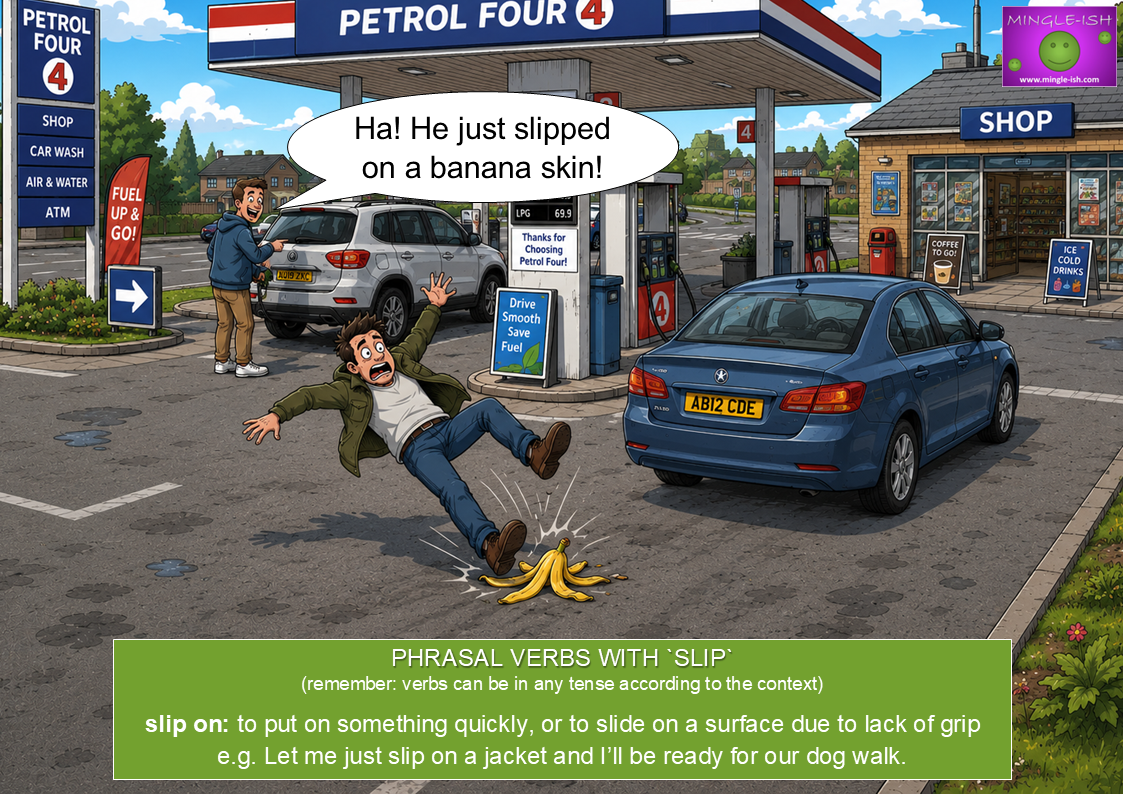
slip on
meaning: to put on something quickly and easily, to accidentally put something on (especially clothing or shoes), or to slide on a surface due to lack of grip
examples:
- He slips on his jacket before heading out the door every morning.
- She slipped on her shoes in a rush and ran out to catch the bus.
- I have slipped on my coat and gone outside without thinking before.
- They will slip on the wet floor if they are not careful after the rain.
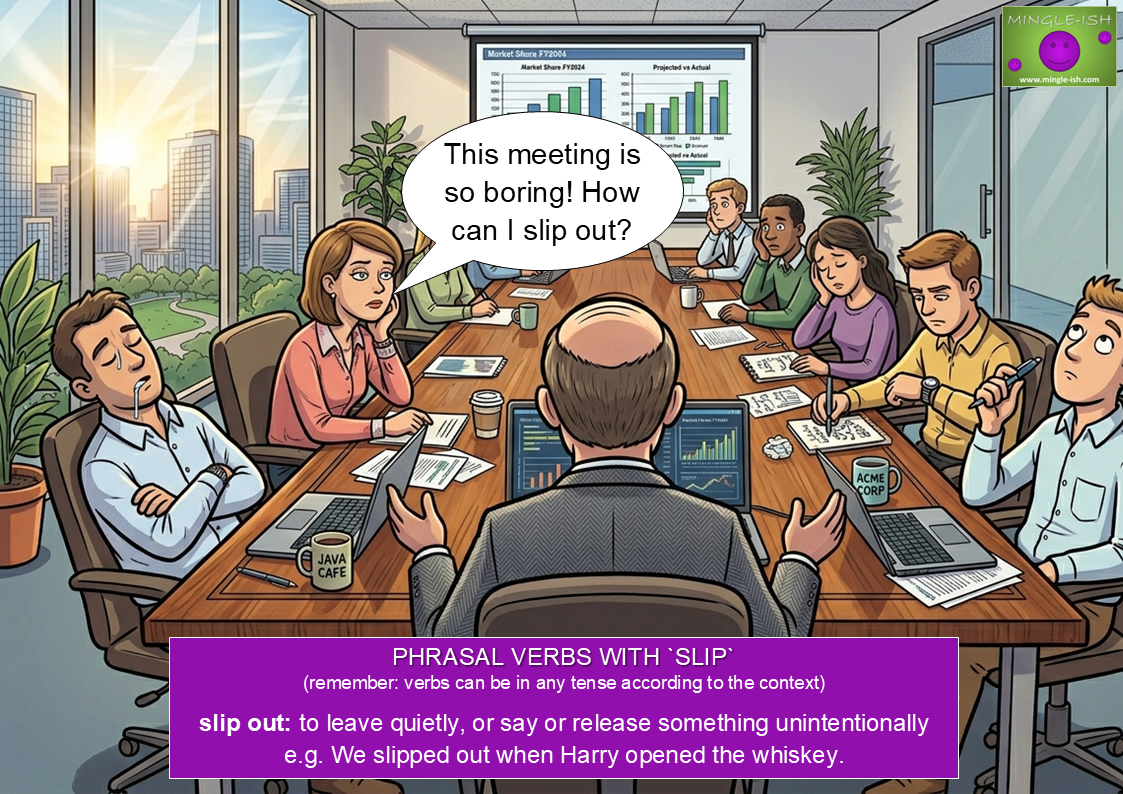
slip out
meaning: to leave a place quietly or without being noticed, to accidentally say something you did not intend to, or for words, information, or objects to come out unintentionally without control
examples:
- He slips out of the office early when no one is watching.
- She slipped out of the room during the meeting to take a call.
- I have slipped out a secret I shouldn’t have before.
- They will slip out of the party once it gets too crowded.
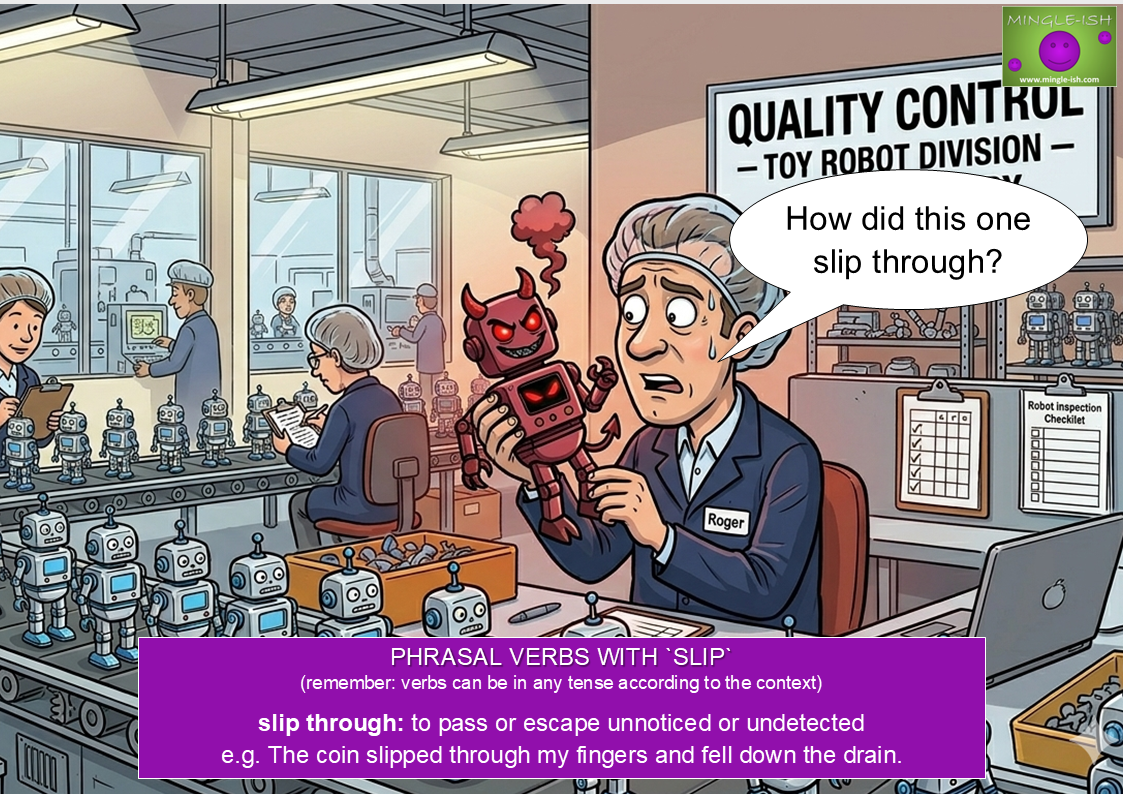
slip through
meaning: to pass through a gap or system unnoticed, escape detection or checks, or succeed without being properly noticed or stopped.
examples:
- He slips through the crowd unnoticed while security is distracted.
- She slipped through the final stage of the interview process after they missed her error.
- I have slipped through security checks before without being stopped.
- They will slip through the system if we do not tighten the rules.
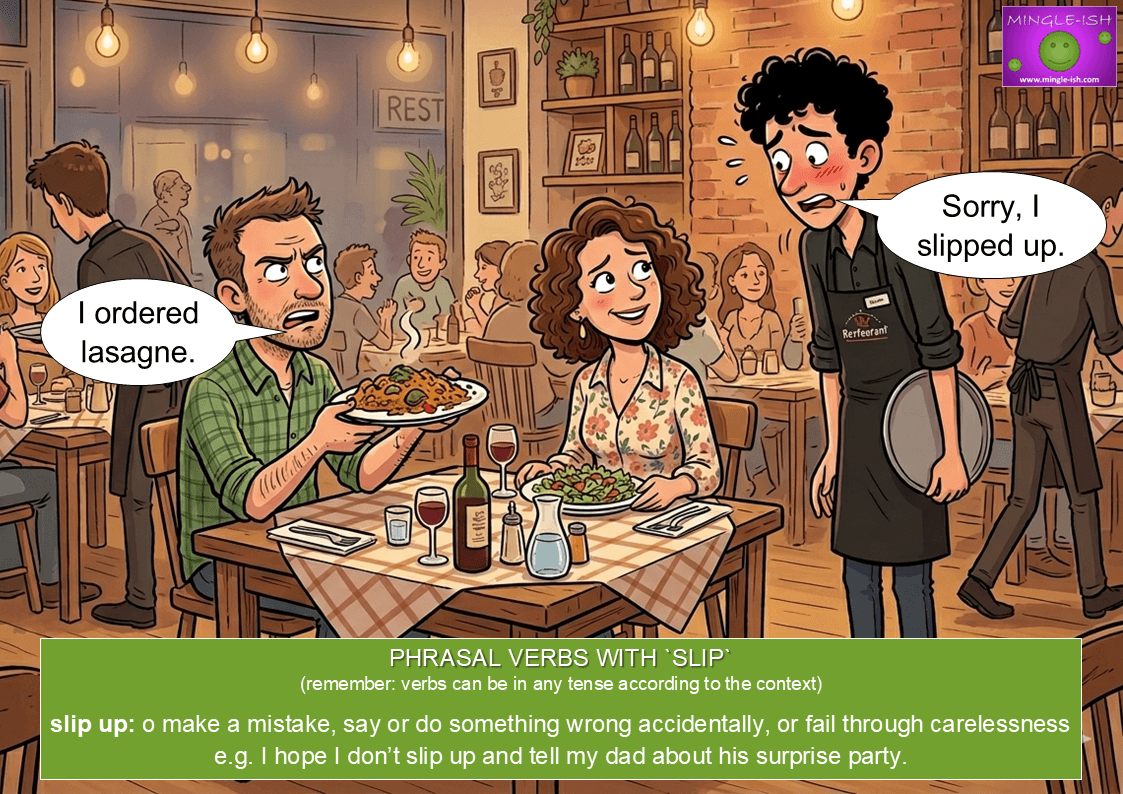
slip up
meaning: to make a mistake, especially a small or careless one
examples:
- I hope I don’t slip up and tell my dad about his surprise party.
- I slipped up and sent the email to the wrong person yesterday.
- She has slipped up a few times at work recently, but luckily none of her mistakes were serious.
- If you’re not careful, you could slip up and give away the surprise.
If you’ve survived this page without your brain completely slipping away, there’s plenty more English chaos waiting for you. You can explore more phrasal verb groups, dive into idioms, test your grammar, or check out my pronunciation section to really help you sound like a native.
And if you enjoy learning through videos, head over to my YouTube channel where you’ll find loads of English quizzes, vocabulary lessons, idioms, grammar tips, pronunciation practice, and other confusing little bits of the English language designed to keep your brain permanently on its toes.
Final Thoughts
Phrasal verbs with “slip” are incredibly common in English, especially in casual conversations and everyday speech. Once you understand the meanings and patterns, they become much easier to recognise and use naturally.
And if you accidentally slip up while learning them? Welcome to the club.