
The word carry seems pretty straightforward, right? But add a little word like on, out, over or away, and suddenly the meaning can change completely. That’s the wonderfully confusing world of English phrasal verbs! In this guide, we’ll look at some of the most common phrasal verbs with carry, what they mean, and how to use them with simple, real-life examples. So, let’s get started!
What does ‘carry’ mean?
The word carry can have several different meanings. As a verb, it can mean to support the weight of something while moving it from one place to another.
For example:
- Can you carry my shopping bag? (support the weight of)
- I’ll carry the baby.
Carry is a regular verb. The past tense and past participle are both carried.
Common phrasal verbs with carry
And here comes the tricky bit! Add a tiny word to carry, and suddenly it can mean something completely different. Here are some of the most common phrasal verbs with carry, along with simple examples and pictures to help you remember them.
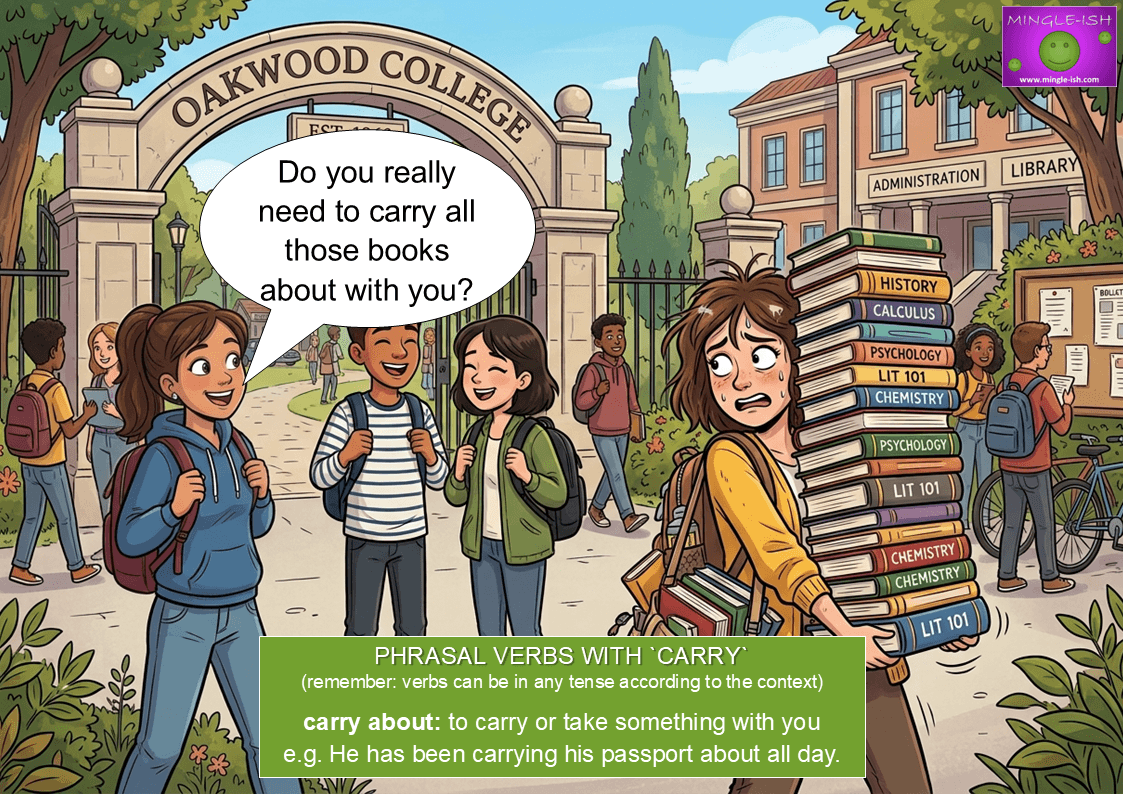
carry about
meaning: to carry or take something with you
examples:
- I always carry my phone about with me.
- She carried a small notebook about wherever she went.
- He has been carrying his passport about all day.
- Do you really need to carry all those books about with you?
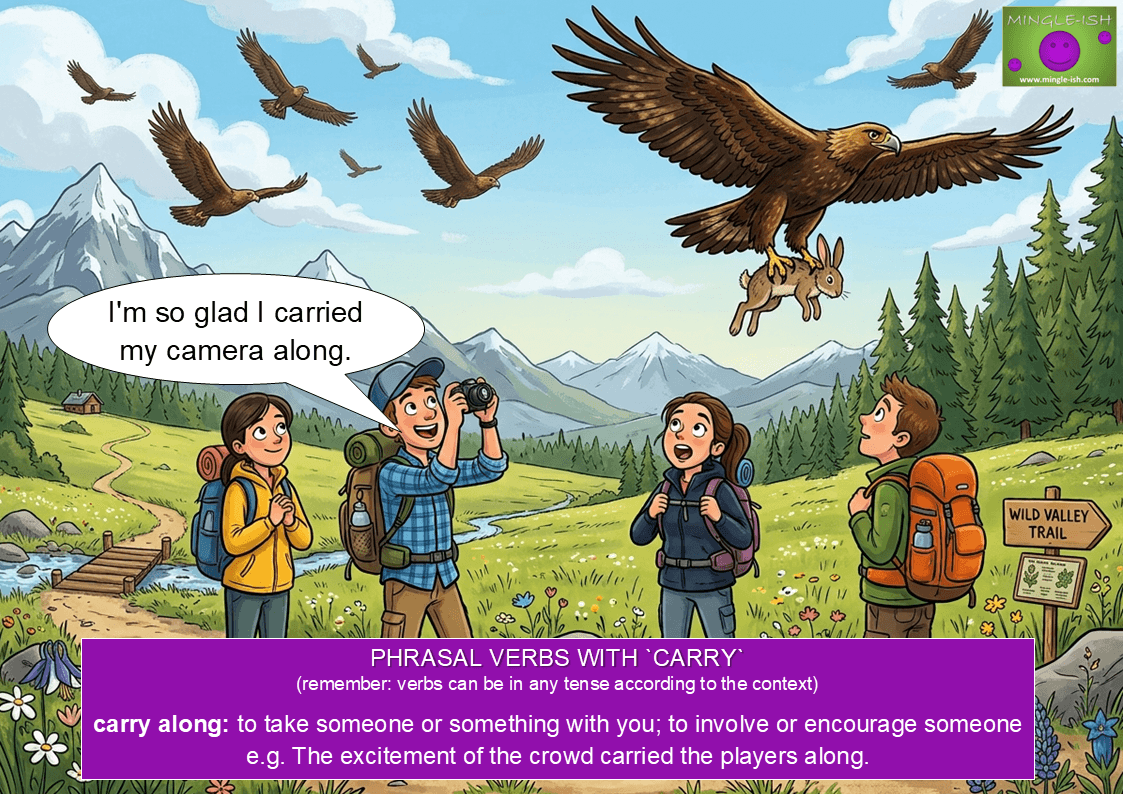
carry along
meaning: to take someone or something with you; to involve or encourage someone
examples:
- I’ll carry along some extra water for the journey.
- She carried her children along when she went shopping.
- The team’s enthusiasm has carried everyone along.
- The manager is carrying the whole team along with his new ideas.
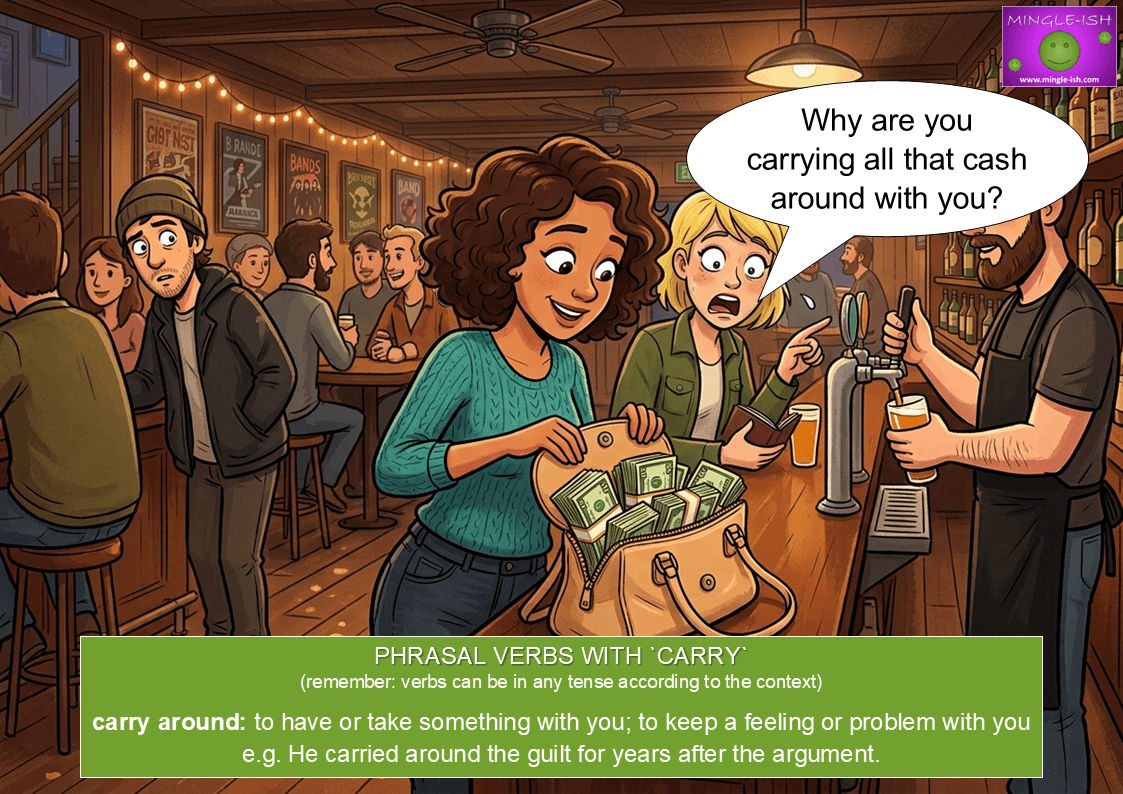
carry around
meaning: to have or take something with you; to keep a feeling or problem with you
examples:
- I always carry around a bottle of water.
- She has been carrying around that old handbag for years.
- He carried around a lot of guilt after the argument.
- You don’t need to carry all that stuff around with you!
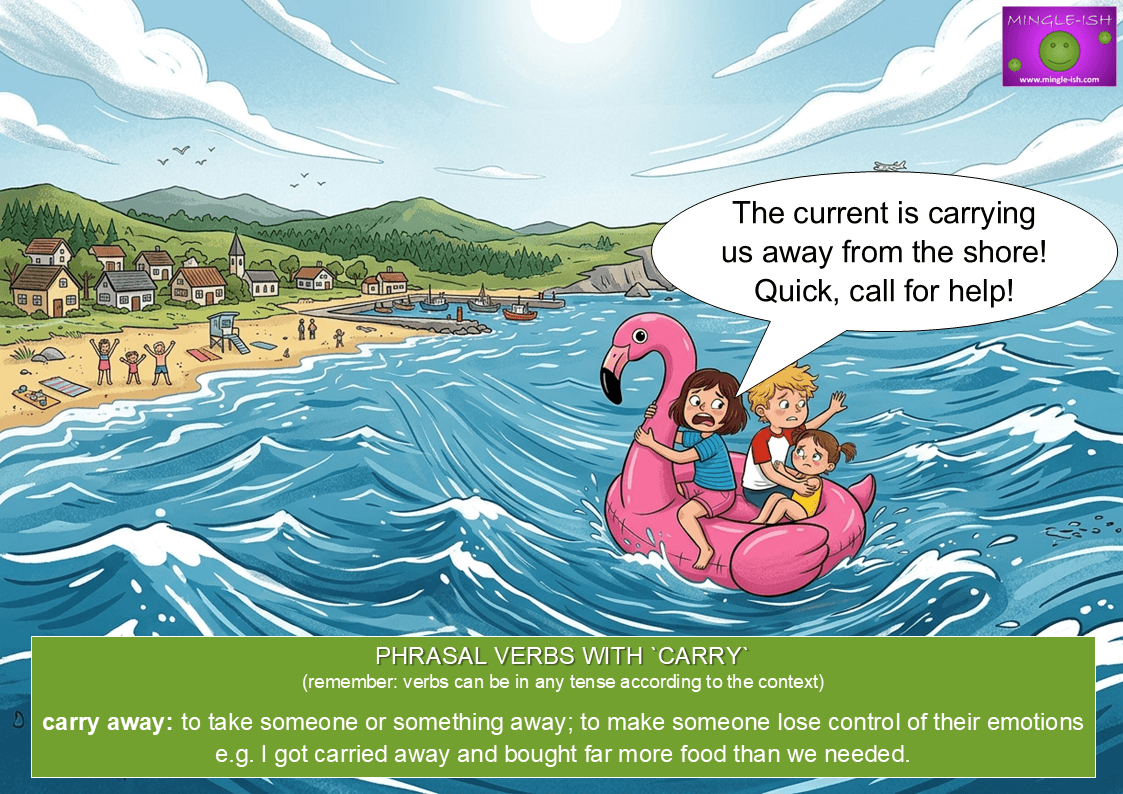
carry away
meaning: to take someone or something away; to make someone lose control of their emotions
examples:
- The strong current carried the boat away from the shore.
- I got carried away and bought far more food than we needed.
- She has been carried away by the excitement of the competition.
- Don’t get carried away when you’re planning your holiday!
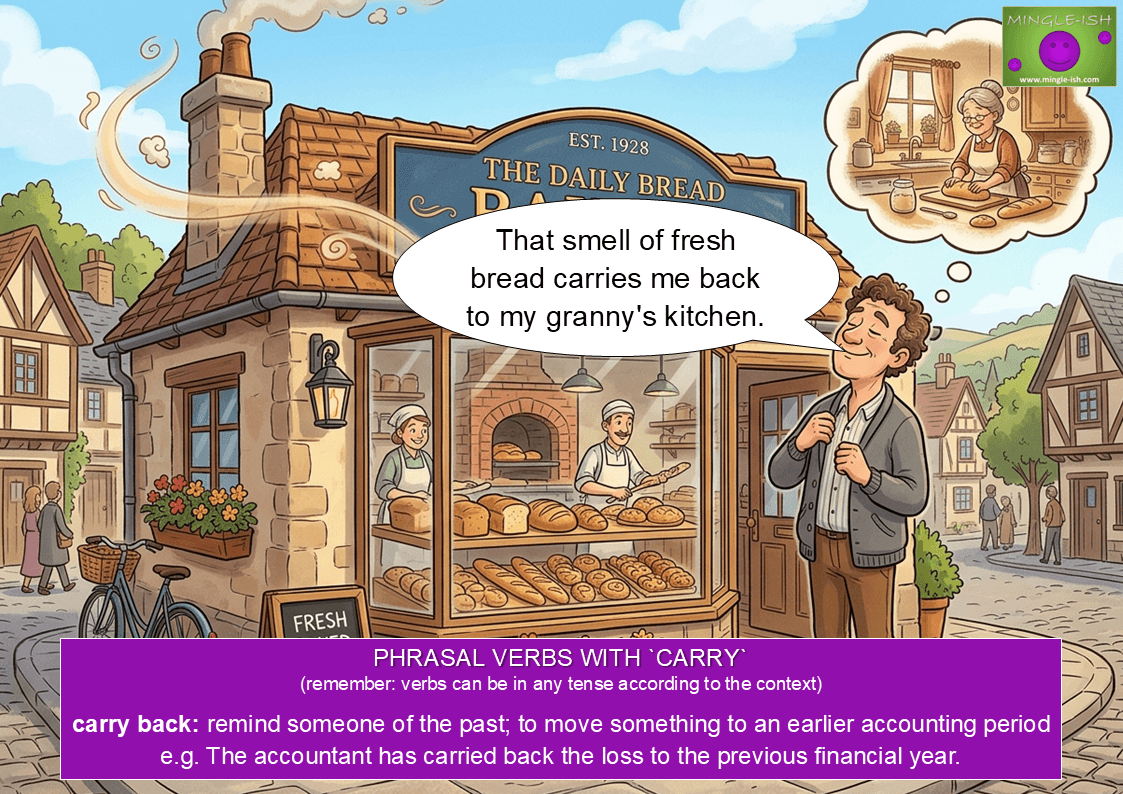
carry back
meaning: to make someone remember a past time; to move something to an earlier period in accounting
examples:
- That old song always carries me back to my school days.
- The smell of freshly baked bread carried her back to her grandmother’s kitchen.
- The memories have carried him back to some very happy times.
- The company will carry back the loss to the previous tax year.
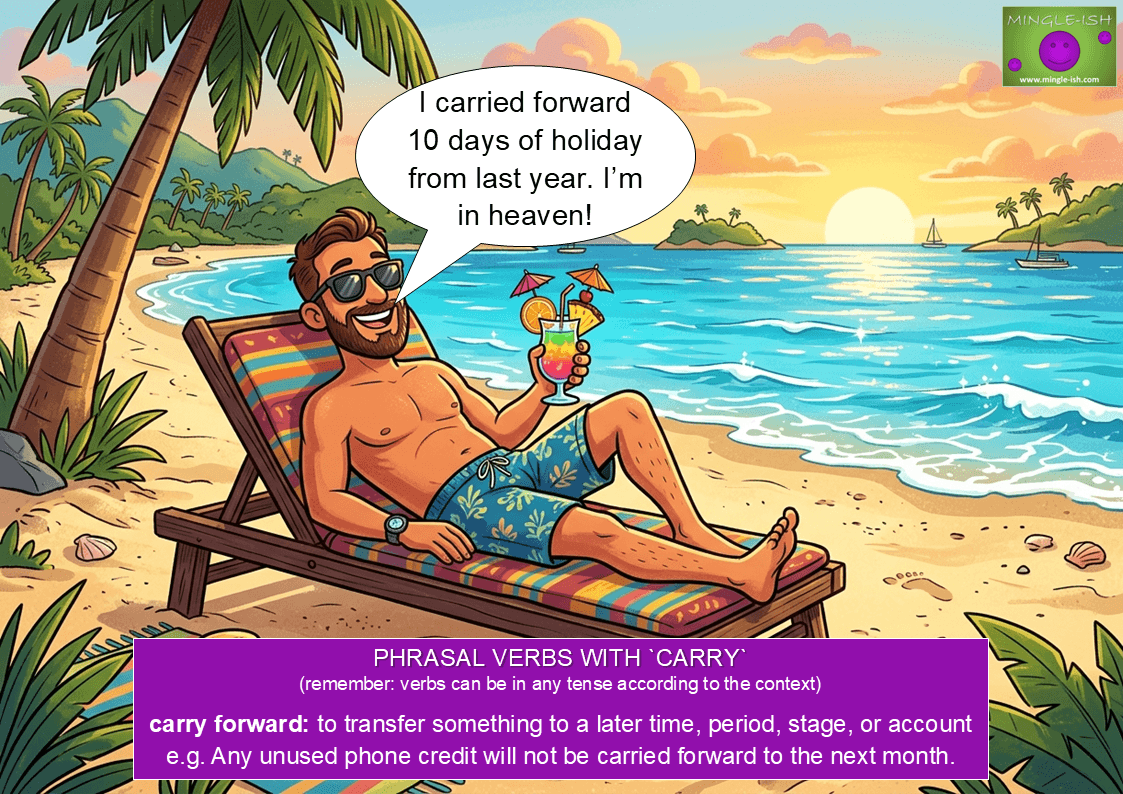
carry forward
meaning: to transfer something to a later time, period, stage, or account
examples:
- Any unused phone credit will not be carried forward to the next month.
- The company carried forward its remaining budget from last year.
- Any unused holiday is being carried forward to next year.
- We have carried forward the remaining balance to the next financial year.
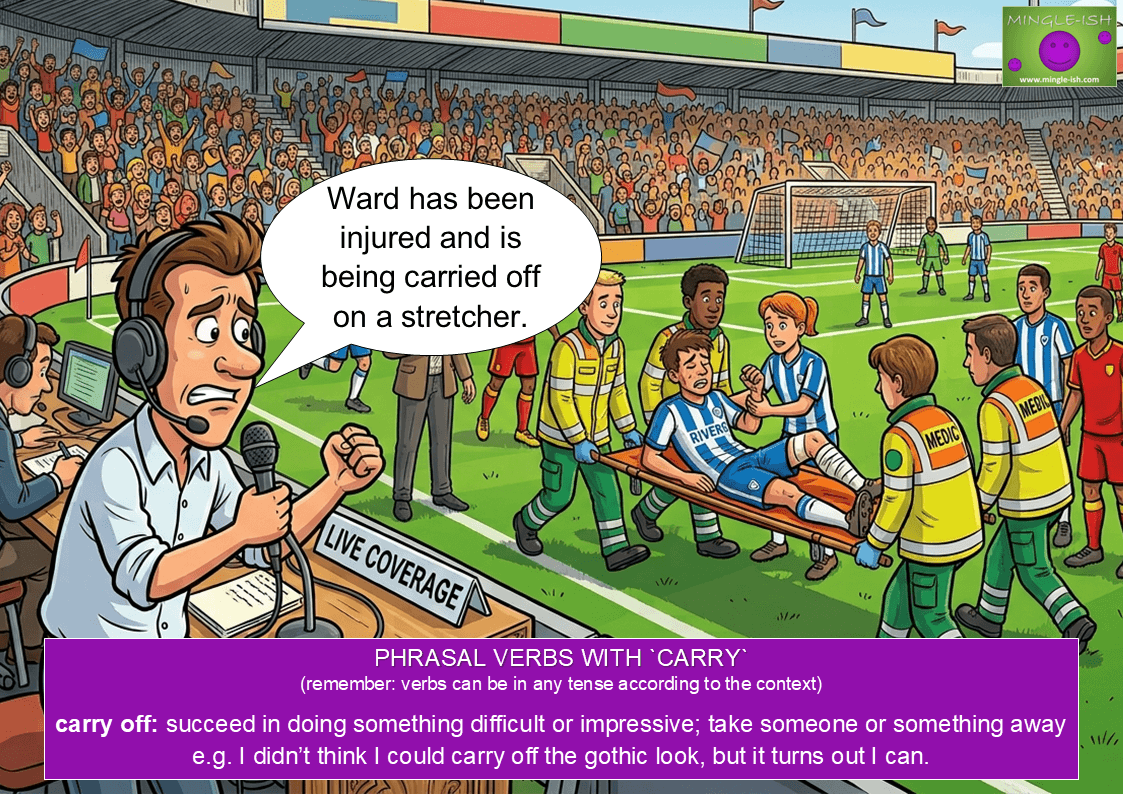
carry off
meaning: to succeed in doing something difficult or impressive; to take someone or something away
examples:
- She carried off the difficult role brilliantly.
- I wasn’t sure about the outfit, but she carried it off perfectly.
- He has carried off the presentation despite being extremely nervous.
- The thieves carried off several valuable paintings during the night.
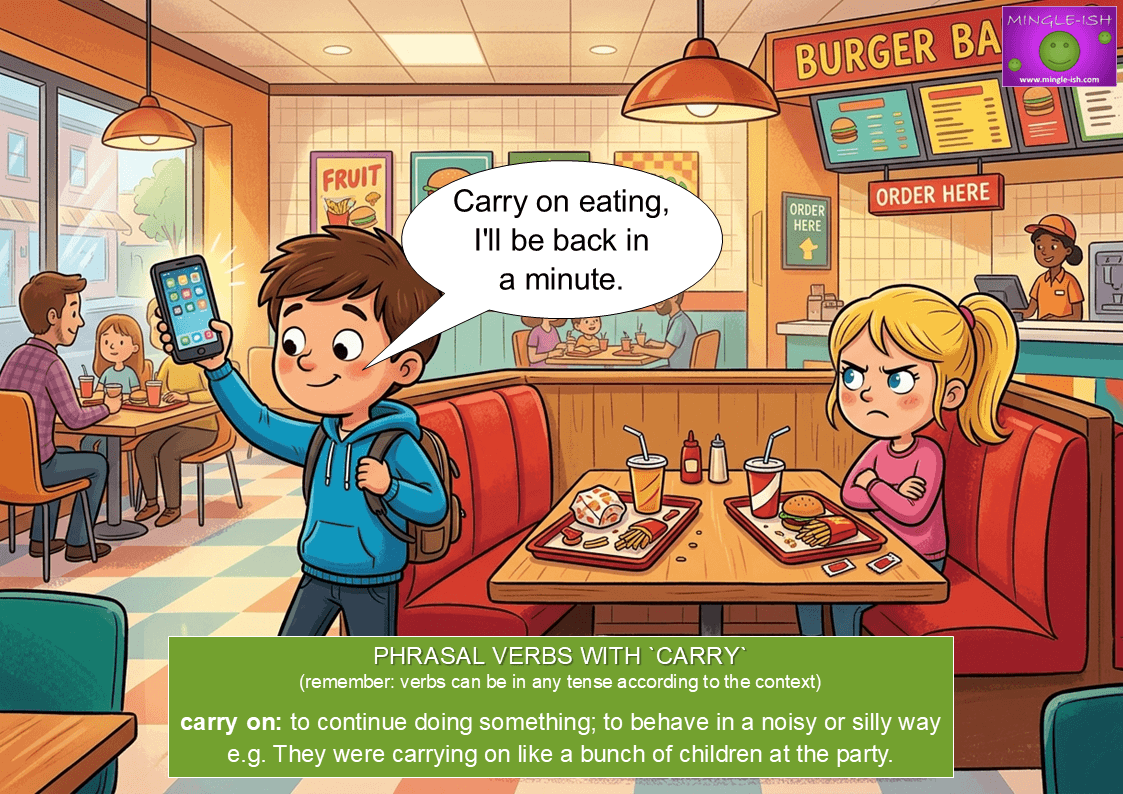
carry on
meaning: to continue doing something; to behave in a noisy or silly way
examples:
- She carried on working despite being tired.
- Please carry on with your homework.
- They have carried on with their plans despite the problems.
- He will carry on complaining until someone listens.
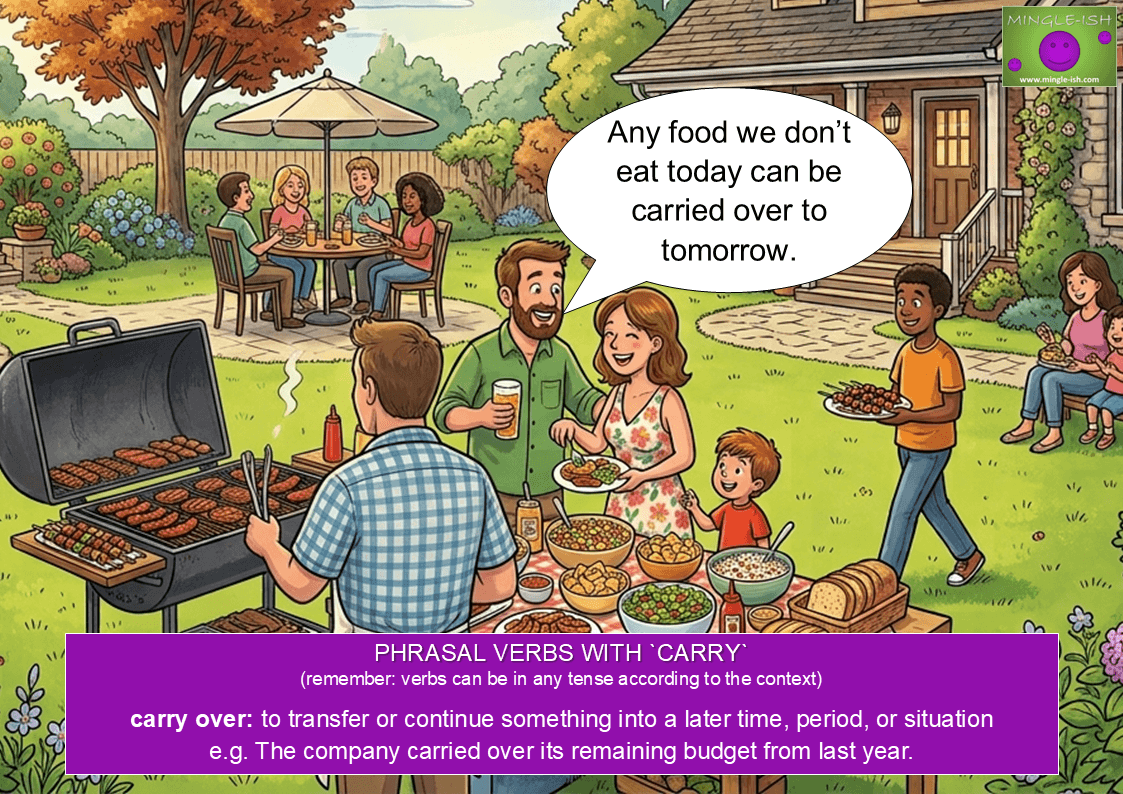
carry on about
meaning: to keep talking or complaining about something
examples:
- He carried on about the traffic all evening.
- She’s always carrying on about how expensive everything is.
- They have been carrying on about the same problem for weeks.
- Stop carrying on about it and let’s get on with the job!
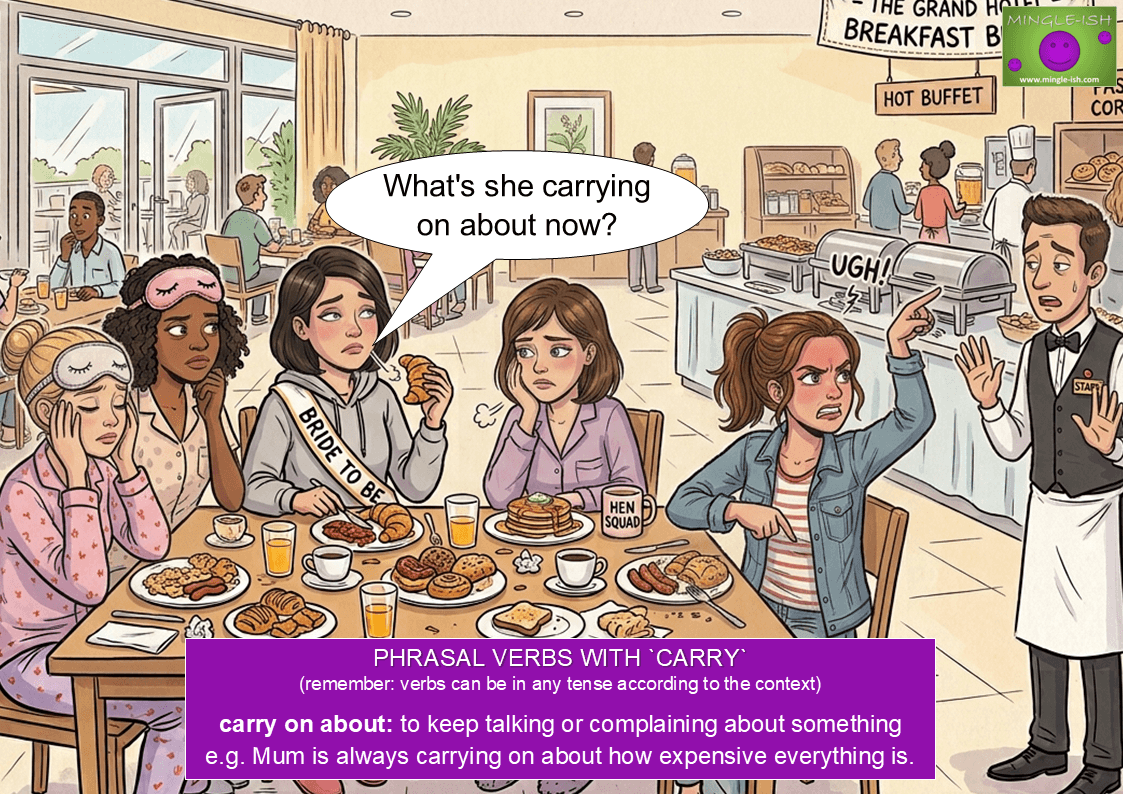
carry on with
meaning: to continue doing something; to have an affair with someone
examples:
- Please carry on with your work while I’m away.
- She carried on with the project despite the problems.
- We have carried on with our plans as normal.
- He is carrying on with another woman, and his wife doesn’t know.
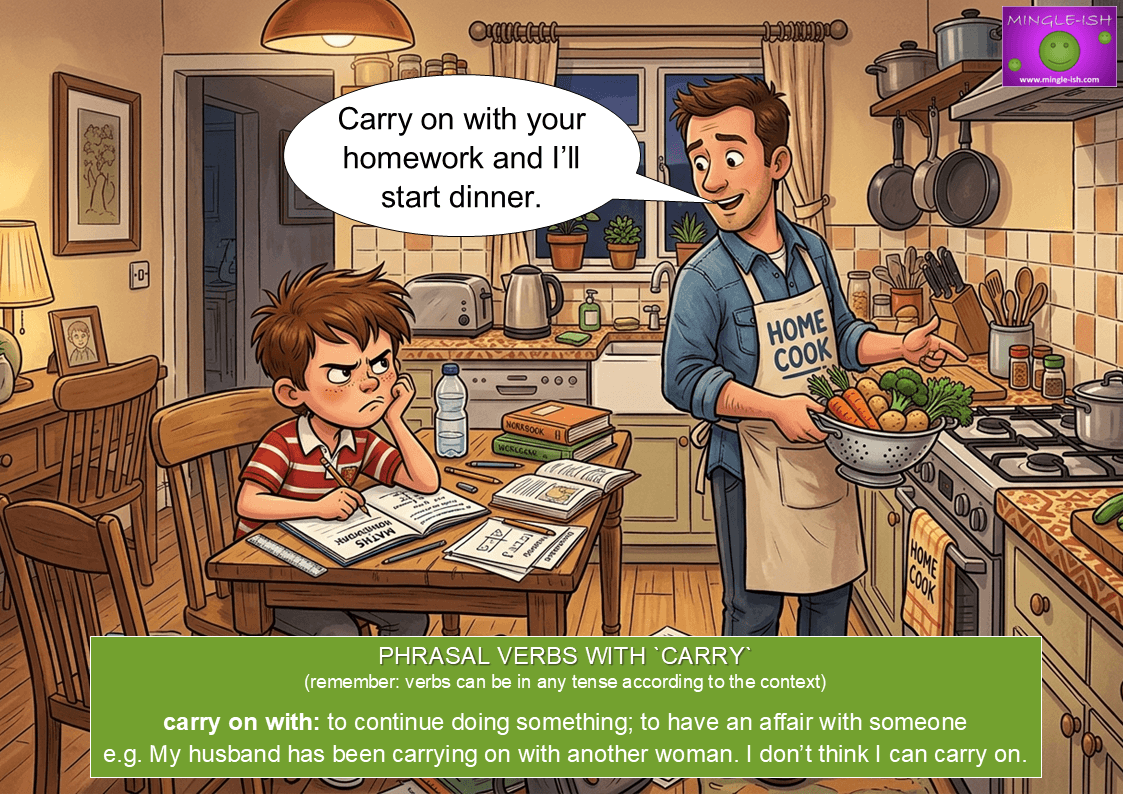
carry out
meaning: to do or complete a task, plan, instruction, test, or investigation
examples:
- The scientists carried out an experiment in the laboratory.
- The police are carrying out an investigation into the incident.
- We have carried out all the necessary safety checks.
- The company will carry out a survey next month.
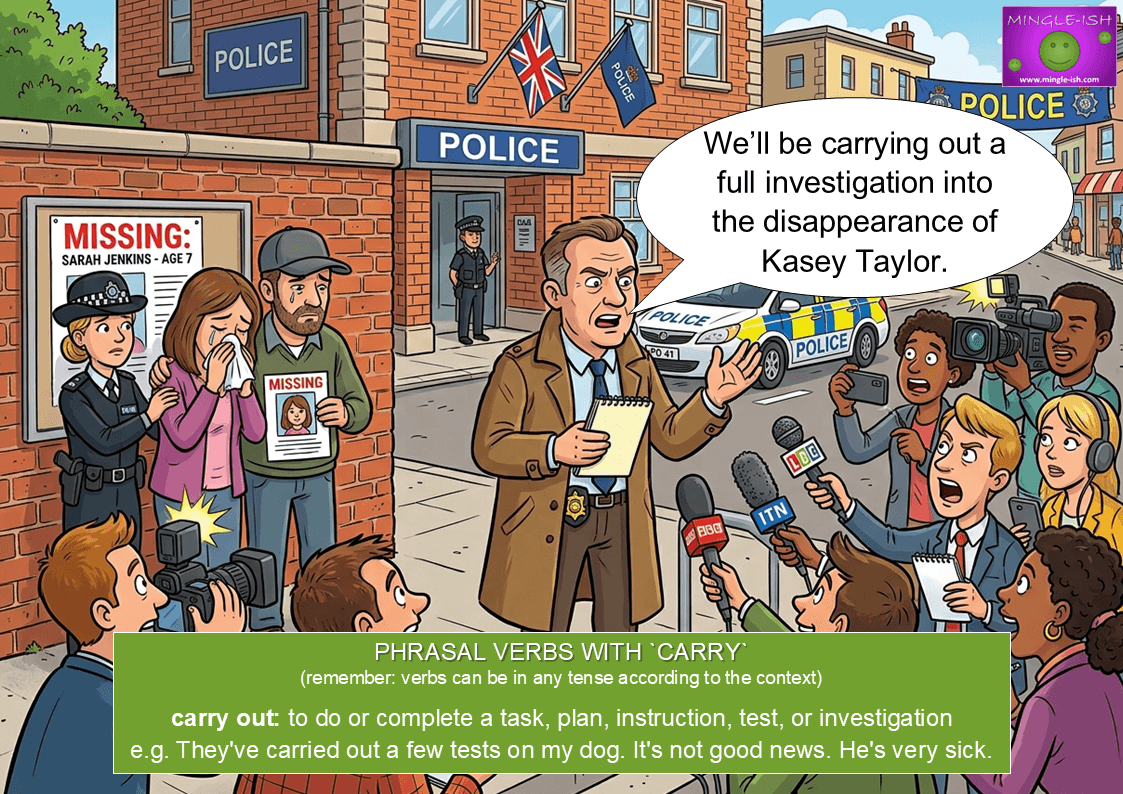
carry over
meaning: to transfer or continue something into a later time, period, or situation
examples:
- Any unused holiday can be carried over to the following year.
- The company carried over its remaining budget from last year.
- The effects of the problem have carried over into this year.
- Any unused data will be carried over to the next month.
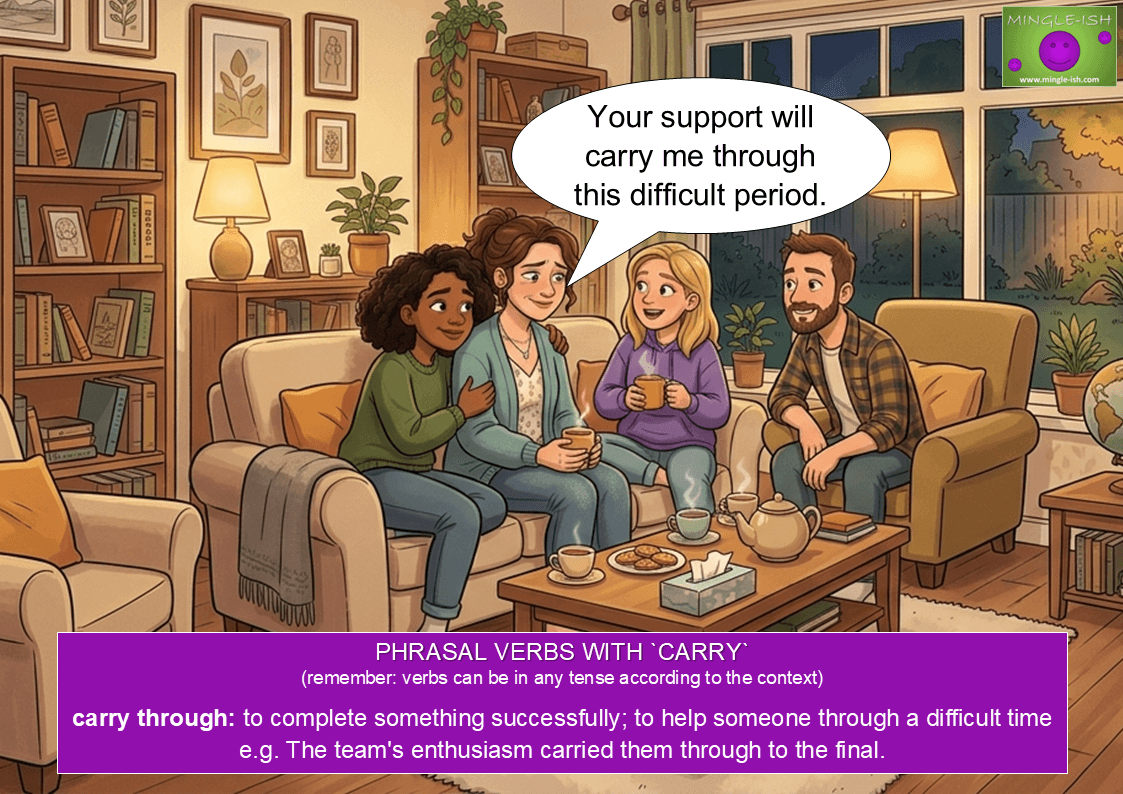
carry through
meaning: to complete something successfully; to help someone through a difficult time
examples:
- Her determination carried her through the difficult period.
- We carried through with the plan despite the problems.
- His family has carried him through some very difficult times.
- Their support will carry us through the final stages of the project.
Are Phrasal Verbs with Carry Separable?
Ah, phrasal verbs… just when you think you’ve got them figured out, they go and move the words around! Some phrasal verbs with carry are separable, meaning you can put the object between carry and the particle.
For example:
She carried out the experiment.
or:
She carried the experiment out.
But here’s the important bit: when the object is a pronoun, it must go in the middle:
She carried it out.
Not:
❌ She carried out it.
So, when using separable phrasal verbs like carry out, remember: noun = either position, pronoun = middle. One small rule, but it can save you from a very un-English-sounding sentence!
Common Mistakes with Phrasal Verbs with Carry
Phrasal verbs are sneaky little things, and carry has a few combinations that can easily trip you up. Here are some of the most common mistakes to watch out for.
Using carry on instead of carry out
Carry on means continue, while carry out means perform or complete something.
❌ The scientists carried on an experiment.
✅ The scientists carried out an experiment.
Using the wrong structure with carry on
We say carry on doing something or carry on with something.
❌ She carried on to work.
✅ She carried on working.
✅ She carried on with her work.
Confusing carry off and carry away
These two sound similar but have very different meanings.
Carry off means to succeed in doing something difficult or impressive.
- She carried off the performance brilliantly.
Get carried away means to become too excited or enthusiastic.
- She got carried away and made far too many plans.
Putting a pronoun in the wrong place
With the separable phrasal verb carry out, a pronoun goes between carry and out.
❌ She carried out it.
✅ She carried it out.
It’s a tiny word-order rule, but getting it wrong can make your English sound very unnatural.
Quick reminder
carry on = continue
carry out = perform or complete
carry off = succeed at something difficult
get carried away = become too excited
Keep those four straight and you’re already avoiding some of the most common phrasal verb with carry mistakes!
Frequently Asked Questions About Phrasal Verbs with Carry
Still carrying a few questions around? Let’s clear them up!
What are the most common phrasal verbs with carry?
Some of the most common phrasal verbs with carry are carry on, carry out, carry over, carry off, carry away, carry through and carry forward.
What does carry on mean?
Carry on means to continue doing something.
- She carried on working despite being tired.
What does carry out mean?
Carry out means to do, perform or complete something, such as a task, plan, experiment or investigation.
- The researchers carried out an experiment.
What does carry over mean?
Carry over means to transfer or continue something into a later period or situation.
- The remaining money was carried over to the following month.
What does carry off mean?
Carry off means to succeed in doing something difficult or impressive.
She carried off the performance brilliantly.
What does get carried away mean?
Get carried away means to become too excited or enthusiastic about something.
- I got carried away and bought far too many things.
Is carry on a phrasal verb?
Yes! Carry on is a common English phrasal verb meaning to continue.
Is carry out separable?
Yes. Carry out is a separable phrasal verb.
- She carried out the task.
You can also say:
- She carried the task out.
But with a pronoun, it goes in the middle:
- She carried it out.
What’s the difference between carry on and carry out?
Easy peasy:
carry on = continue
carry out = do or complete something
One little word makes a big difference!
Phrasal Verbs with Carry: Conclusion
And there we have it! Carry might look like a simple little verb, but add on, out, over, off or away, and suddenly things get a lot more interesting! The best way to remember these phrasal verbs with carry is to practise them in context and use them whenever you can. Keep practising, and soon you’ll be carrying on like a pro!
Keep Learning English
Enjoyed getting to grips with phrasal verbs with carry? Don’t stop here! There are plenty more ways to give your English a little workout.
If you want to discover more English phrasal verbs, head over to our main Phrasal Verbs page, where you’ll find phrasal verbs grouped by verb, making it easy to find exactly what you’re looking for.
You might also enjoy exploring our Idioms and Expressions, or brush up on your Regular Verbs and Irregular Verbs. And if you’re looking for more useful English tips, check out our grammar and pronunciation pages too.
Prefer learning with a bit more action? Head over to our YouTube channel for English lessons, quizzes, word games and plenty of bite-sized videos to test your skills.
So, whether you’re here to master phrasal verbs, improve your grammar or simply make your English sound more natural, there’s plenty more to explore. Go on, have a browse!