
In spoken English, the letter D can sometimes sound like a J, especially in fast, natural speech. This often surprises learners because the spelling does not change, only the sound does. On this page, you will learn when D is pronounced as J, why this happens in everyday English, and how to recognise and practise the sound so your listening and pronunciation feel more natural and confident.
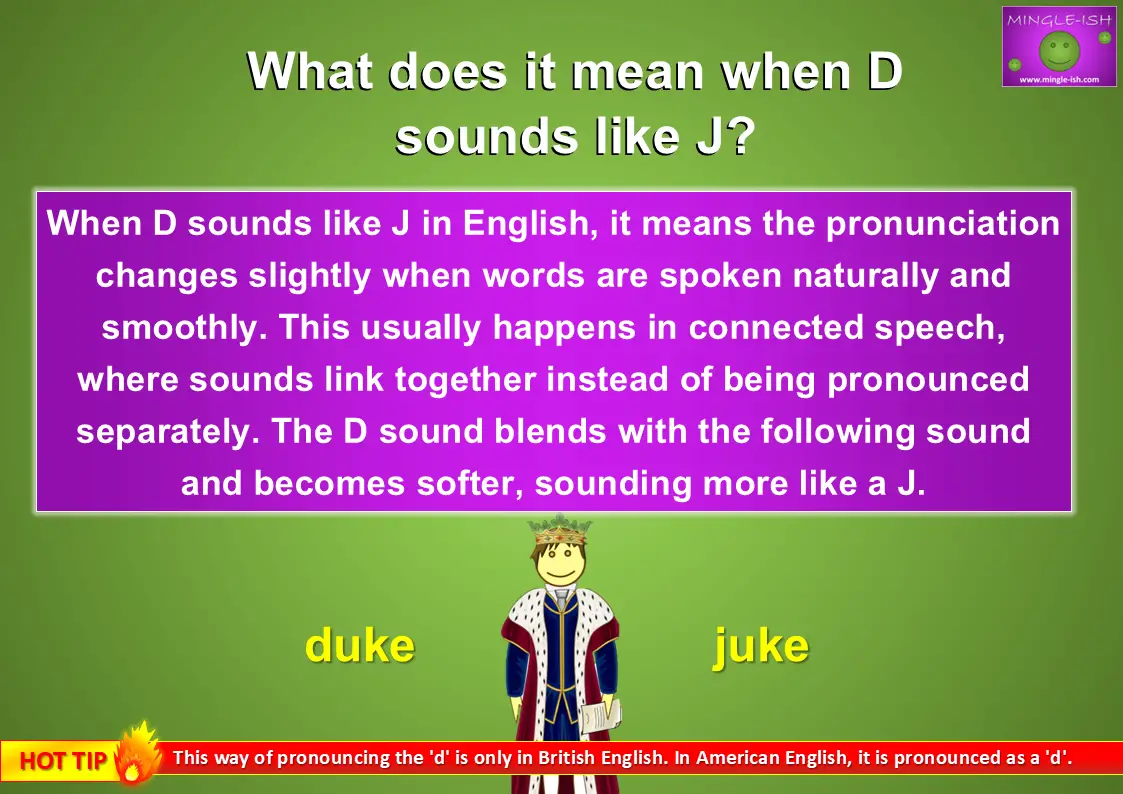
What does it mean when D sounds like J?
When D sounds like J in English, it means the pronunciation changes slightly when words are spoken naturally and smoothly. This usually happens in connected speech, where sounds link together instead of being pronounced separately. The D sound blends with the following sound and becomes softer, sounding more like a J. You will hear this a lot in everyday spoken English, especially in casual conversation, fast speech, and common phrases, even though the spelling stays exactly the same.
This way of pronouncing the ‘d’ is only in British English. In American English, it is pronounced as a ‘d’.
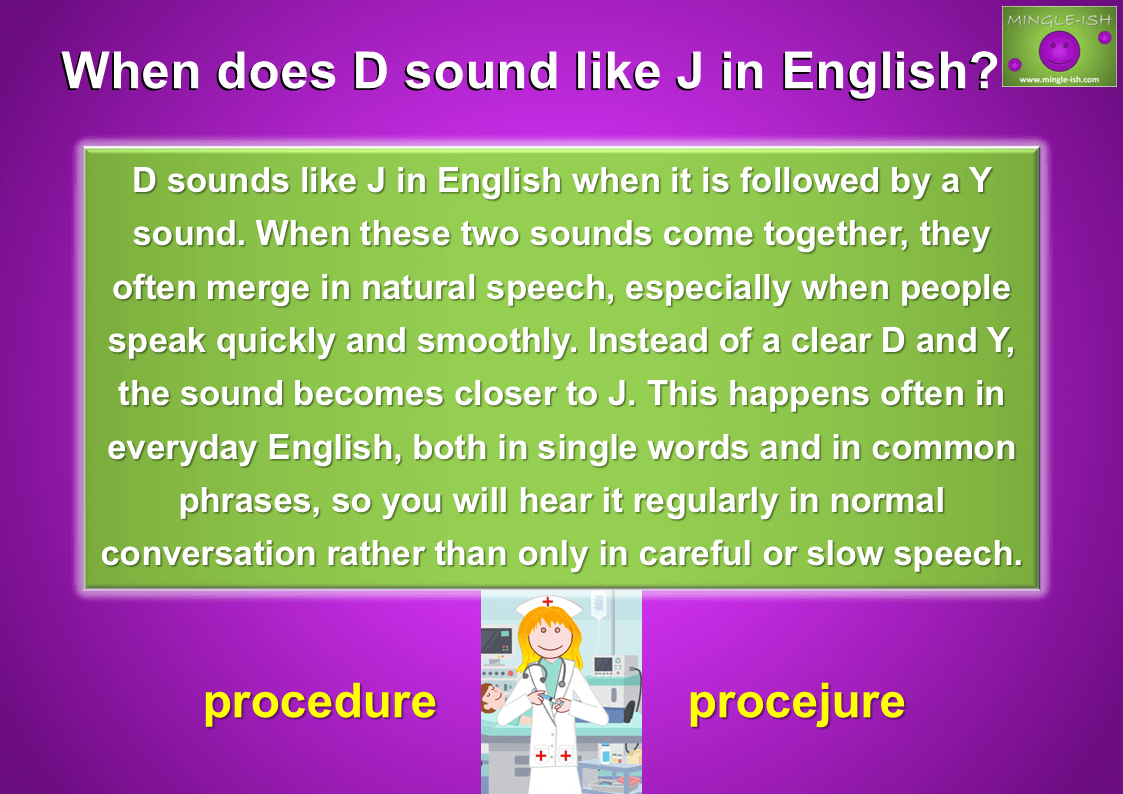
When does D sound like J in English?
D sounds like J in English when it is followed by a Y sound. When these two sounds come together, they often merge in natural speech, especially when people speak quickly and smoothly. Instead of a clear D and Y, the sound becomes closer to J. This happens often in everyday English, both in single words and in common phrases, so you will hear it regularly in normal conversation rather than only in careful or slow speech.
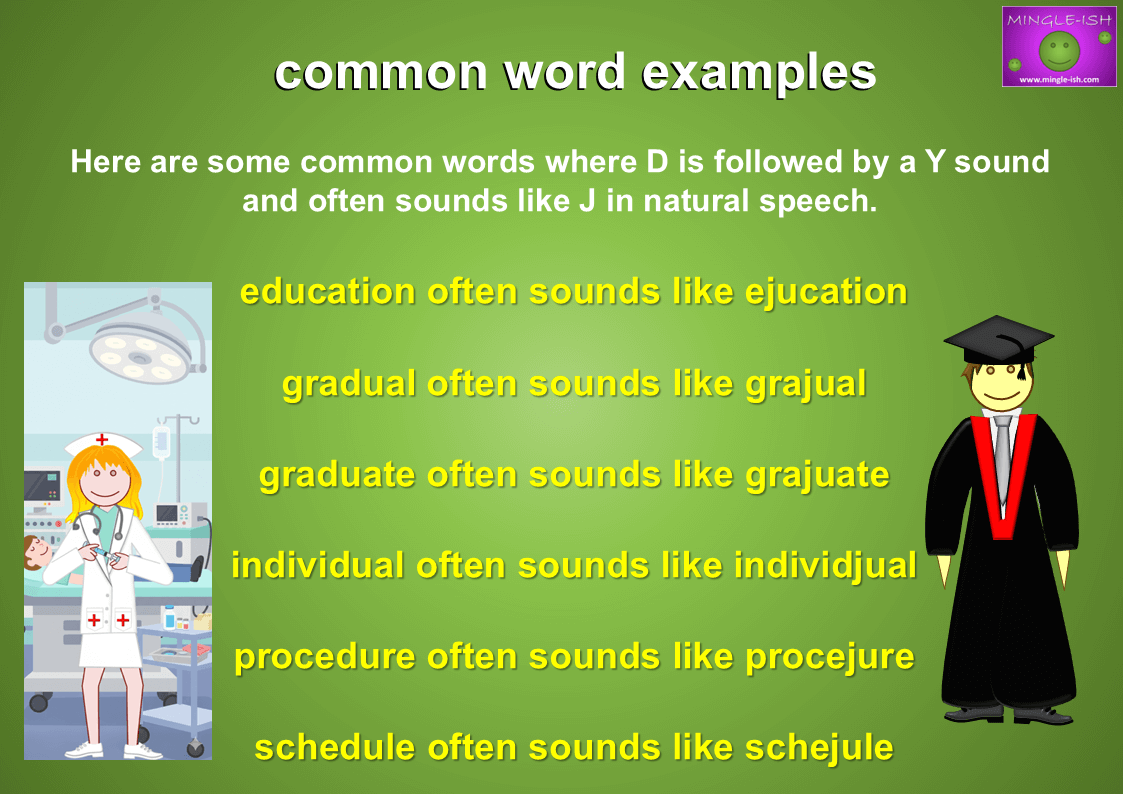
Common word examples
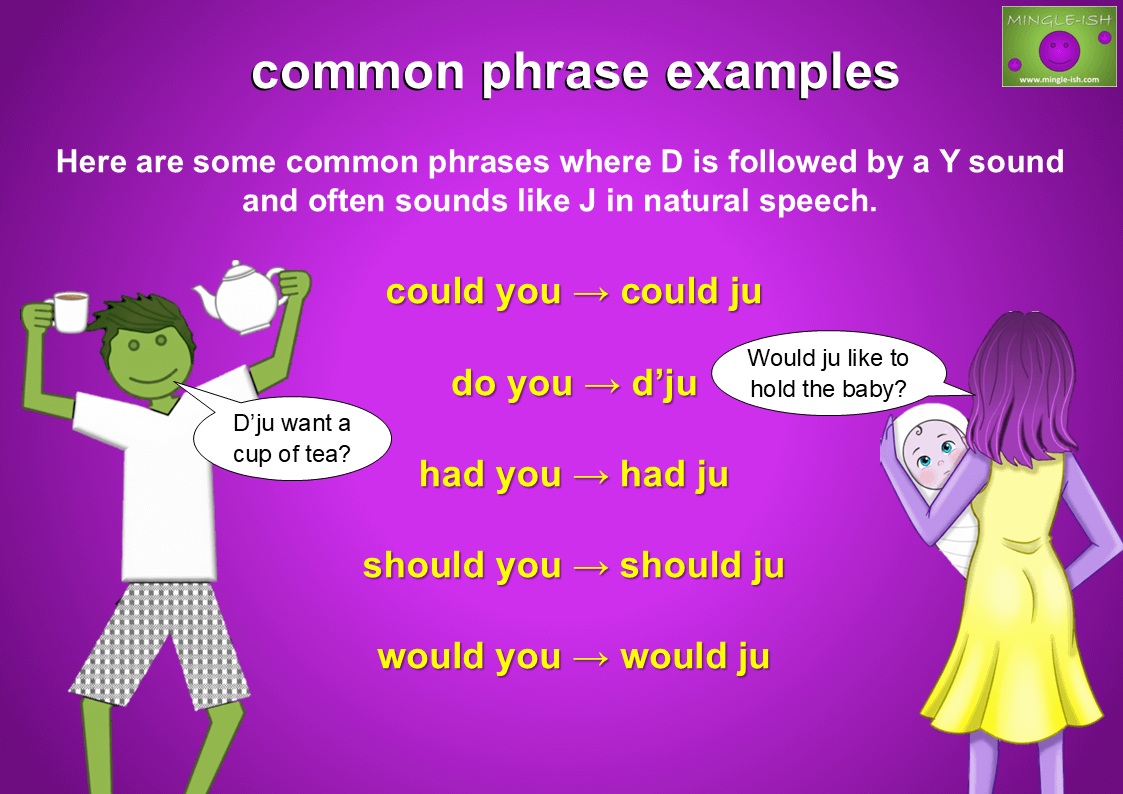
Common phrase examples
In everyday speech, this sound change is very common in short, frequent phrases. When D is followed by a Y sound, the two sounds merge and come out more like a J. This happens naturally when people speak quickly and smoothly. For example:
- could you → could ju
- do you → d’ju
- had you → had ju
- should you → should ju
- would you → would ju
You will hear these merged sounds all the time in natural British English. Try listening for the sound rather than the individual words, as native speakers rarely pronounce each sound separately in casual conversation.
Rules: When D is Pronounced as J
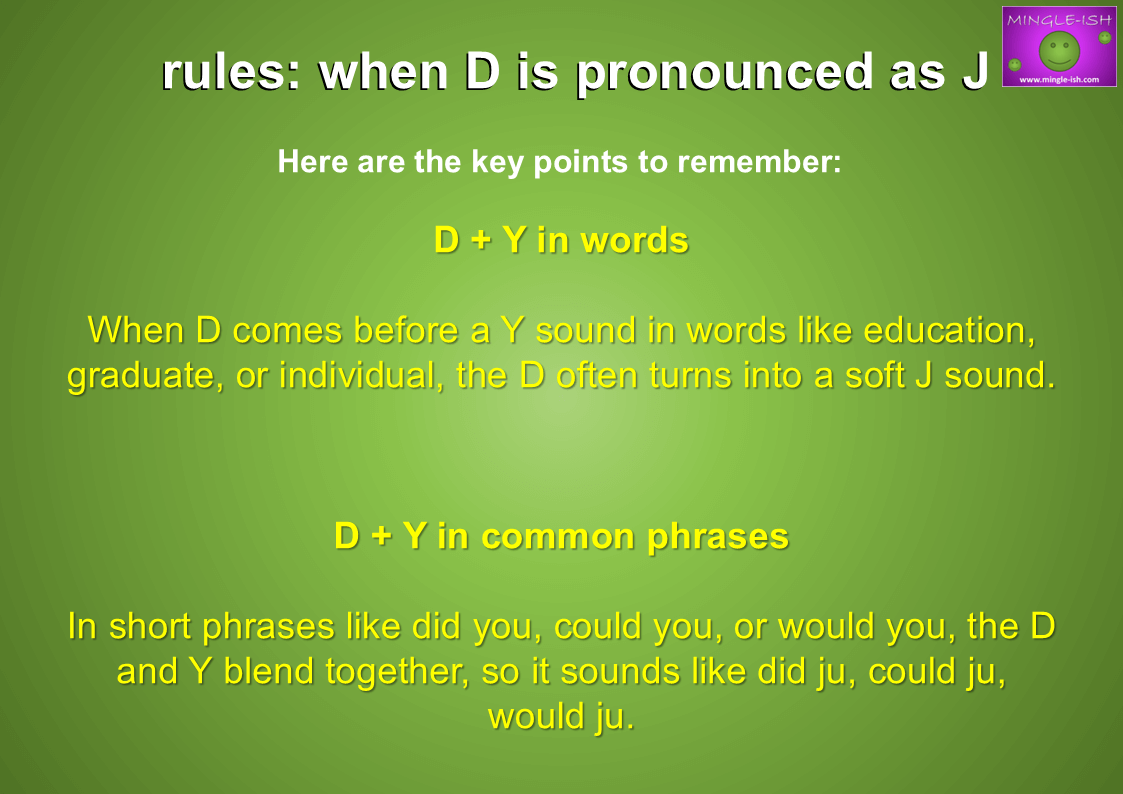
In English, D usually sounds like D, but in certain situations it can sound more like J. This mostly happens when a D is followed by a Y sound in the same word or phrase. Instead of pronouncing the D and Y separately, the two sounds merge, creating a J-like sound.
Here are the key points to remember:
- D + Y in words – When D comes before a Y sound in words like education, graduate, or individual, the D often turns into a soft J sound.
- D + Y in common phrases – In short phrases like did you, could you, or would you, the D and Y blend together, so it sounds like did ju,could ju, would ju.
-
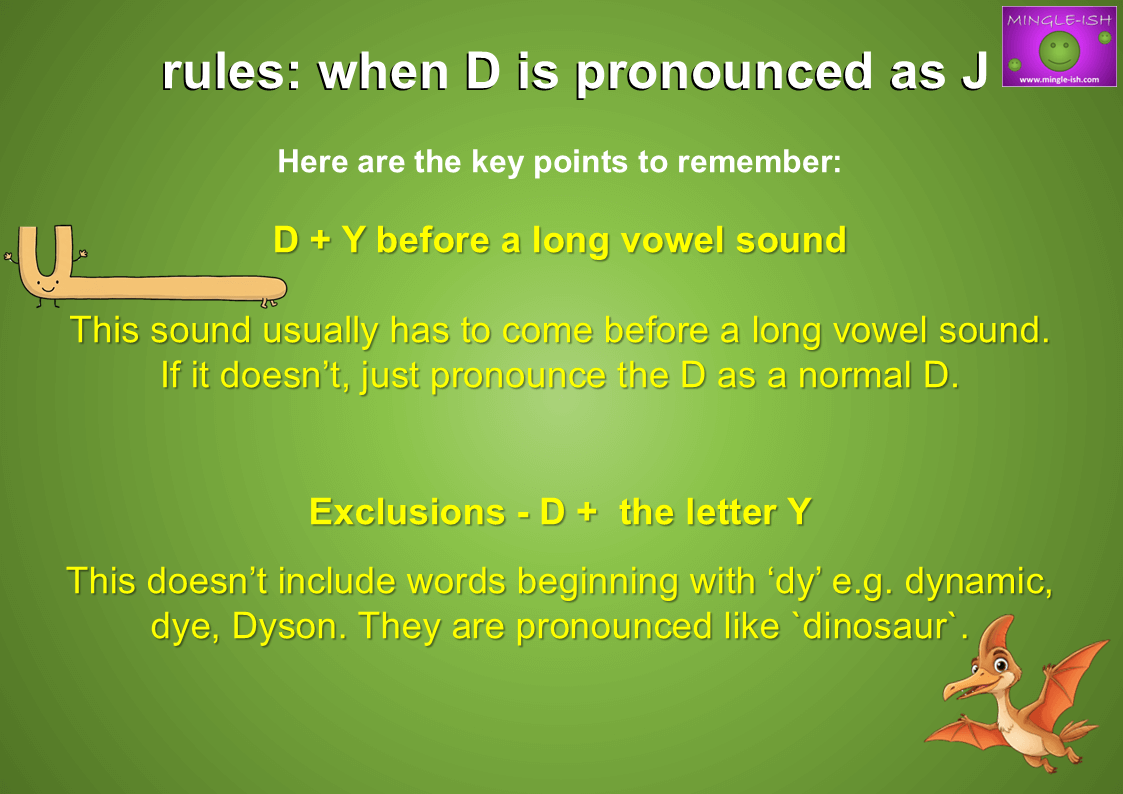
D + Y before a long vowel sound – This sound usually has to come before a long vowel sound. If it doesn’t, just pronounce the D as a normal D.
- Exclusions – D + the letter Y – This doesn’t include words beginning with ‘dy’ e.g. dynamic, dye, Dyson. They are pronounced like `dinosaur`.
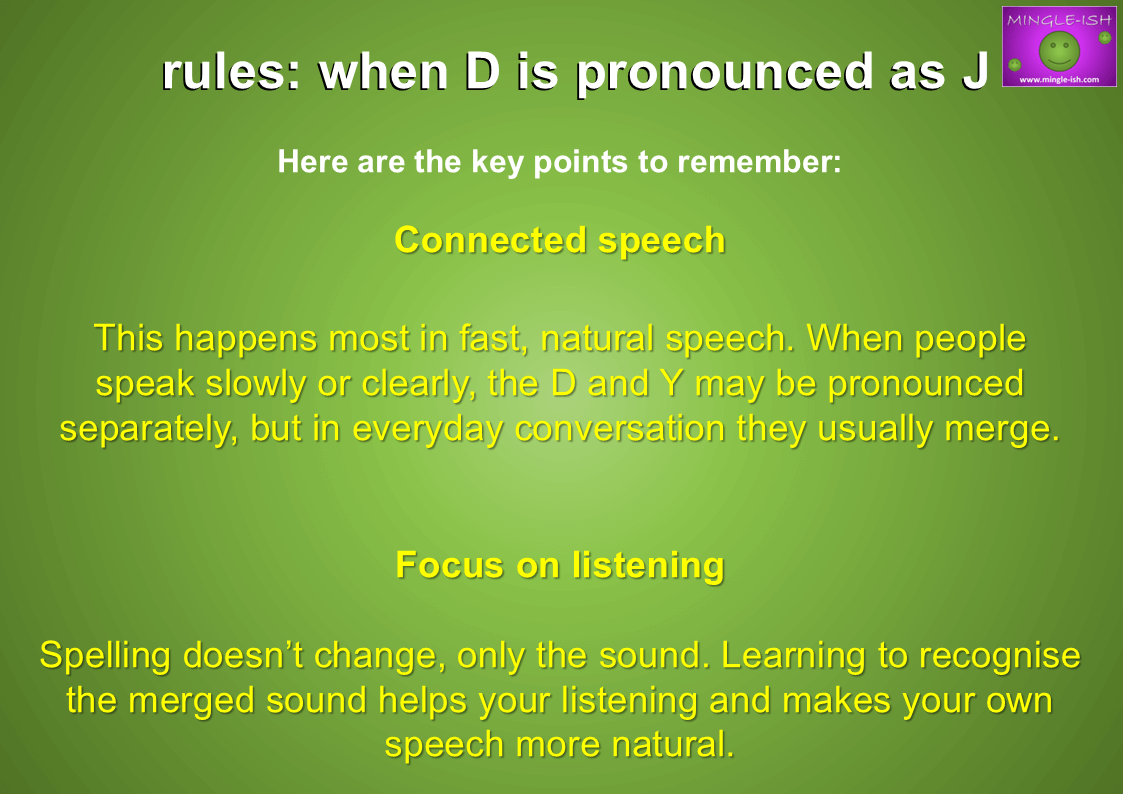
- Connected speech – This happens most in fast, natural speech. When people speak slowly or clearly, the D and Y may be pronounced separately, but in everyday conversation they usually merge.
- Focus on listening – Spelling doesn’t change, only the sound. Learning to recognise the merged sound helps your listening and makes your own speech more natural.
Following these rules will make it easier to understand native speakers and get your pronunciation closer to natural British English.
Pronouncing D as J Quiz
Now it’s time to put your knowledge to the test with this quick quiz on pronouncing D as J. Think you can catch it in real speech? Give it a go and see how you do! For more fun quizzes like this, head over to my YouTube channel and keep practising with even more English tips and challenges.
conclusion
To wrap up, pronouncing the letter D as a J sound is a small detail, but it makes a big difference to how natural your English sounds. The more you listen to real, everyday spoken English, the easier it becomes to notice when this change happens. Try to practise little and often, repeat short phrases out loud, and do not worry about being perfect. With regular exposure and a bit of confidence, this pronunciation pattern will start to feel completely natural.