Is B and V the same in English?
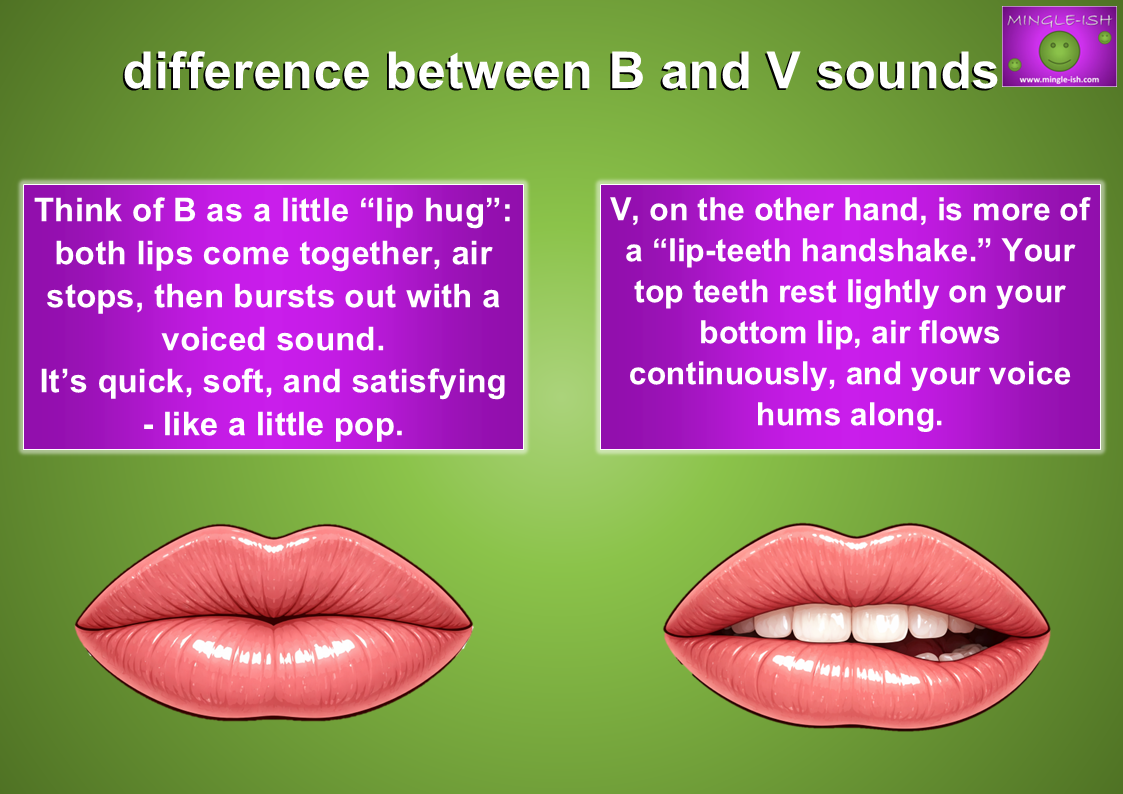
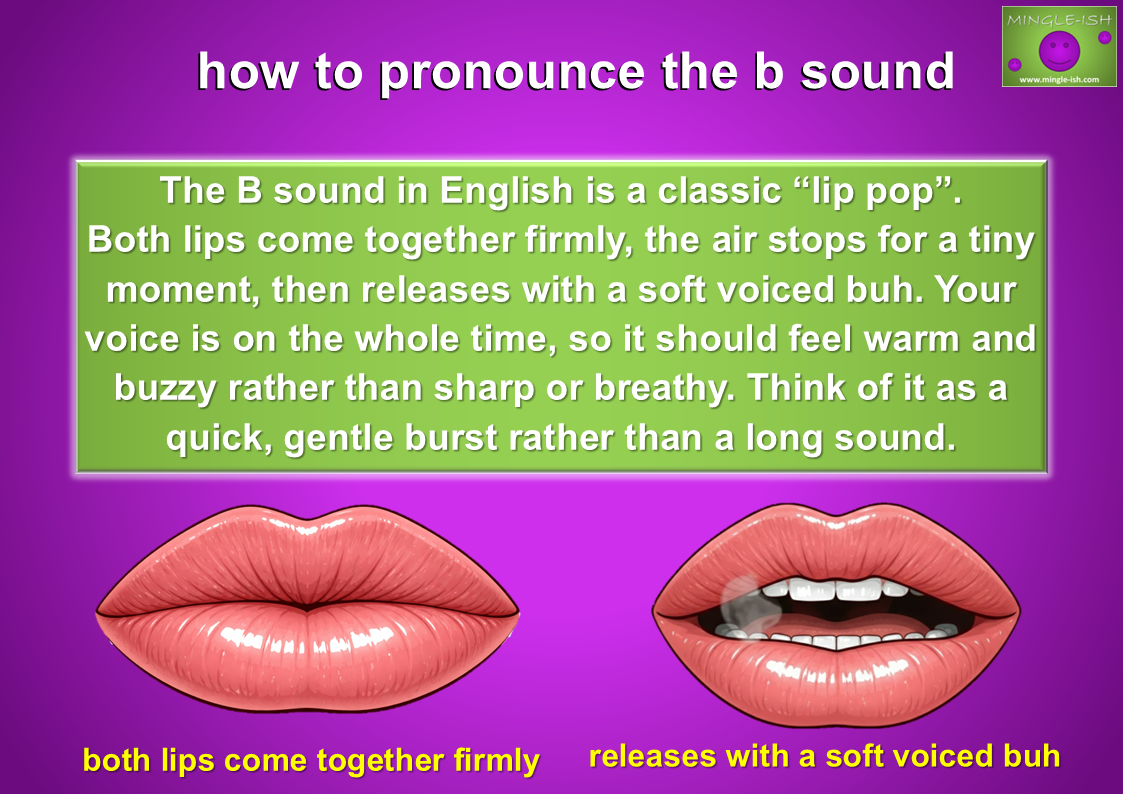
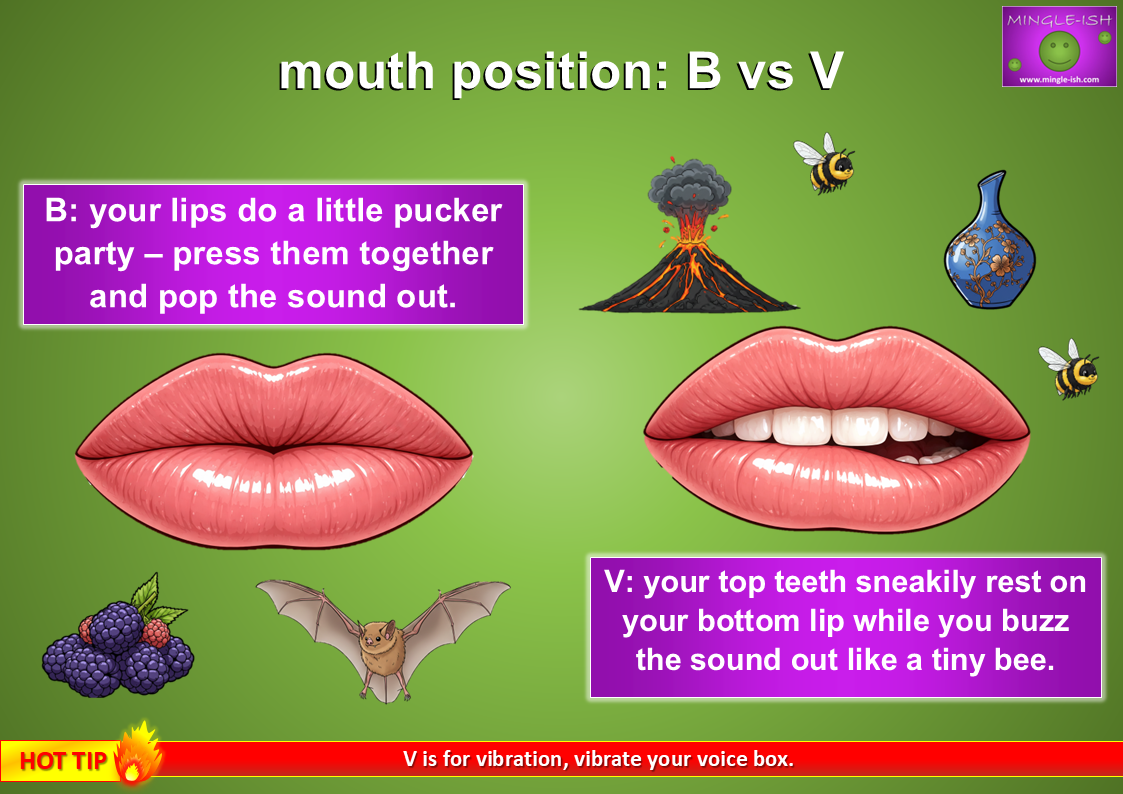
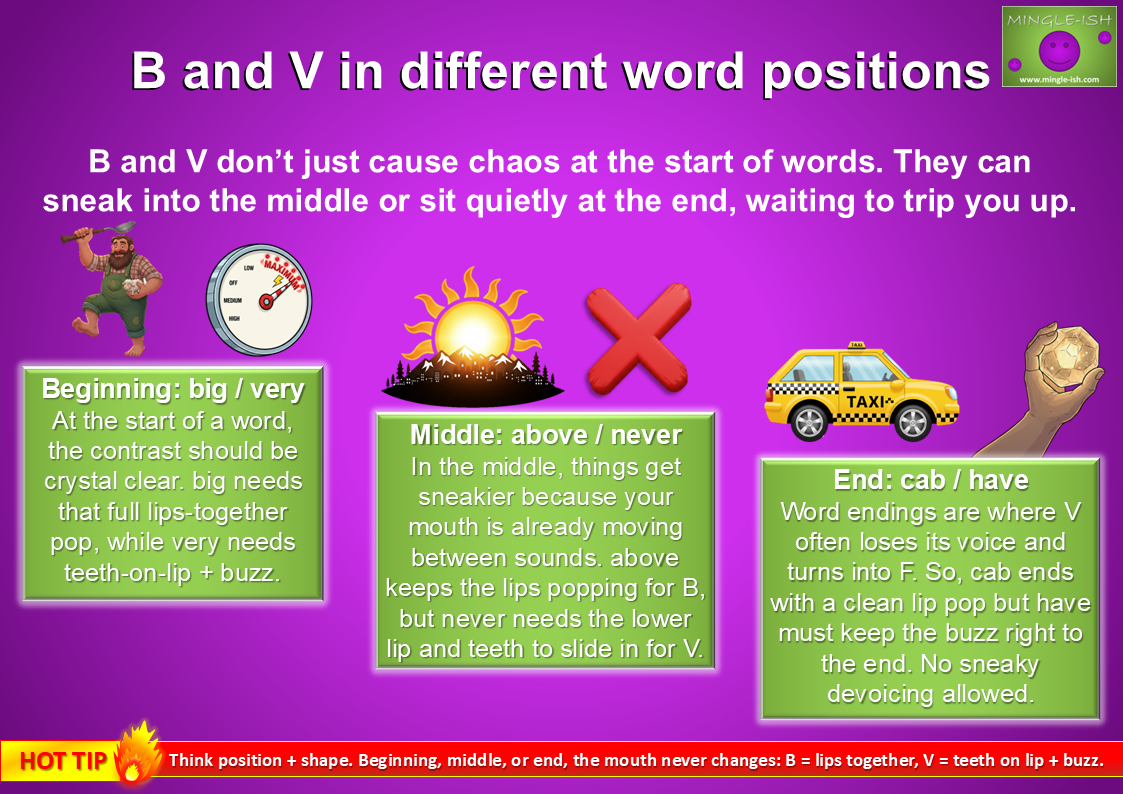
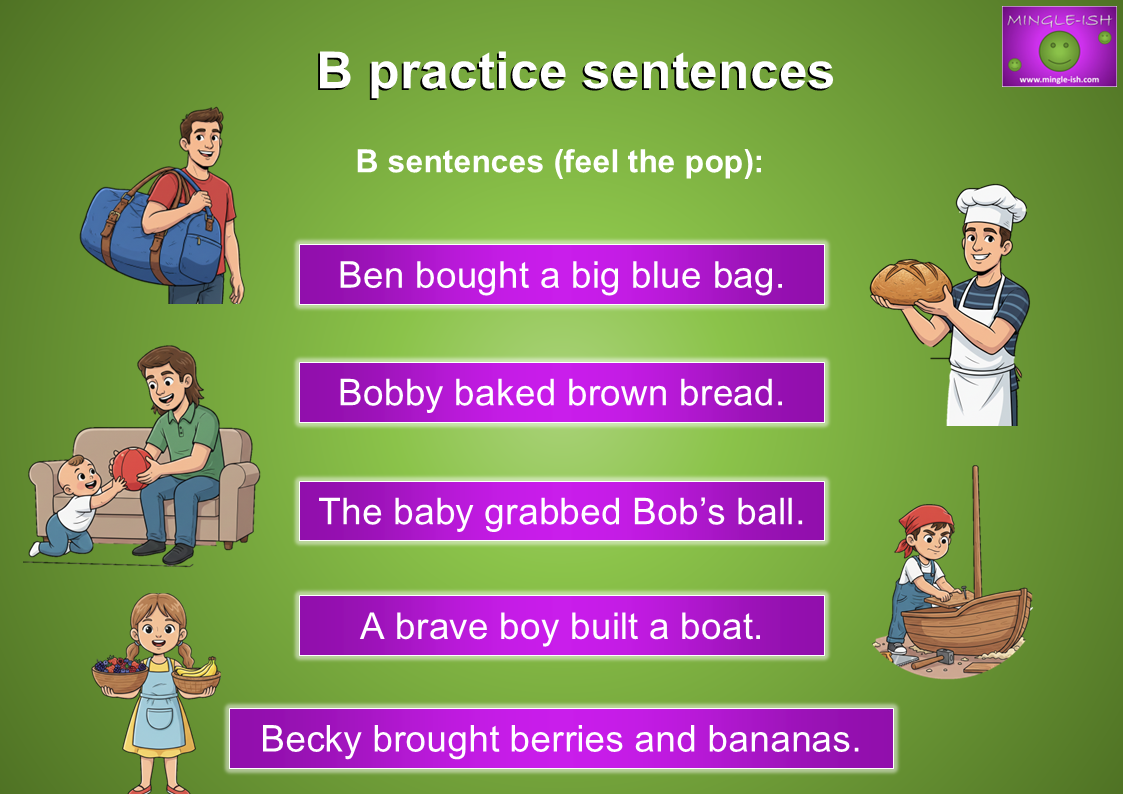
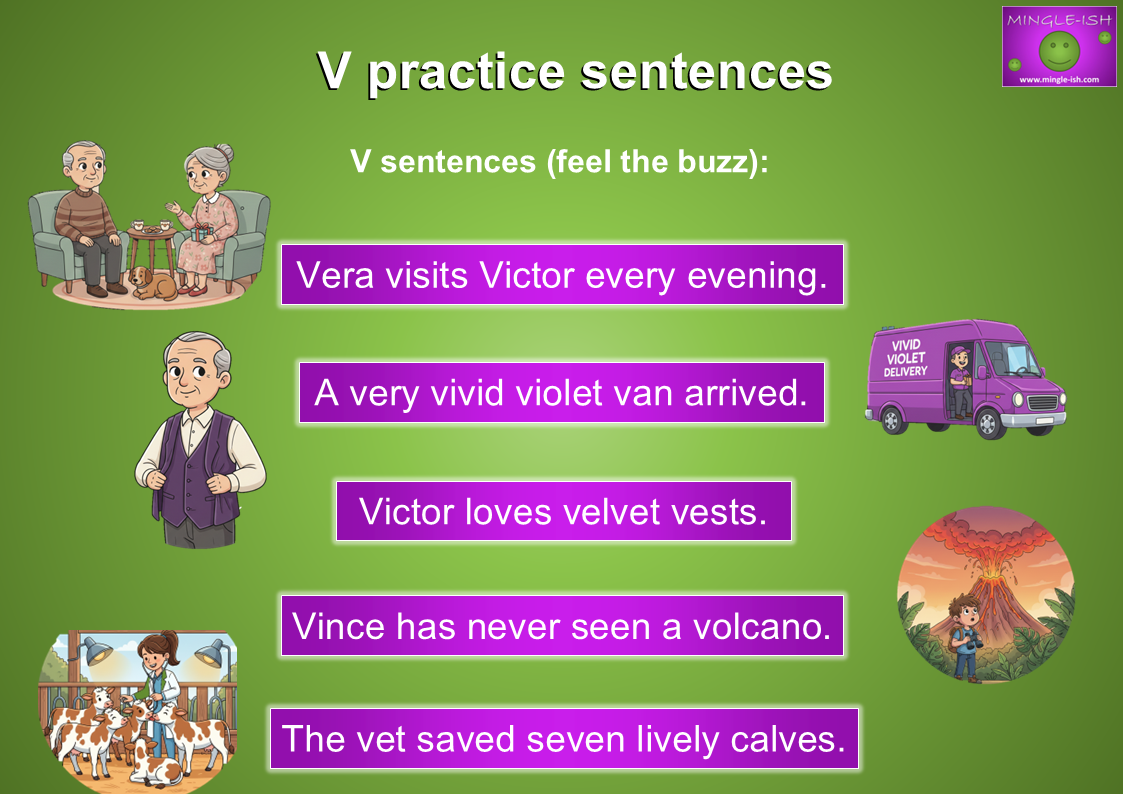
Nope. They’re completely different sounds. B is a plosive (lips together, little puff of air), while V is a fricative (teeth on lip, buzzy airflow). They might feel similar at first, but in English they’re distinct and swapping them can change meaning.
Why do I say berry for very?
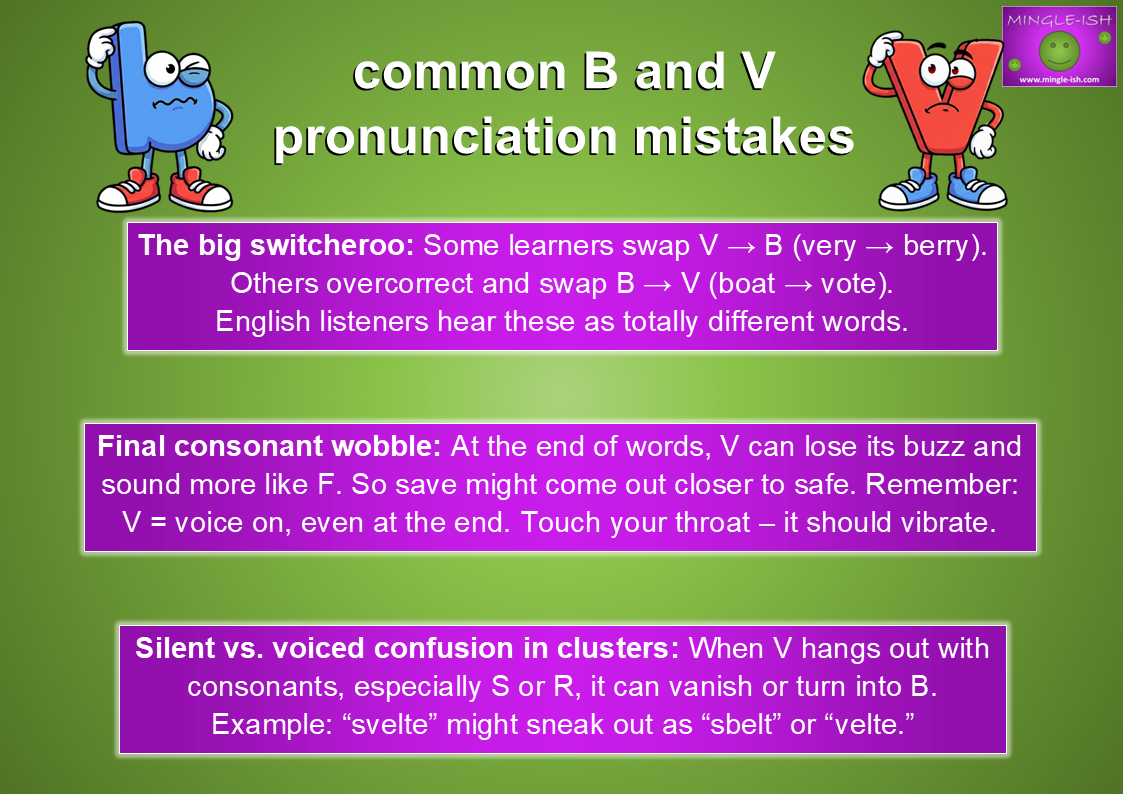
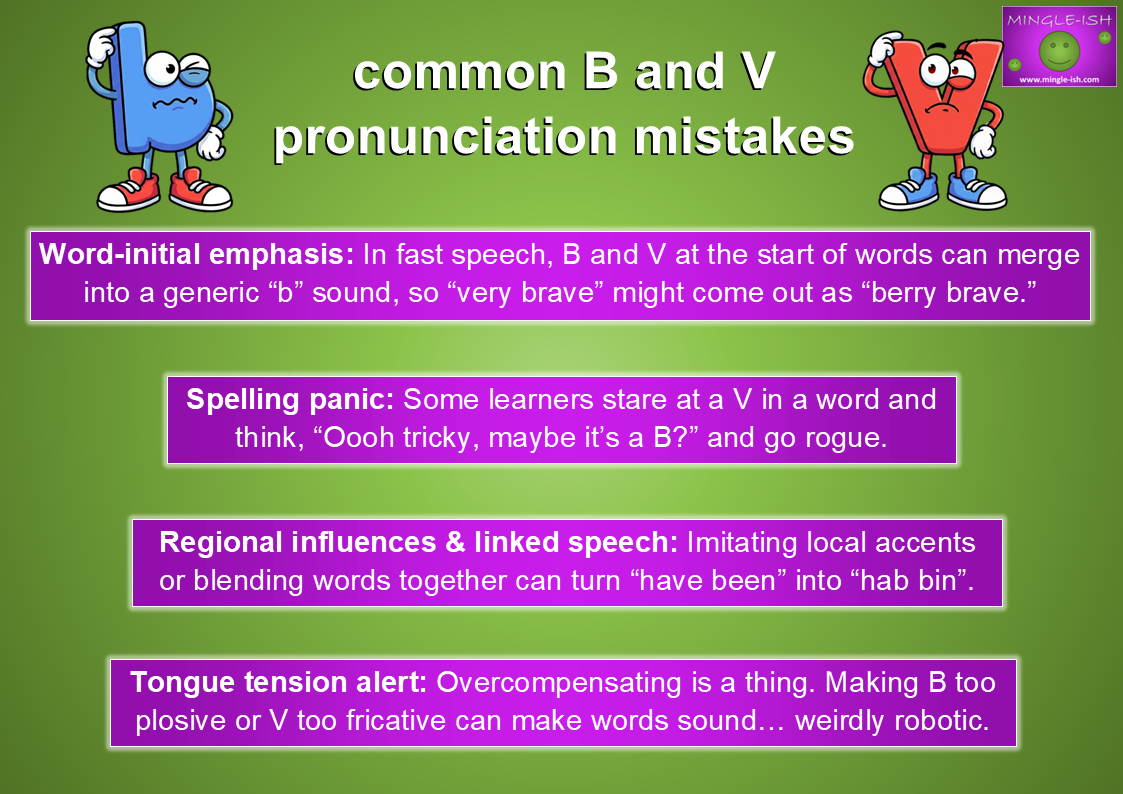
This usually happens when your first language doesn’t have the /v/ sound. Your brain reaches for the closest match it knows — /b/. Totally normal ESL behaviour, not a personal failure. It just means your mouth hasn’t learned the V position yet.
How do I practise the V sound?
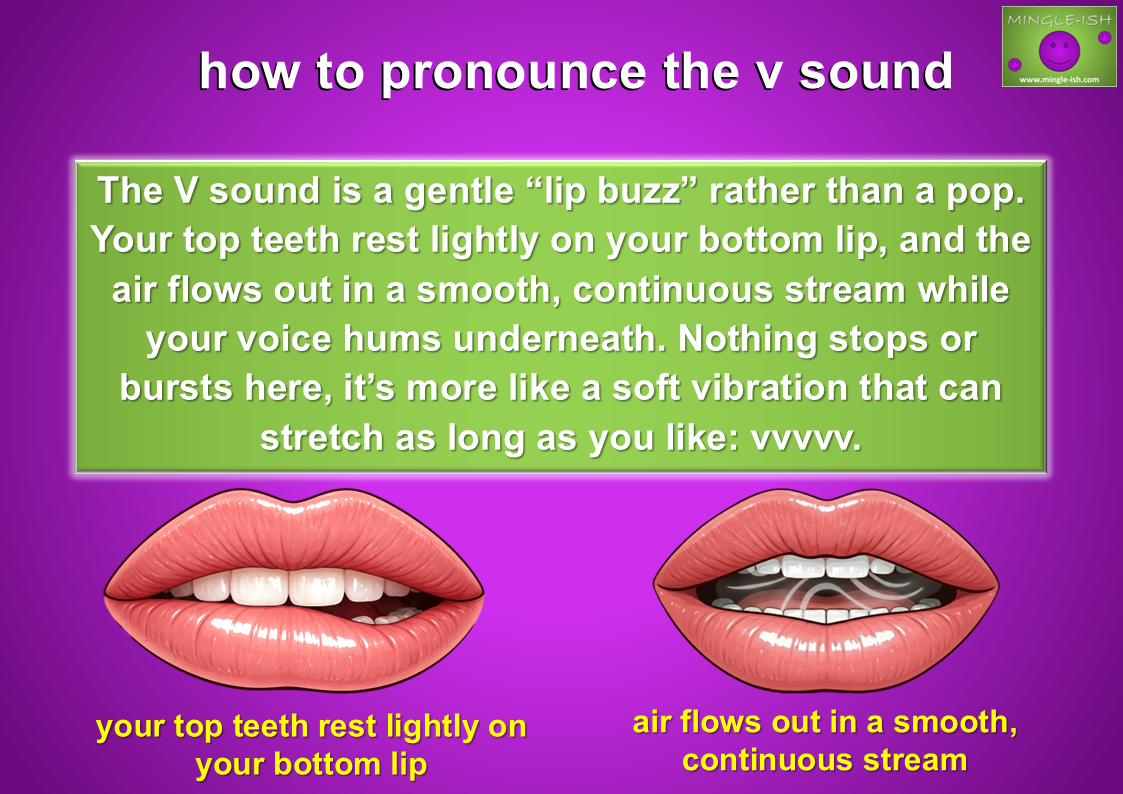
Start with the mouth shape: top teeth gently on your bottom lip. Turn your voice on and let the air flow: vvvv. Then add vowels: va, ve, vi, vo, vu. Mirror practice helps a lot — you should see your teeth on your lip.
Do B and V change meaning?
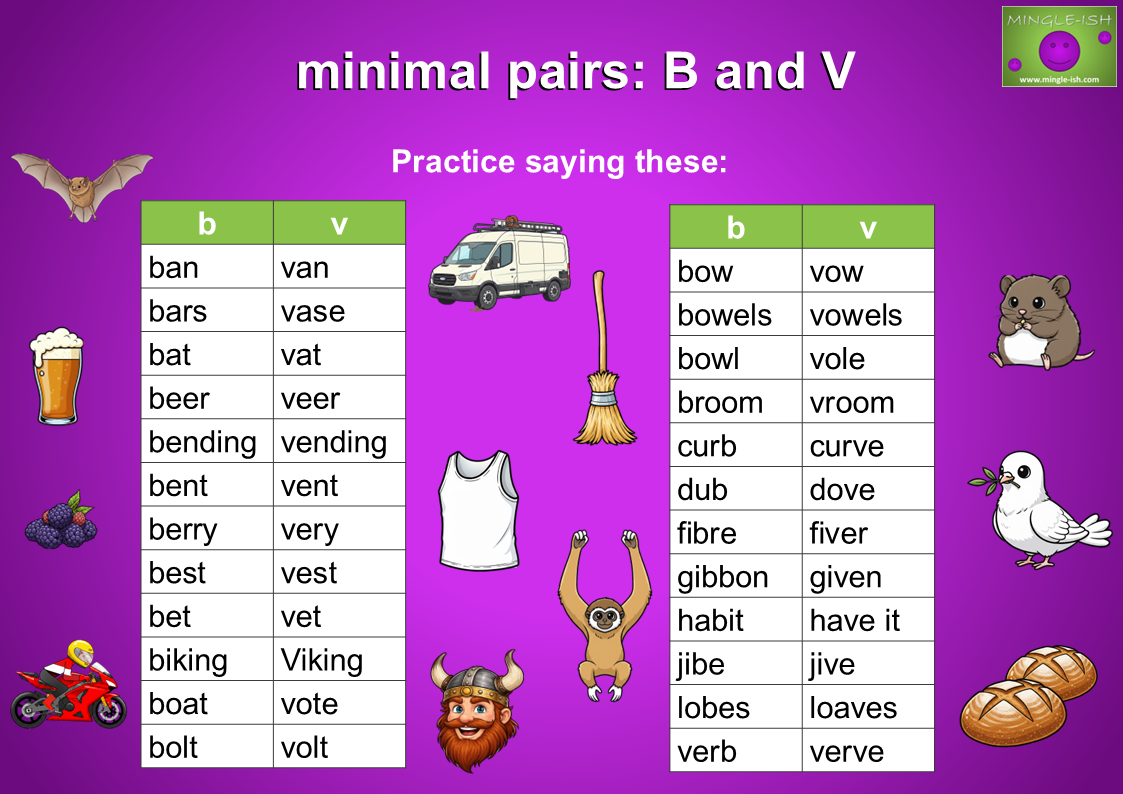
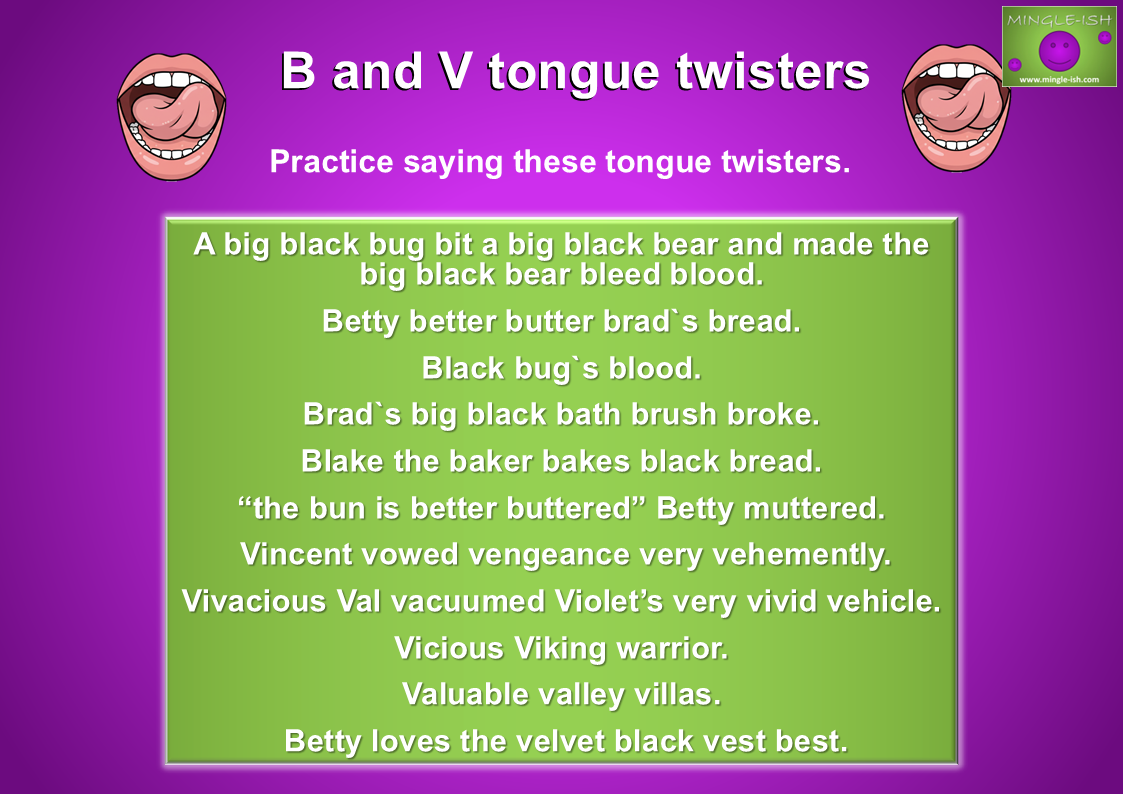
Yes, and sometimes dramatically. English has many minimal pairs where one sound swap creates a different word: berry–very, ban–van, boat–vote. So mastering the contrast isn’t just about accent — it’s about clarity.
Why can I hear the difference but still say it wrong?
Because listening and speaking use different muscle skills. Your ear may recognise /v/, but your mouth still defaults to /b/ out of habit. You need physical practice to retrain the movement.
Is V always made with teeth on the lip?
Yes. In standard English pronunciation, the top teeth lightly touch the bottom lip for /v/. If your lips touch each other instead, it becomes /b/. That tiny placement change is the whole difference.
Why does my V sound like F?
That means your mouth position is right, but your voice is off. /v/ is voiced and /f/ is voiceless. Put your fingers on your throat: you should feel vibration for vvvv but not for ffff.
Do native speakers ever confuse B and V?
Not in their own accent. For native listeners, berry and very are completely different words. That’s why mixing them can sometimes cause misunderstandings.