Breakups are never fun, but English has plenty of idioms to talk about them. Instead of saying things directly, we use expressions like call it quits or on the rocks to describe relationships falling apart.

In this guide, you’ll learn common breakup idioms with meanings, examples, and a quick quiz to test what actually stuck.

What Are Break Up Idioms?

Break up idioms are expressions used to describe the end of a relationship, emotional situations, or relationship problems. They’re commonly used in everyday English, films, and conversations, so learning them helps you understand natural, real-life English.

Common Break Up Idioms in English

a shoulder to cry on

meaning: A “shoulder to cry on” means someone who gives you emotional support after a breakup. It’s the person who listens to you, comforts you, and helps you get through the sad, messy post-breakup phase when your brain is replaying everything like a bad movie you can’t turn off.

examples:

  • After the breakup, she went straight to her best friend for a shoulder to cry on.
  • He was a shoulder to cry on when she split up with her boyfriend last week.
  • Everyone needs a shoulder to cry on after a tough breakup, even if they say they’re fine.
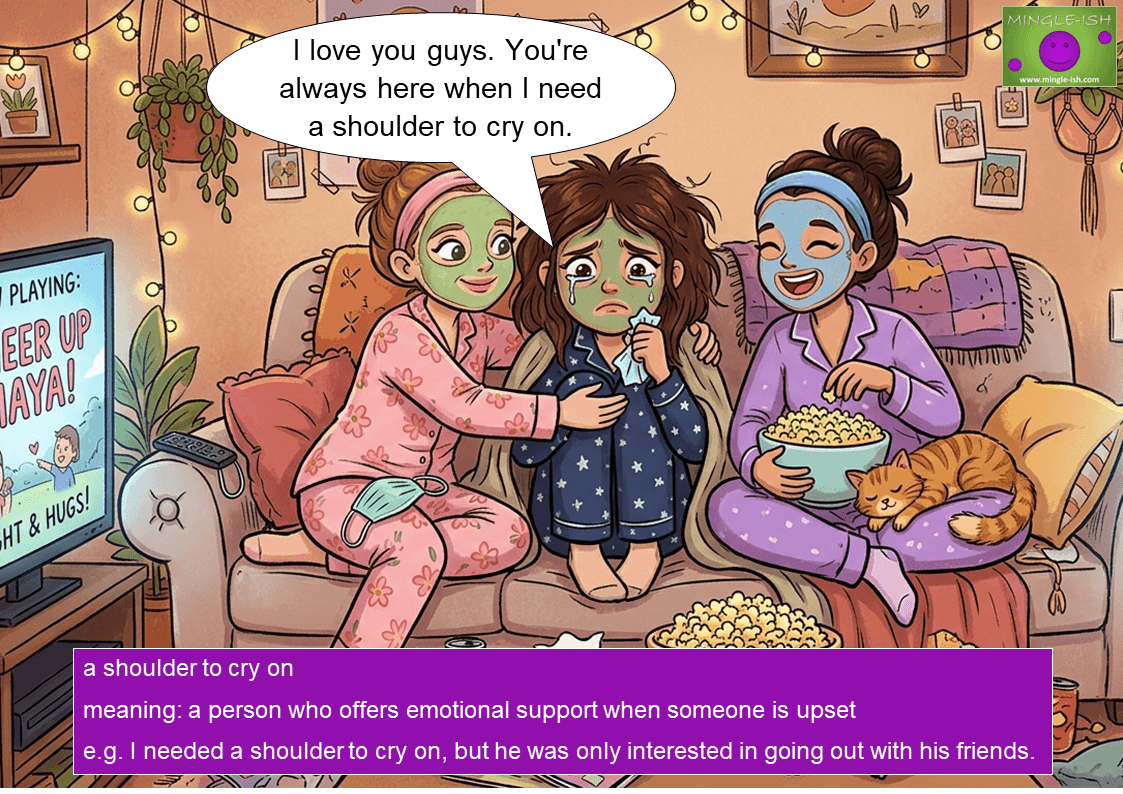
Cartoon of three friends in pajamas having a movie night with face masks and popcorn to comfort a girl crying after a breakup.

at loggerheads

meaning:
“At loggerheads” means two people are in strong disagreement and constantly arguing, especially during or after a breakup when neither side can seem to agree on what went wrong. It’s that stage where every conversation turns into a debate and even saying “hello” somehow becomes a problem.

examples:

  • They were at loggerheads over why the breakup even happened.
  • She and her ex were still at loggerheads about who ended things first.
  • After the split, they stayed at loggerheads and barely spoke without arguing.
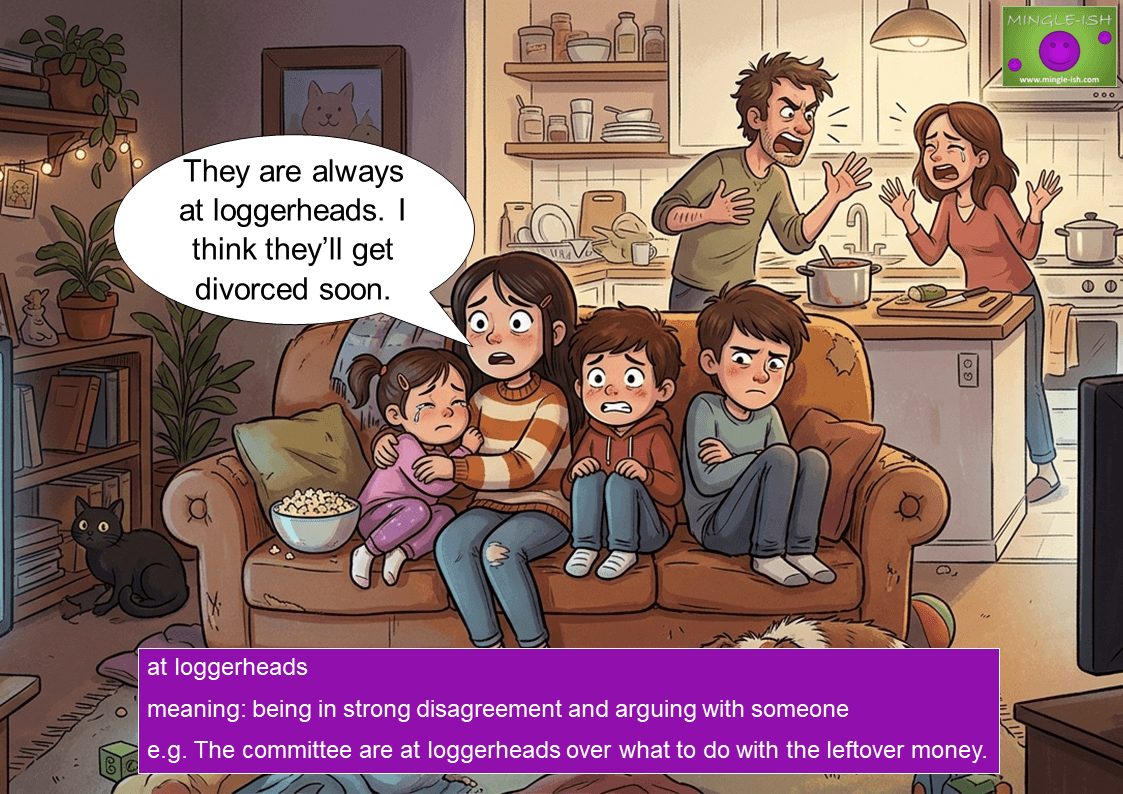
An illustration showing a family where the parents are arguing in the kitchen and the children on the couch are stressed and crying.

bad blood

meaning:
“Bad blood” means there are negative feelings, resentment, or lingering tension between two people after a breakup. It’s that awkward, slightly frosty vibe where things didn’t end well, and neither of you is exactly rushing to wish the other one happiness.

examples:

  • There’s still bad blood between them after the breakup.
  • She said there was no bad blood, but they clearly avoid each other.
  • The split left a lot of bad blood, so they don’t speak anymore.
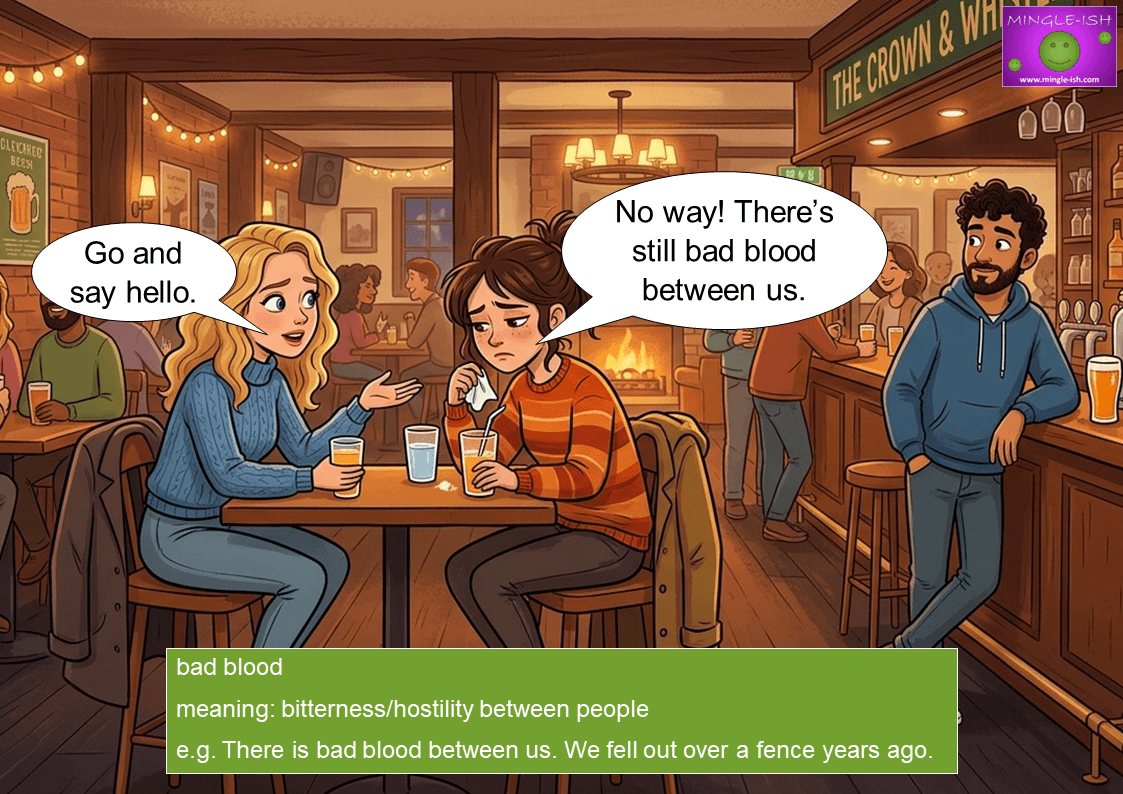
Breakup idiom bad blood example in conversation, woman talking to friend about tension after relationship ended

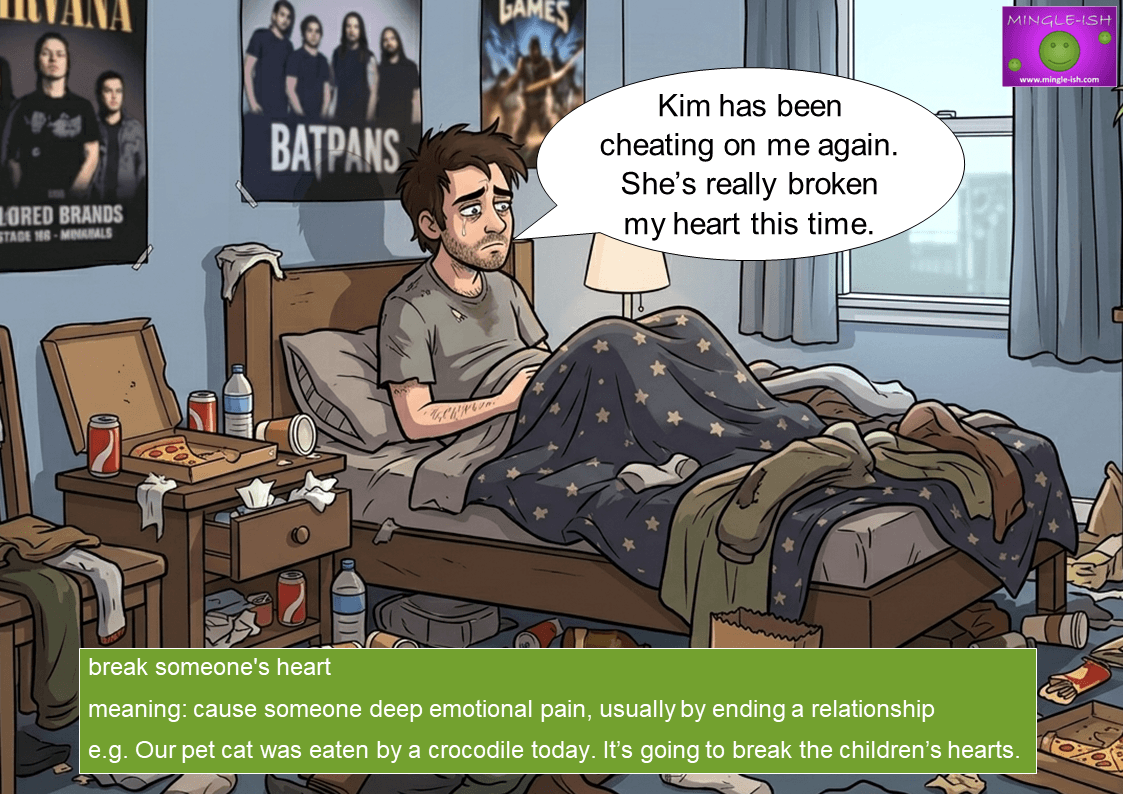
break someone’s heart

meaning:
“Break someone’s heart” means to cause someone deep emotional pain, usually by ending a relationship or hurting them romantically. It’s that awful moment where everything suddenly feels a bit dramatic, a bit miserable, and yes, your playlist somehow turns into non-stop sad songs.

examples:

  • She broke his heart when she ended things out of nowhere.
  • He tried to act fine, but the breakup clearly broke his heart.
  • Breaking up with her like that really broke her heart.
Cartoon of a depressed man crying in a messy bedroom after a relationship breakup, illustrating the idiom "break someone's heart."

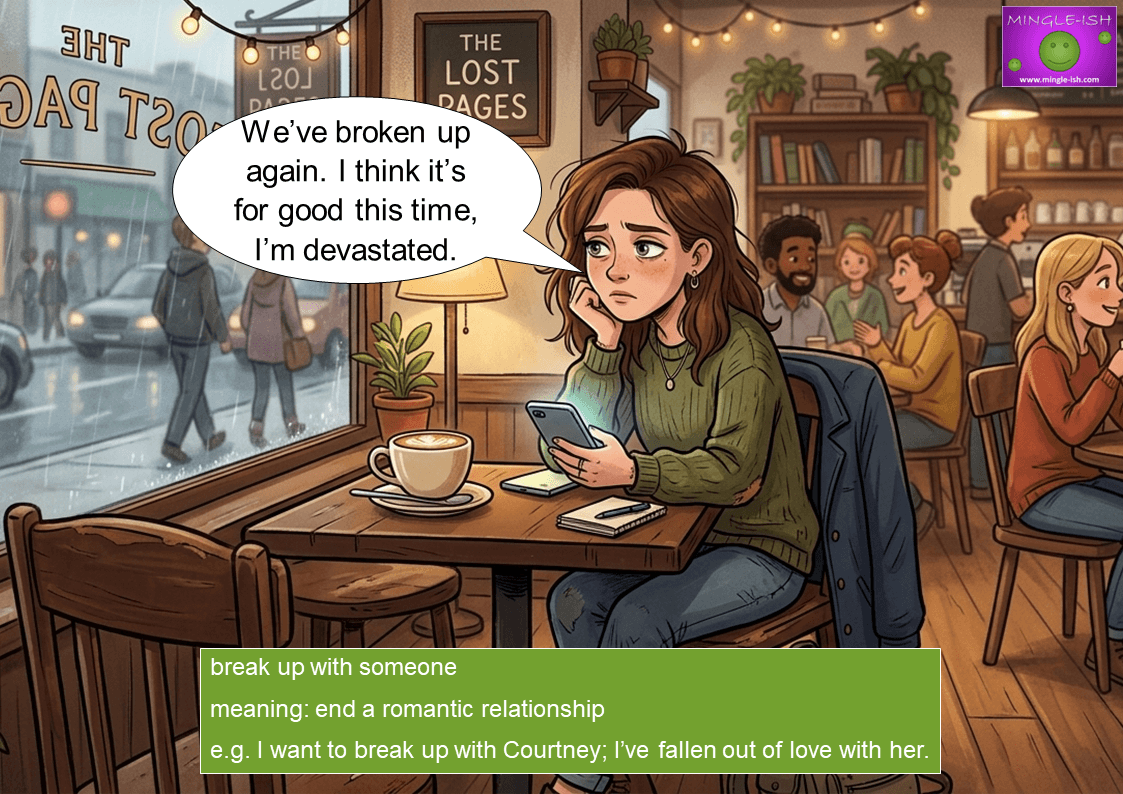
break up with someone

meaning:
“Break up with someone” means to end a romantic relationship with them. It’s the moment where one person actually says the words (or sends the dreaded message), and suddenly you’re no longer a couple, just two people awkwardly avoiding the same places.

examples:

  • She broke up with her boyfriend after months of arguing.
  • He finally broke up with her when he realised it wasn’t working.
  • I broke up with him last week, and now everything feels a bit weird.
Cartoon of a sad woman sitting alone in a rainy cafe after a breakup, illustrating the phrase "break up with someone."

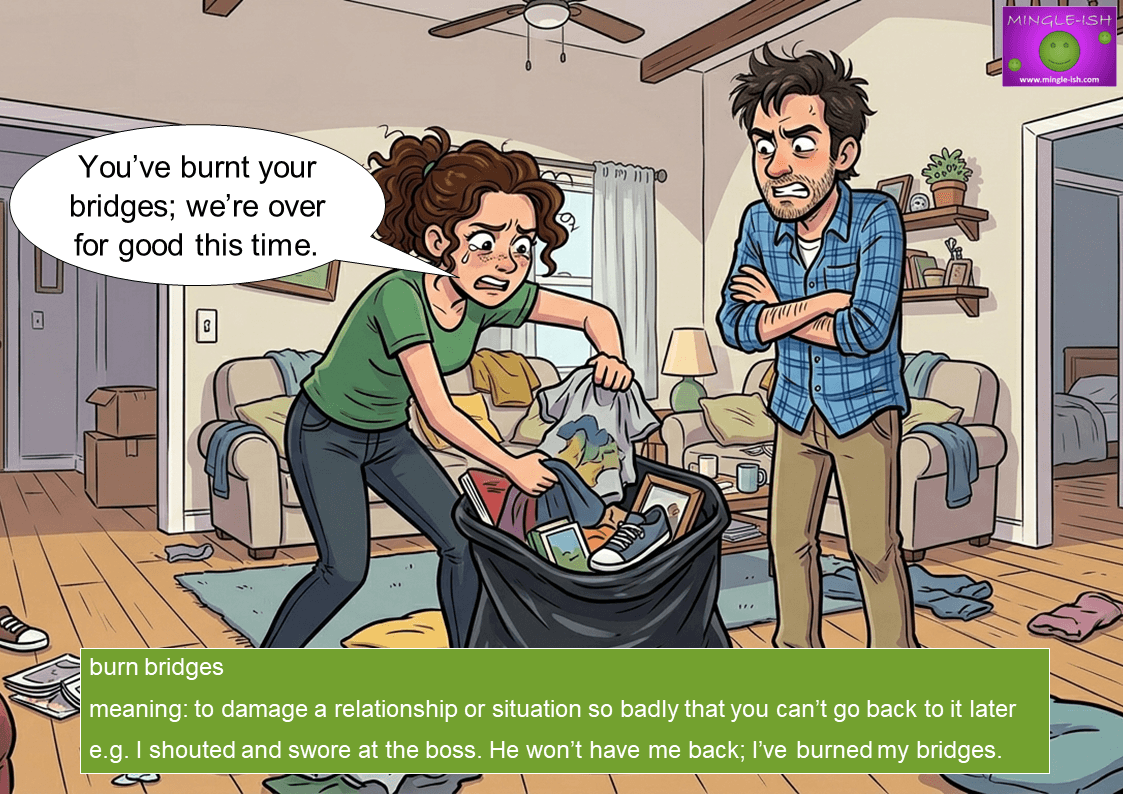
burn bridges

meaning:
“Burn bridges” means to damage a relationship so badly that there’s no going back. In a breakup, it’s when things end on such a dramatic, slightly chaotic note that being friends later is not even remotely an option.

examples:

  • He really burned bridges when he ended things in that argument.
  • She burned bridges with her ex, so they don’t speak at all now.
  • I didn’t want to burn bridges, but the breakup got out of hand.
Cartoon illustration of a woman crying while packing a man's belongings into a trash bag during a breakup, featuring a speech bubble that says "You’ve burnt your bridges" to illustrate the idiom's meaning.

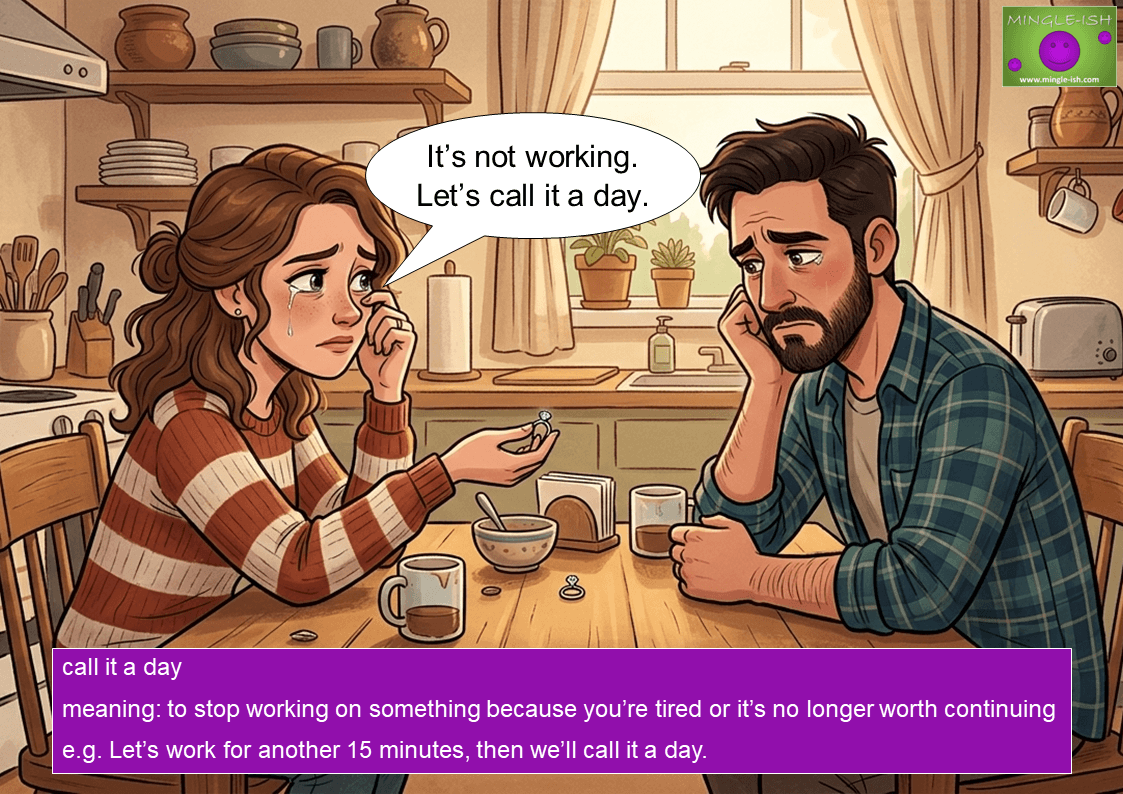
call it a day

meaning:
“Call it a day” in a breakup sense means you’ve reached the point where the relationship is officially done. No more trying, no more fixing things, just a mutual or one-sided decision to say “this is it” and walk away before it turns into endless arguments or awkward texting phases.

examples:

  • He called it a day after they kept having the same argument for weeks.
  • She called it a day when she realised they wanted completely different things in life.
  • They both decided to call it a day after one final awkward dinner that said everything without anyone actually saying anything.
Couple breaking up at kitchen table saying “It’s not working, let’s call it a day” relationship idiom example

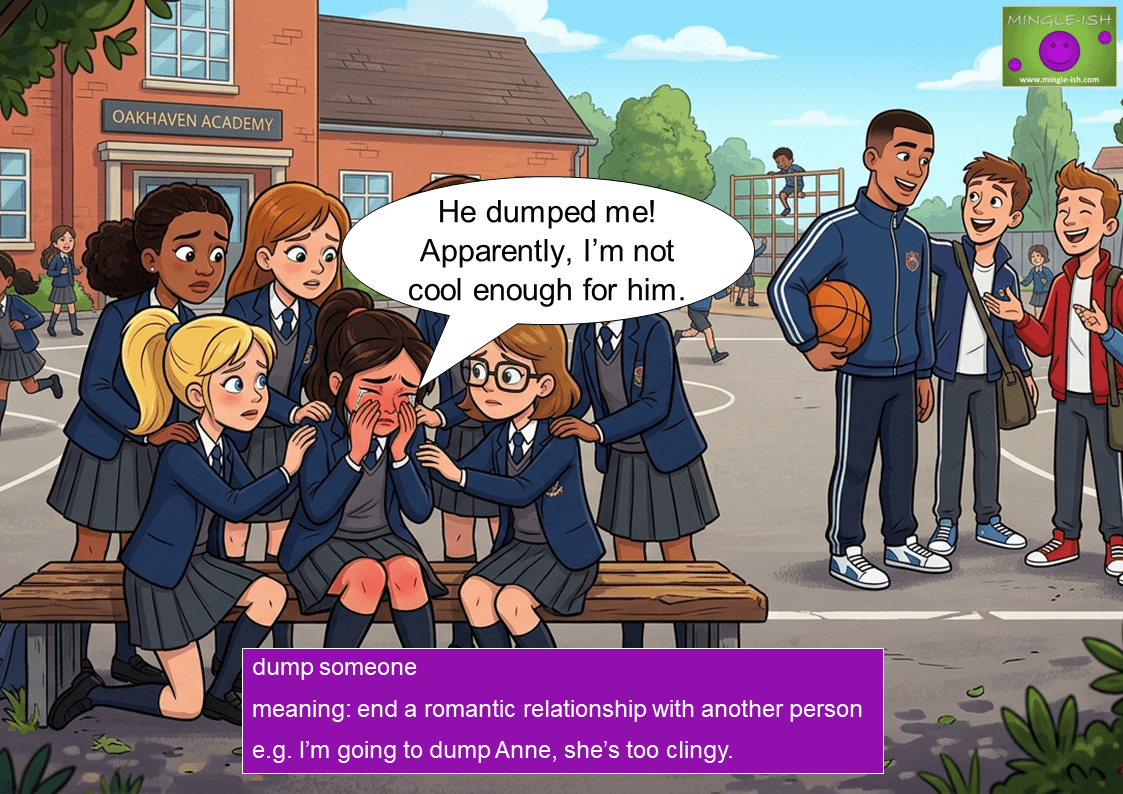
dump someone

meaning:
“To dump someone” means to end a relationship suddenly or bluntly, usually from one person’s side. It often feels quite harsh, like one person has made the decision and the other is left trying to process what just happened.

examples:

  • She dumped him over text after a week of awkward silence.
  • He got dumped right after they came back from holiday.
  • They said she dumped him because things had just stopped feeling right.
Girl crying at school after being dumped saying “He dumped me” breakup idiom example ESL EFL

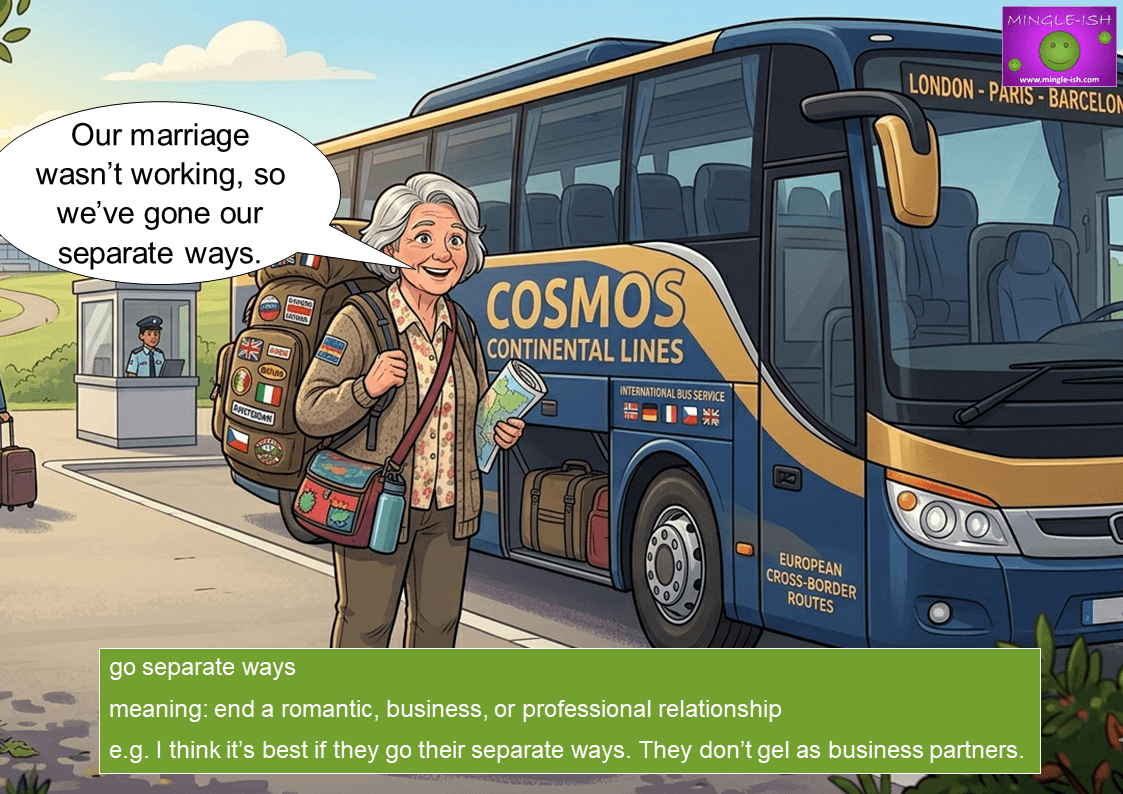
go your separate ways

meaning:

“Go your separate ways” means a relationship has come to a natural end and both people move on in different directions. It’s not usually dramatic, more like things have slowly changed and you both accept it’s time to live your own lives.

examples:

  • They went their separate ways after realising they wanted different things.
  • After years together, they went their separate ways quite peacefully.
  • She said they just went their separate ways once the spark faded.
An older woman with a large travel backpack stands by an international coach, illustrating the idiom "go separate ways" by explaining the end of her marriage.

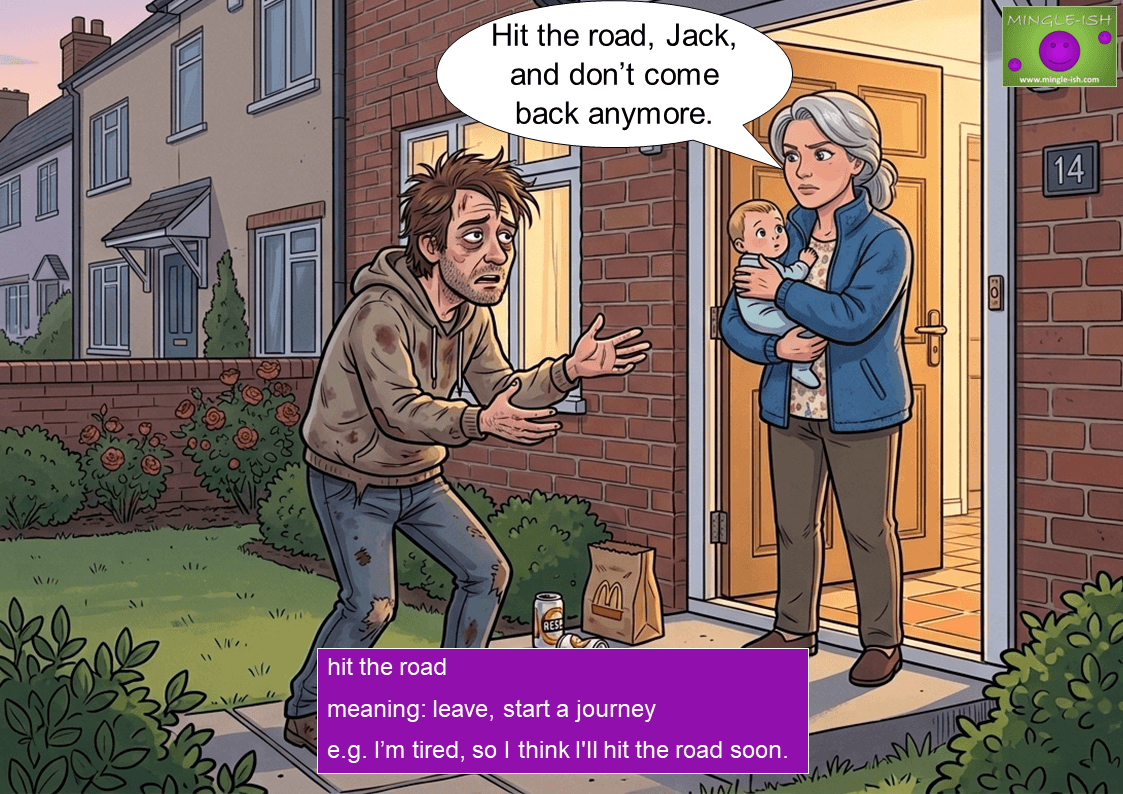
hit the road

meaning:
“Hit the road” in a breakup sense means leaving a relationship and moving on, usually quite decisively. It’s that moment when someone decides they’re done and it’s time to go in a different direction, sometimes suddenly, sometimes after things have been building up for a while.

examples:

  • He hit the road after realising the relationship wasn’t working anymore.
  • She hit the road when things started feeling too tense all the time.
  • They both agreed it was time to hit the road and move on.
A woman standing in her doorway holding a baby, telling a disheveled man to leave, illustrating the idiom "hit the road" in the context of a relationship breakup.

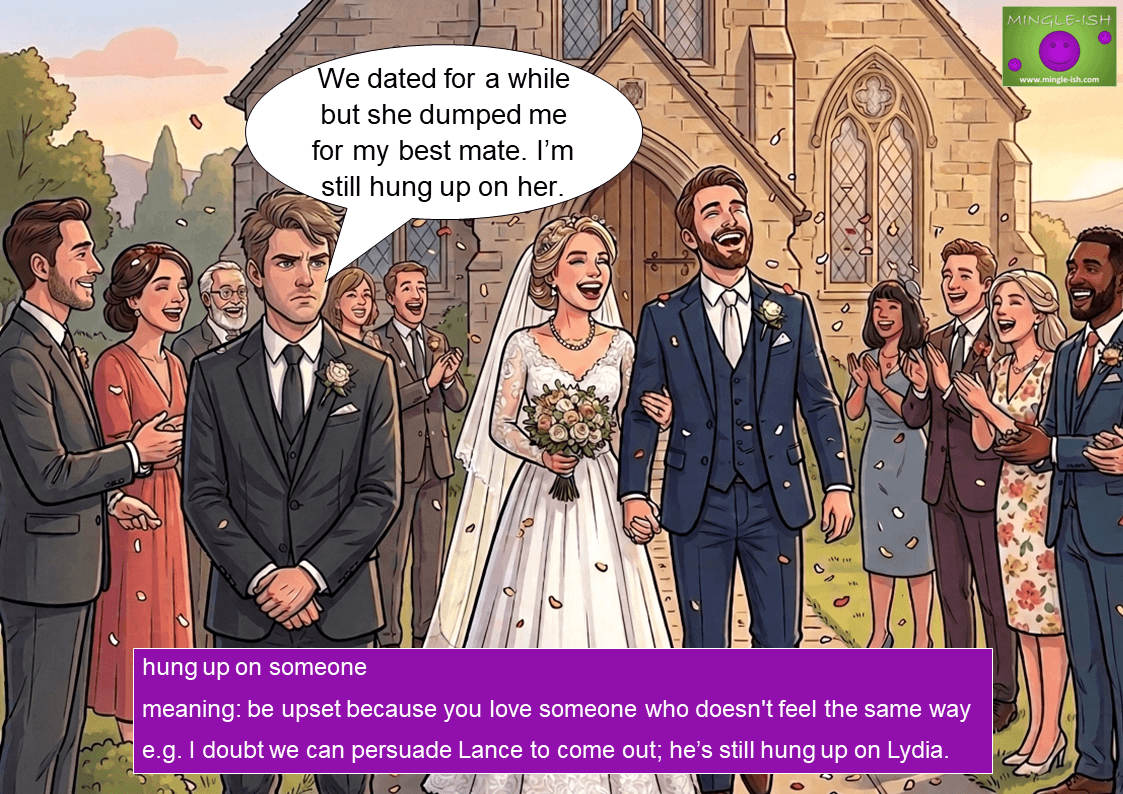
hung up on someone

meaning:
“Hung up on someone” means you can’t stop thinking about an ex or a past relationship, even after it’s ended. It’s when your brain keeps replaying everything like it’s stuck on repeat, and moving on feels harder than it probably should.

examples:

  • He’s still hung up on his ex months after they broke up.
  • She realised she was hung up on someone who had already moved on.
  • They both pretended to be fine, but he was clearly still hung up on her.
Man at a wedding looking upset as his ex marries his best friend, illustrating the idiom “hung up on someone”

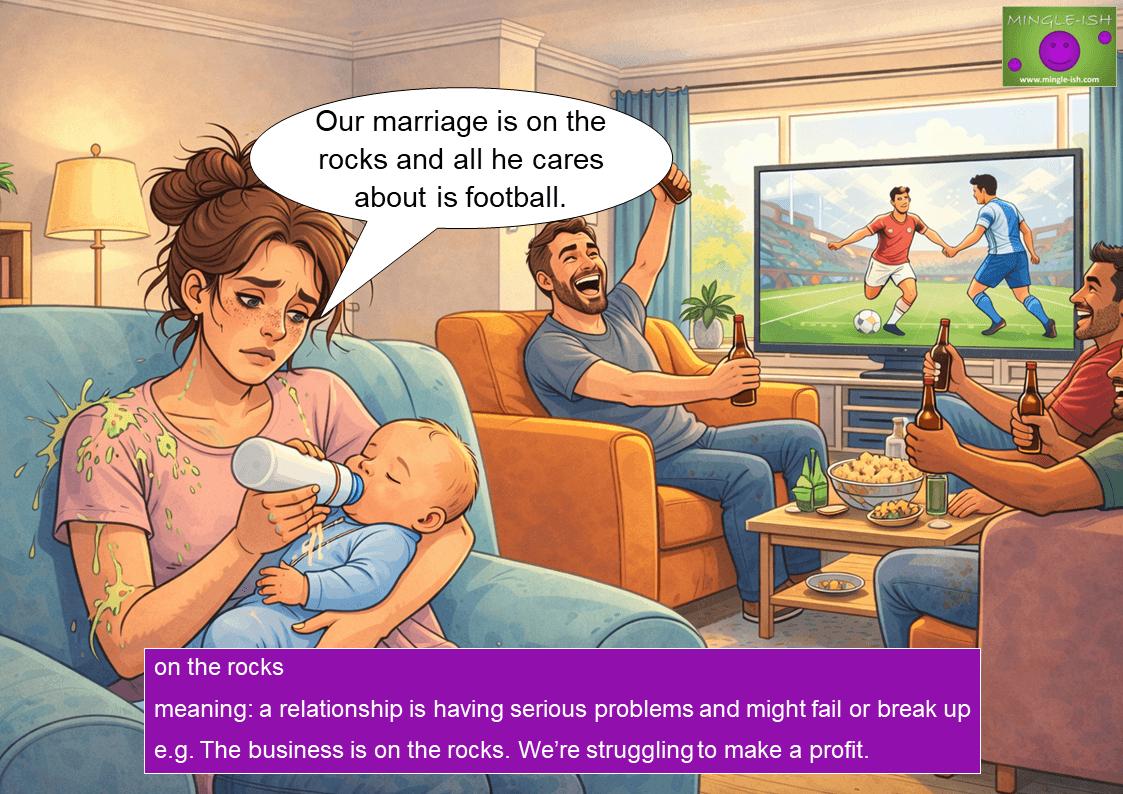
on the rocks

meaning:
“On the rocks” in a relationship means things are going badly and a breakup is very likely. It’s that awkward stage where nothing feels quite right anymore, arguments are more common, and you can both kind of feel it heading downhill.

examples:

  • Their relationship was on the rocks after months of constant arguing.
  • She could tell things were on the rocks when they stopped talking properly.
  • They admitted things had been on the rocks for a while before they split.
A frustrated woman bottle-feeding a baby while her husband and his friends watch football in the background, illustrating the idiom "on the rocks" to describe a troubled relationship.

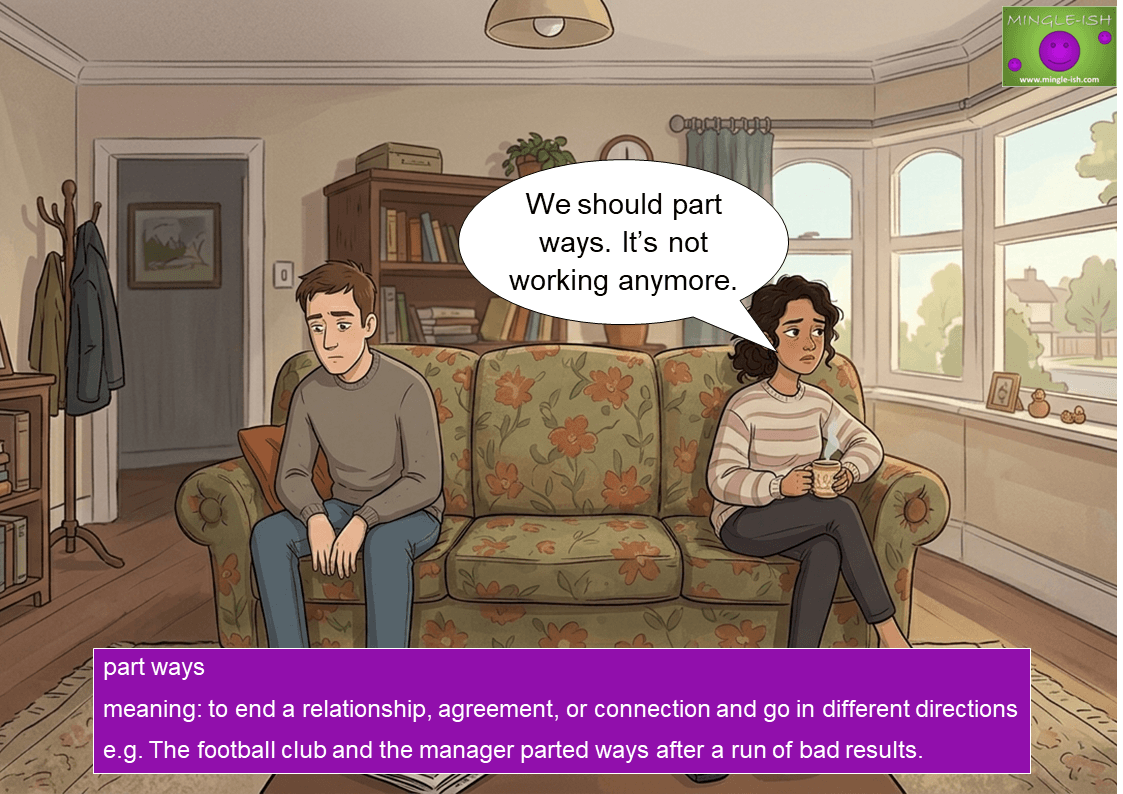
part ways

meaning:

“Part ways” in a relationship means two people decide to end things and move on separately. It’s usually a fairly calm way of saying the relationship is over, like you’ve both accepted it’s time to go in different directions in life.

examples:

  • They parted ways after realising they wanted completely different futures.
  • She said they parted ways without too much drama in the end.
  • After a long talk, they decided to part ways and stay friends.
Couple sitting apart on sofa looking sad as woman says “we should part ways”, illustrating breakup idiom in real-life situation

show someone the door

meaning:
“Show someone the door” in a breakup sense means ending a relationship by telling someone to leave, often because things have gone wrong or patience has completely run out. It’s that firm moment where there’s no more discussion, just a clear “it’s over, time to go.”

examples:

  • She showed him the door after he kept lying about everything.
  • He got shown the door when the arguments became too much to handle.
  • They said she finally showed him the door after months of drama.
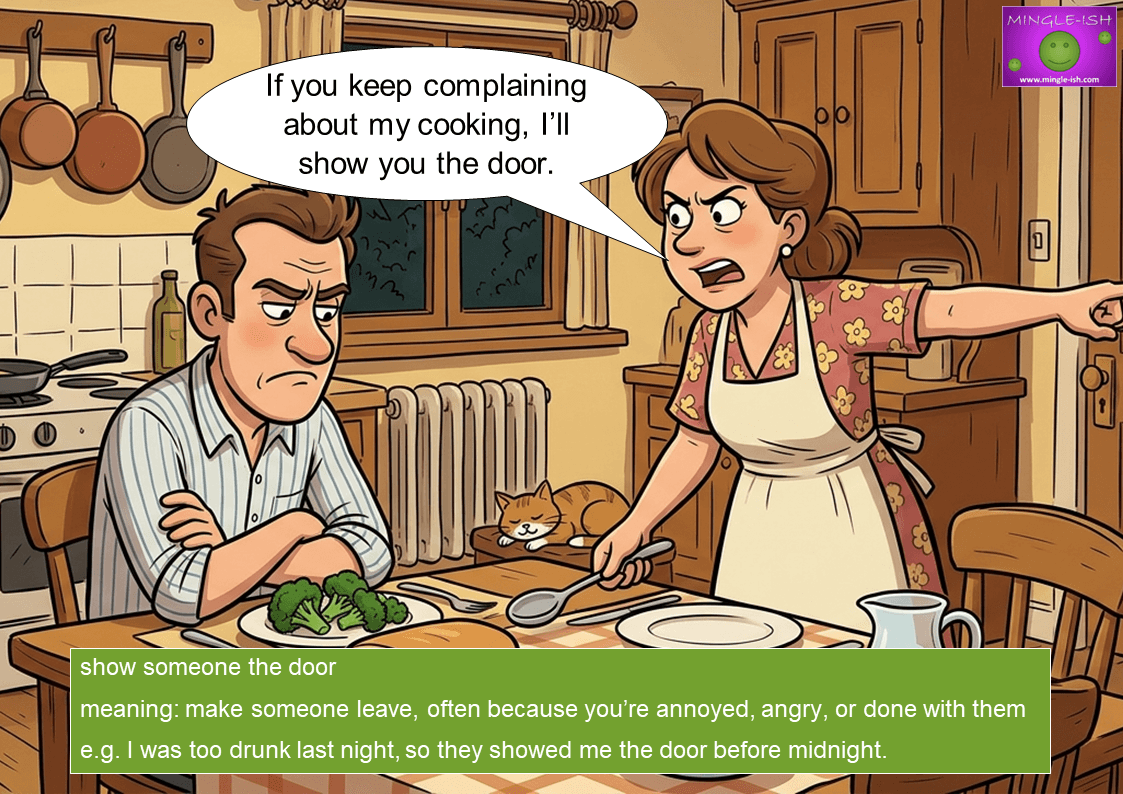
Angry woman pointing to the door while arguing with partner at dinner table, illustrating “show someone the door” idiom in a relationship context

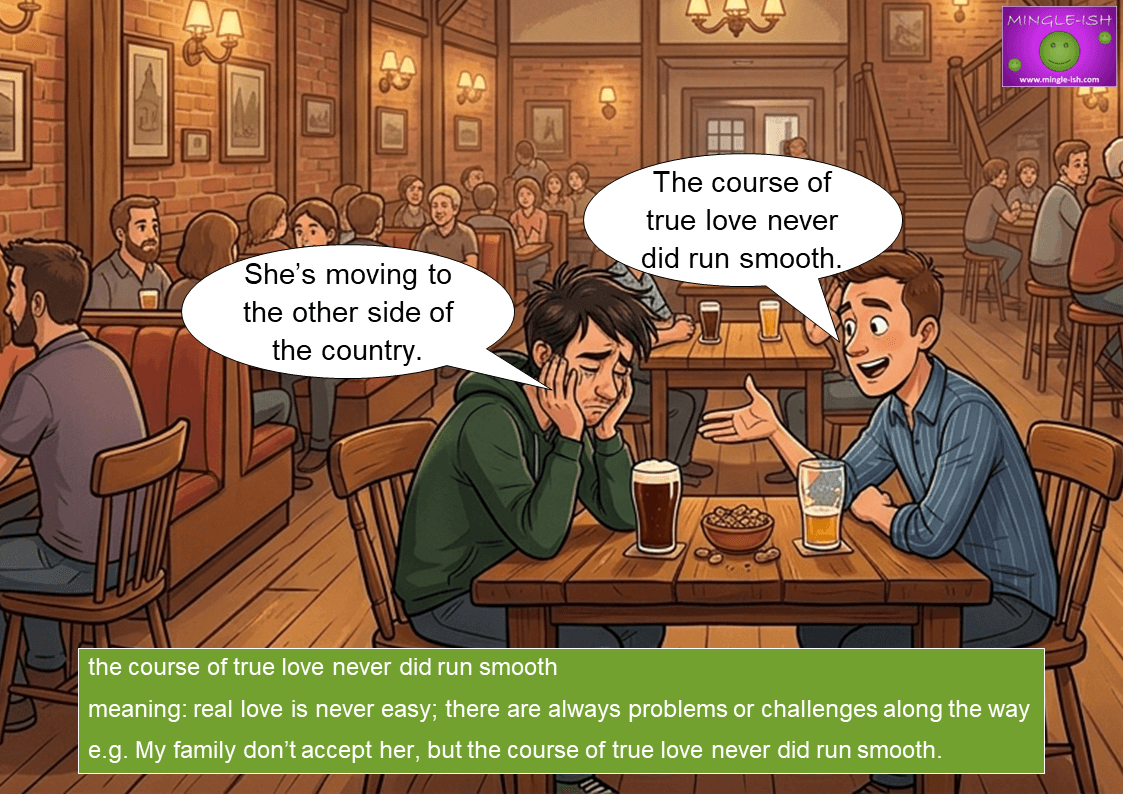
the course of true love never did run smooth

meaning:
“The course of true love never did run smooth” means that relationships are rarely simple or easy. Even when two people really care about each other, there are usually ups and downs, arguments, awkward phases, and all sorts of chaos along the way.

examples:

  • They broke up and got back together twice, but the course of true love never did run smooth.
  • She kept saying the course of true love never did run smooth after another dramatic argument.
  • Their relationship proved that the course of true love never did run smooth from day one.
Two men sitting at a pub table, one looking sad and crying while the other comforts him, illustrating the idiom "the course of true love never did run smooth" in a cartoon style.

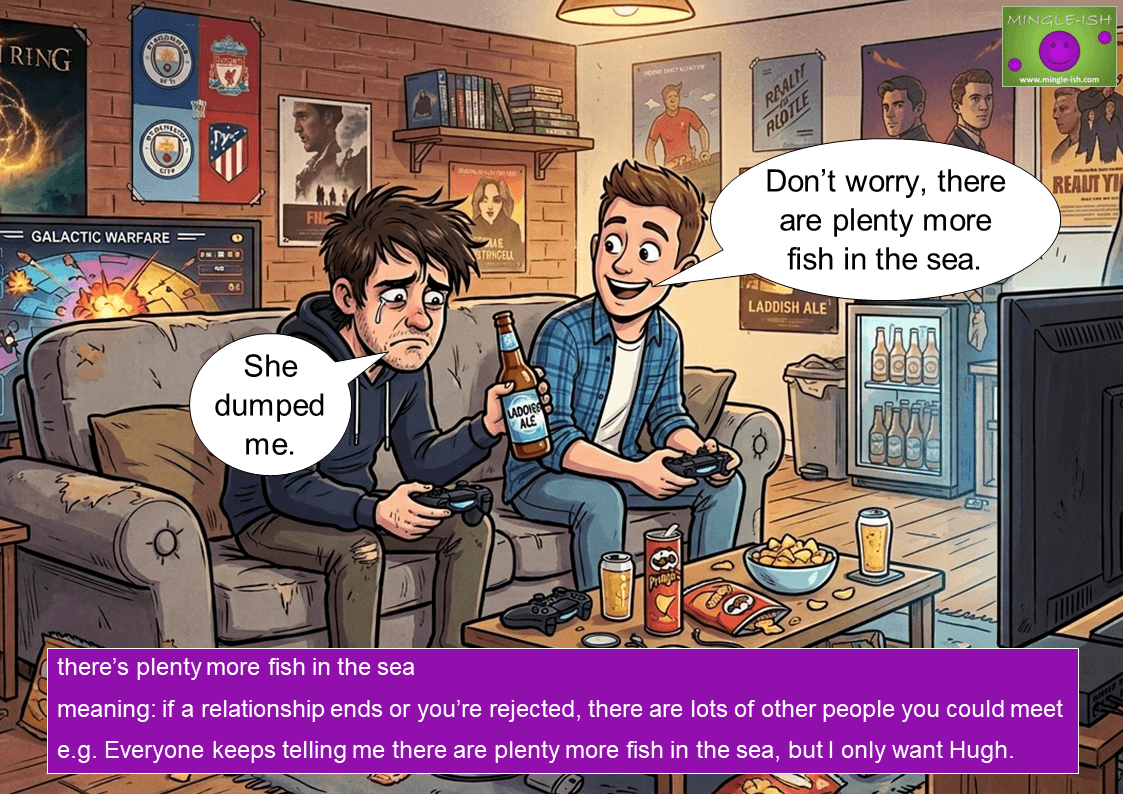
there’s plenty more fish in the sea

meaning: “There’s plenty more fish in the sea” is a way of saying that even if a relationship ends, there are lots of other potential partners out there. It’s meant to be reassuring, like reminding someone not to dwell on an ex because there are still plenty of chances for something better.

examples:

  • She was upset after the breakup, but her friend told her there’s plenty more fish in the sea.
  • He kept hearing there’s plenty more fish in the sea, even though he wasn’t ready to hear it.
  • They joked that there’s plenty more fish in the sea after another dramatic breakup.
Two friends playing video games on a sofa, with one appearing sad after a breakup and the other offering a beer and support, illustrating the idiom "there's plenty more fish in the sea" in a modern cartoon style.

walk out on someone

meaning:
“Walk out on someone” means to suddenly leave a relationship without properly explaining things or giving closure. It’s that moment when one person just decides they’re done and leaves the other person trying to figure out what just happened.

examples:

  • She walked out on him after another late-night argument.
  • He walked out on her without saying much, just grabbed his stuff and left.
  • They said he walked out on her when things got too intense.
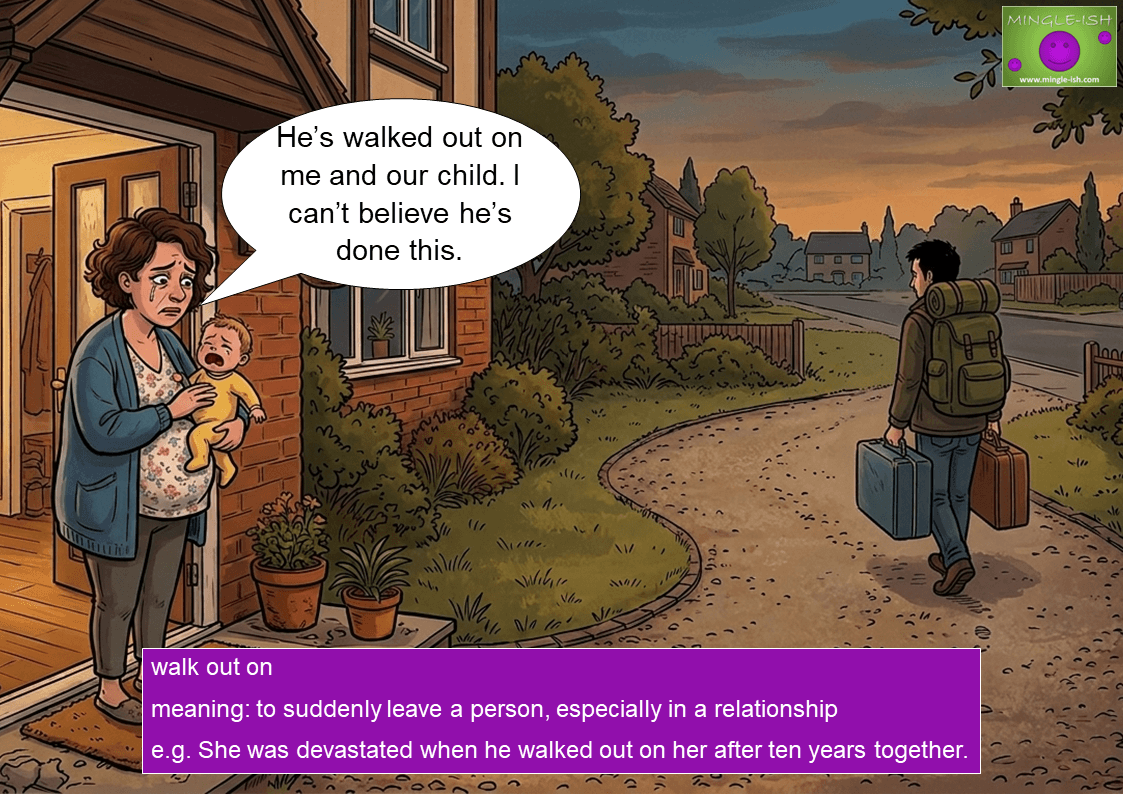
A woman standing in her doorway holding a baby while visibly upset as a man walks away down the driveway with packed luggage, illustrating the idiom "walk out on" in a cartoon style.

Common Mistakes with Break Up Idioms

Breakups are already awkward enough without the grammar making things worse. This is where learners tend to go slightly off track, usually by translating directly or overthinking it. English prefers simple, natural phrases, not dramatic inventions.

Here are the most common mistakes (and how to fix them):

❌ They did a breakup
✅ They broke up

❌ They finished their relationship
✅ They ended their relationship / called it quits

❌ They separated themselves
✅ They separated / they split up

❌ They broke their relationship
✅ They broke up

❌ He cut the relationship
✅ He ended the relationship

❌ She left with him (when you mean ended the relationship)
✅ She left him

❌ They stopped their love
✅ They fell out of love

❌ They destroyed the relationship
✅ They ruined the relationship / it fell apart

❌ He quitted the relationship
✅ He quit the relationship / he called it quits

❌ They are in breakup
✅ They are breaking up / they have broken up

FAQs

If you’ve ever stared at a sentence about relationships and thought, “Wait… did they break up or did they call it quits?”, you’re in exactly the right place. These FAQs cover the most searched breakup idiom questions so your English sounds natural, not like it was assembled by a confused robot in a hoodie.


What is a break up idiom?

A break up idiom is an expression used to describe ending a romantic relationship in a more natural, conversational way. Instead of saying “they ended their relationship”, you might say “they called it quits” or “they split up”, which sounds way more like real-life English and less like a legal document.

What is the most common break up idiom?

The most common breakup idioms include “call it quits”, “break someone’s heart”, “split up”, and “go their separate ways”. These are used all the time in everyday English, TV shows, and probably at least three awkward conversations you’ve overheard in a café.

How do you use break up idioms in a sentence?

You use breakup idioms just like normal verbs or expressions, depending on the structure of the idiom. For example, “They called it quits after five years”, “She broke his heart when she left”, or “They went their separate ways after university”. The key is to treat the idiom as a fixed expression and not try to overthink it mid-sentence, that’s where things get messy.

Are breakup idioms formal or informal?

Most breakup idioms are informal and used in spoken English or casual writing. If you’re writing an essay or something very formal, you’d usually stick to “ended their relationship” instead. But in everyday English, idioms are absolutely everywhere.

What’s the difference between a breakup idiom and a phrasal verb?

A breakup idiom is a fixed expression with a meaning you can’t always guess from the words, like “call it quits”. A phrasal verb is usually a verb plus a preposition or adverb, like “break up”. Both are used to talk about relationships ending, but idioms tend to be a bit more expressive and colourful.

Can breakup idioms be used for friendships too?

Yes, some can. While many are romantic, phrases like “go their separate ways” can also describe friendships or even business partnerships ending. Basically, anytime two things (or people) stop sticking together, an idiom might sneak in.

What are common mistakes with breakup idioms?

A common mistake is translating word-for-word from your first language, which often leads to unnatural English like “they did a breakup”. Another mistake is mixing idioms, for example saying “they broke their relationship heart”, which sounds dramatic but not correct. Stick to the fixed phrase and you’ll be fine.