
Skin idioms are some of the most colourful expressions in English. On this page, you’ll discover their meanings, see example sentences, and learn how to use them naturally in everyday conversations.
What Are Skin Idioms?
Skin idioms are everyday English expressions that use the word skin in a figurative way rather than talking about your actual skin. They often describe appearance, protection, courage, sensitivity, emotions or even personal responsibility.
You’ll hear skin idioms in conversations, films, TV programmes, books and workplaces, making them useful for anyone learning English. Understanding these common skin idioms will help you sound more natural and improve both your spoken and written English. Below, you’ll find the meanings, example sentences and usage tips for some of the most popular English skin idioms.
List of Skin Idioms
Below you’ll find some of the most common skin idioms in English. Each one includes its meaning, an example sentence, and tips on how to use it naturally in everyday conversations.
a skinflint
meaning: a very stingy person who hates spending money, even when they should
examples:
- My mum is such a skinflint, she won’t give me £1 for the charity cake sale.
- Don’t be a skinflint and leave a proper tip after the meal.
- She called him a skinflint because he wouldn’t even pay for a round of drinks.
- The boss is a real skinflint, he never spends money on decent office equipment.

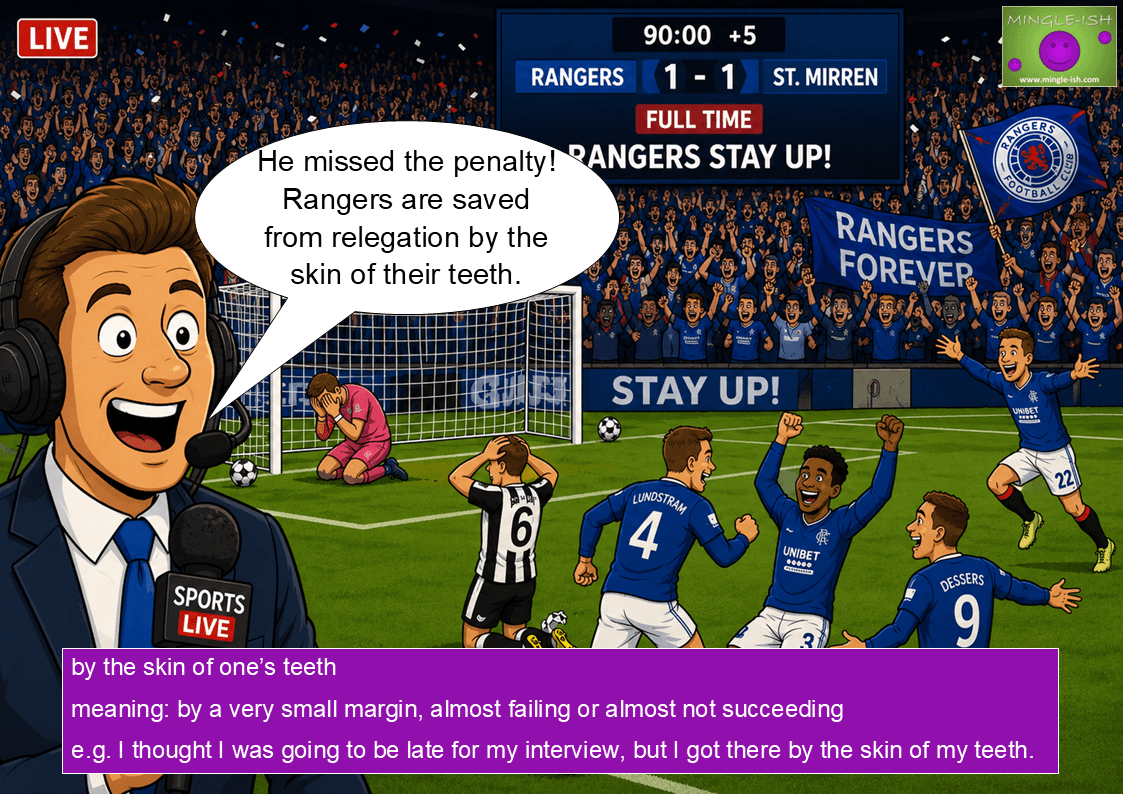
by the skin of one’s teeth
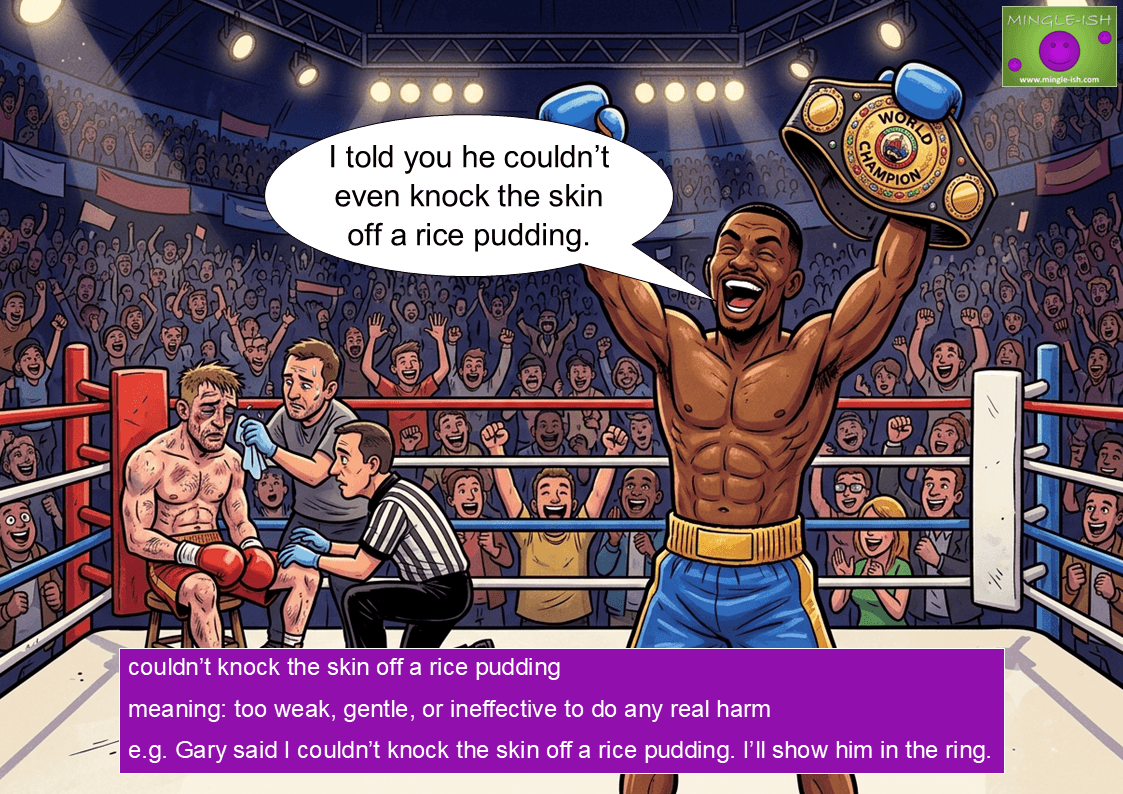
couldn’t knock the skin off a rice pudding
meaning: too weak, gentle, or ineffective to do any real harm
examples:
- Don’t worry about him. He couldn’t knock the skin off a rice pudding.
- The boxer fought so badly that people said he couldn’t knock the skin off a rice pudding.
- My grandad said my little brother couldn’t knock the skin off a rice pudding.
- The security guard looked tough, but he couldn’t knock the skin off a rice pudding.
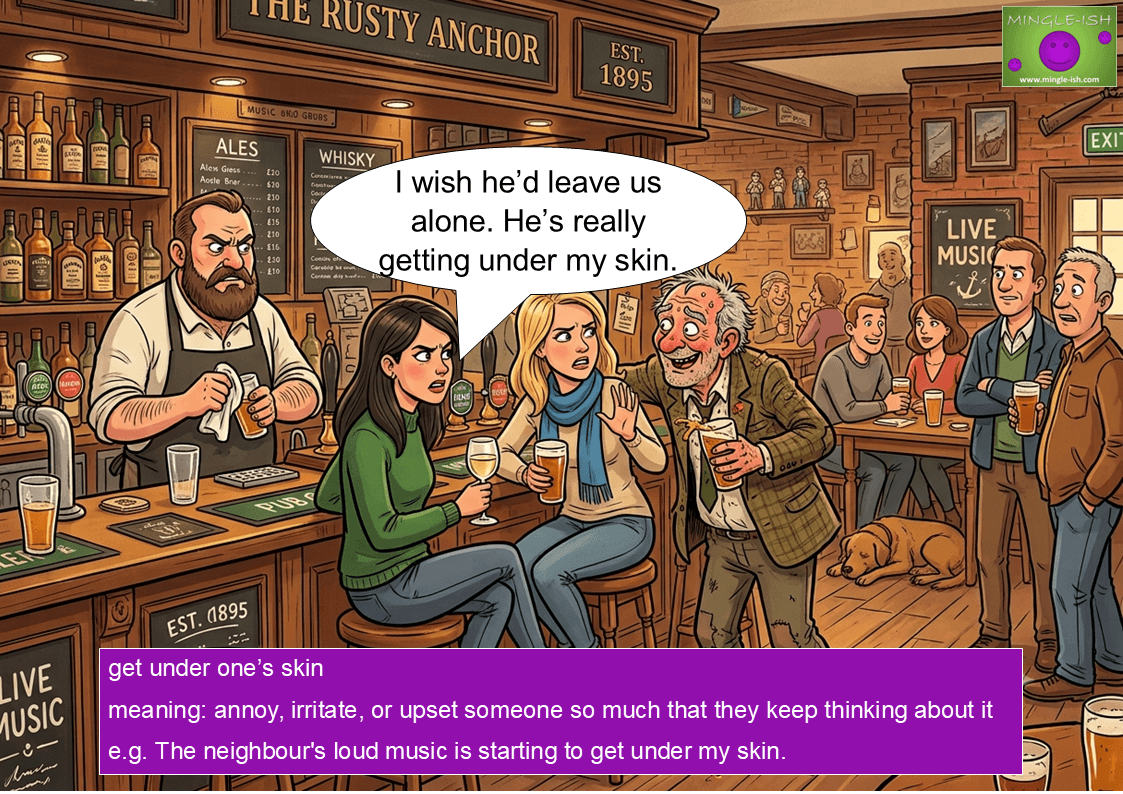
get under one’s skin
meaning: Get under someone’s skin means to annoy, irritate, or upset someone so much that they keep thinking about it. It can also mean to affect someone emotionally, although it is most commonly used in a negative way.
examples:
- My little brother always gets under my skin by borrowing my clothes.
- His constant complaining really gets under my skin.
- The neighbour’s loud music is starting to get under my skin.
- She knows exactly what to say to get under my skin.
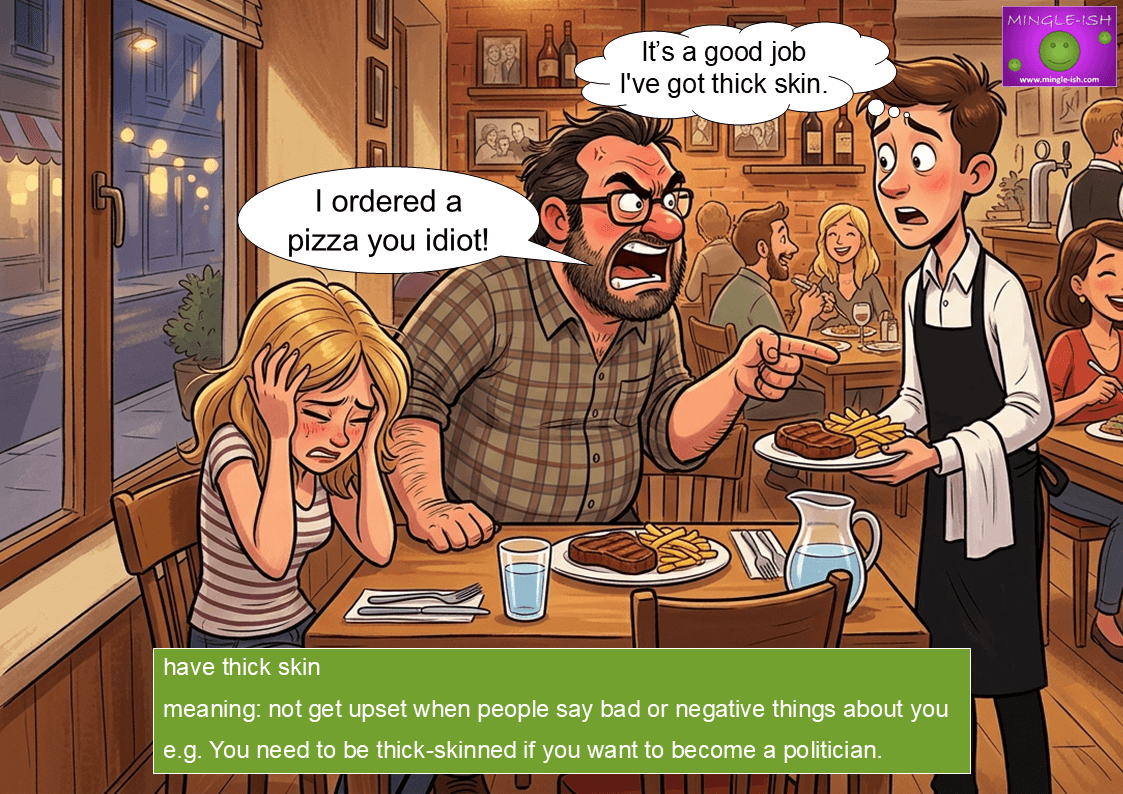
have thick skin
meaning: to have thick skin means you do not get upset when people say bad or negative things about you
examples:
- You need to be thick skinned if you want to become a politician.
- She has thick skin, so rude comments do not upset her.
- You need thick skin if you work in social media.
- He has thick skin and listens to criticism without getting angry.
jump out of one’s skin
meaning: to be suddenly and extremely frightened or startled by something unexpected
examples:
- A huge spider ran across my leg. I nearly jumped out of my skin.
- She jumped out of her skin when the dog barked.
- We all jumped out of our skin at the loud bang.
- He jumped out of his skin when someone tapped him on the shoulder.

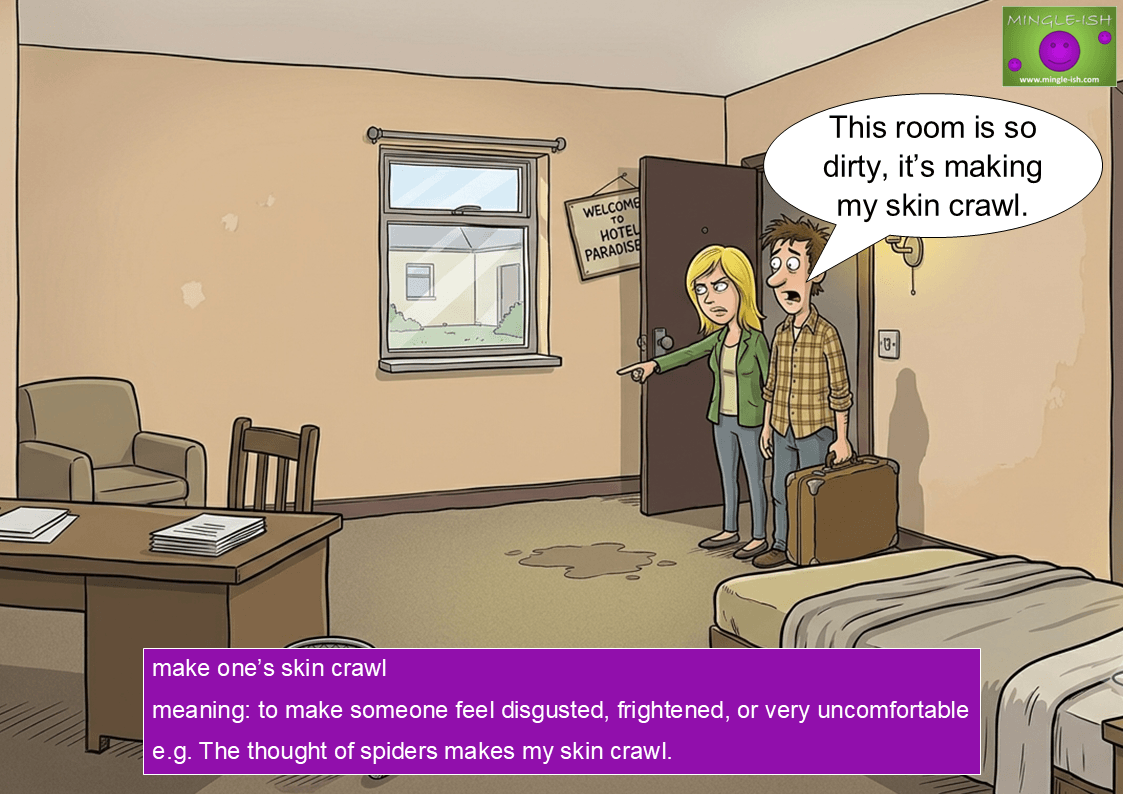
make one’s skin crawl
meaning: to make someone feel disgusted, frightened, or very uncomfortable.
examples:
- The thought of spiders makes my skin crawl.
- That creepy old house makes my skin crawl.
- His rude behaviour made my skin crawl.
- Horror films always make my skin crawl.
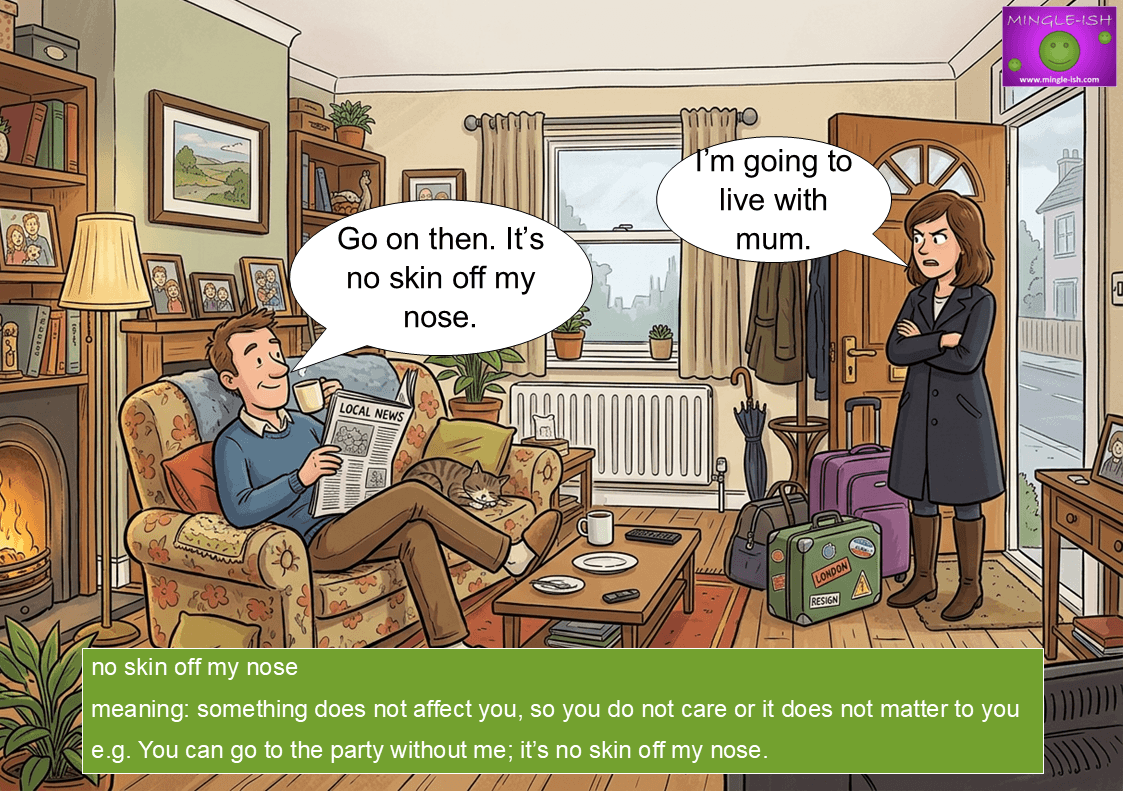
no skin off my nose
meaning: something does not affect you, so you do not care or it does not matter to you
examples:
- You can go to the party without me; it’s no skin off my nose.
- If he wants to leave early, that’s no skin off my nose.
- She didn’t like the plan, but it was no skin off my nose.
- You can change the schedule again if you want, it’s no skin off my nose.
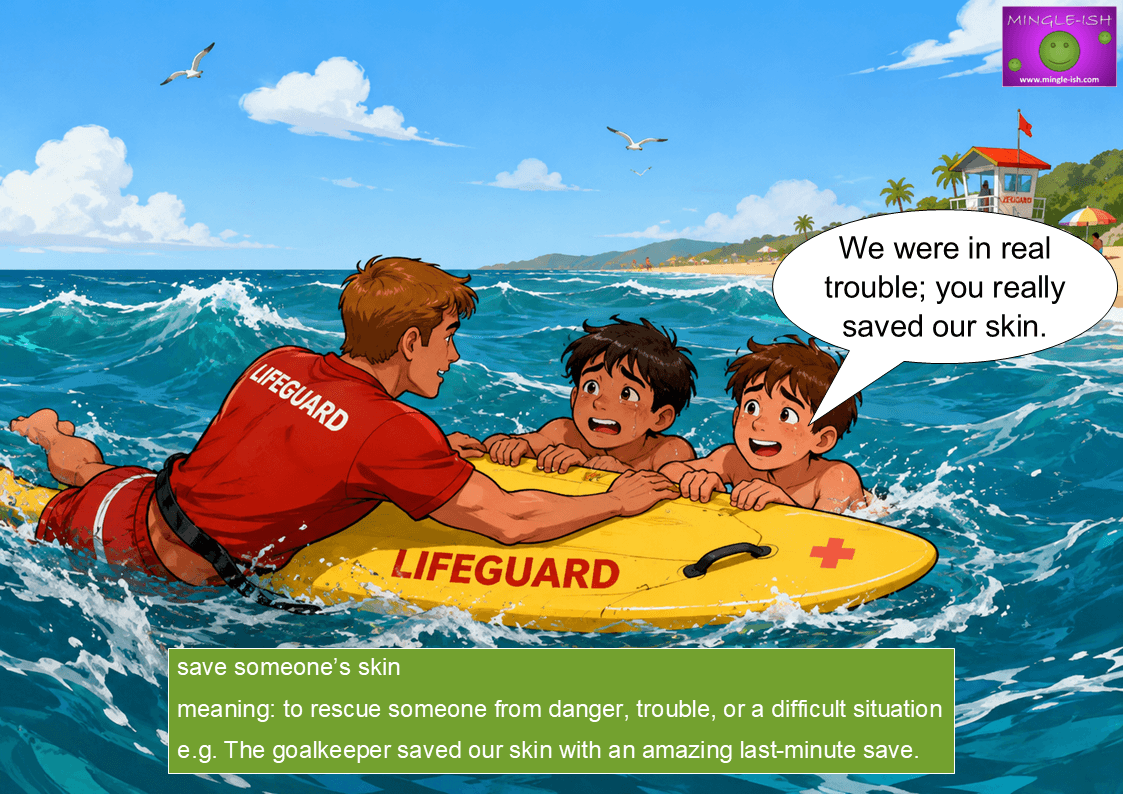
save someone’s skin
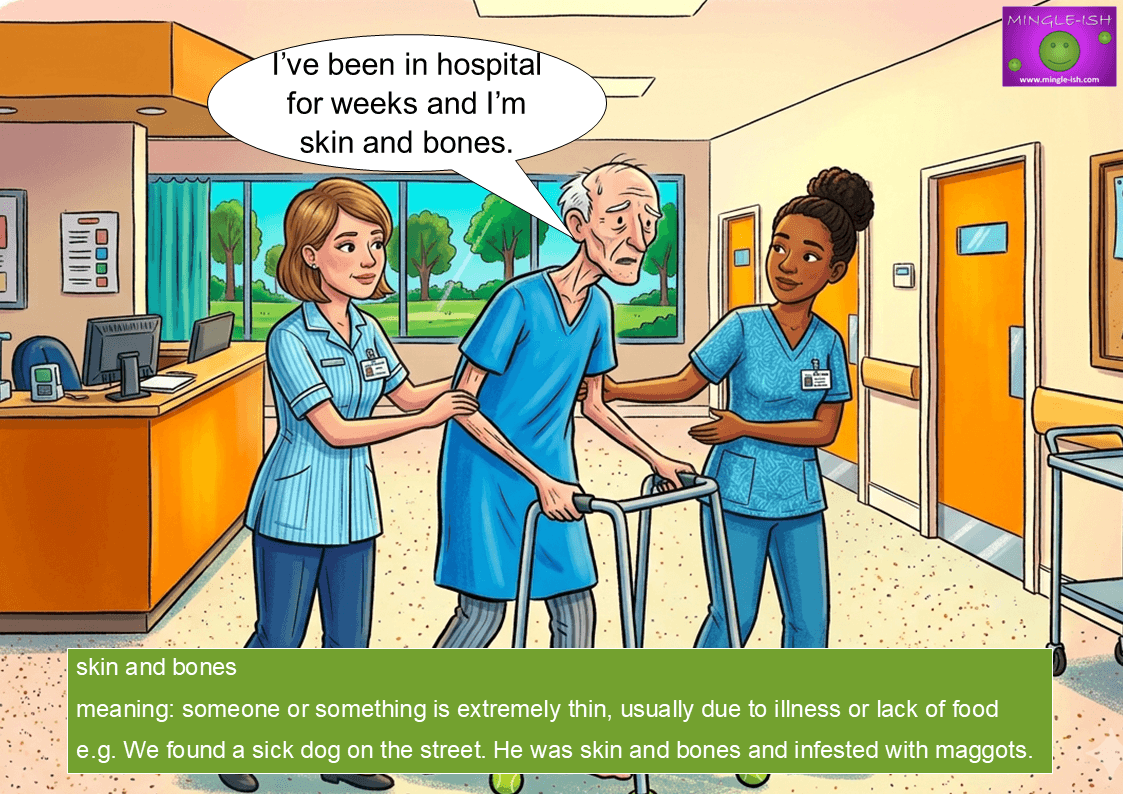
skin and bones
meaning: someone or something that is extremely thin, usually because they are very ill, malnourished, or have not been eating properly
examples:
- We found a sick dog on the street. He was skin and bones and infested with maggots.
- He was so ill in hospital that he came home looking like skin and bones.
- I saw the stray dog in the street and it was just skin and bones.
- She used to be quite healthy but after the illness she was skin and bones when I saw her again.
skin someone alive
meaning: to severely punish or criticise someone very harshly, usually in anger
examples:
- I cracked the TV. My mum is going to skin me alive when she gets back.
- My boss will skin me alive if I miss that deadline again.
- She said she’d skin him alive for forgetting their anniversary.
- The coach will skin the team alive after that poor performance.

there’s more than one way to skin a cat
meaning: there is more than one way to achieve the same result
examples:
- I didn’t get tickets to the concert, but there’s more than one way to skin a cat.
- I couldn’t solve the problem the usual way, so I tried it backwards. There’s more than one way to skin a cat.
- The recipe went wrong, so I changed a few ingredients and fixed it. There’s more than one way to skin a cat.
- We missed the train, so we took a bus instead. There’s more than one way to skin a cat.

Frequently Asked Questions
Skin idioms can look a bit strange at first, especially if you try to understand them word-for-word. Below are some of the most common questions people ask about skin idioms in English, along with simple, clear answers to help you use them naturally.
What are skin idioms?
Skin idioms are English expressions that use the word skin in a non-literal way. They usually describe emotions, personality, protection, effort, or relationships, rather than anything to do with actual skin.
What is the most common skin idiom?
One of the most common skin idioms is “by the skin of your teeth”, which means you only just managed to do something. Another very common one is “get under someone’s skin”, meaning to annoy or bother someone.
What does “under my skin” mean?
If something gets under your skin, it means it really irritates you or stays in your thoughts in a frustrating way. You can’t quite shake it off, even if you try.
What does “have thick skin” mean?
To have thick skin means you don’t get upset easily by criticism or rude comments. It’s a useful trait in work, social media, and everyday life.
What does “have thin skin” mean?
To have thin skin means you are easily upset or offended. Small comments or criticism can affect you quite strongly.
What does “skin in the game” mean?
To have skin in the game means you have a personal stake in something, usually money, effort, or responsibility. If it fails, you lose something too.
Is “by the skin of your teeth” a real idiom?
Yes, it is a real and very common English idiom. It means you only just managed to do something, usually by a very small margin.
Why do English speakers use skin idioms so much?
English speakers use skin idioms because they are vivid and expressive. They help turn simple ideas into more interesting, natural-sounding language.
Are skin idioms used in everyday English?
Yes, skin idioms are used all the time in everyday English, especially in conversation, films, TV shows and workplace communication.
Conclusion
Now you’ve got a handle on some of the most common skin idioms in English. They might sound a bit odd at first, but once you start spotting them in real conversations, they’ll quickly become part of your natural English. Keep an eye (and your skin!) out for them in films, TV, and everyday chats.
Want to Learn More?
If you enjoyed learning these skin idioms, there’s plenty more where that came from. You can explore other body part idioms like eye idioms, hand idioms and heart idioms, or dive into more English idioms and phrasal verbs to build your natural English even further.
Over on mingle-ish.com, you’ll find loads more grammar guides, vocabulary pages and idiom collections designed for ESL and EFL learners who want to sound more fluent without the boring stuff.
And if you prefer learning with videos, head over to my YouTube channel for quick grammar quizzes, pronunciation practice and fun English challenges you can actually enjoy.